Claude Code 6x Surge: How JetBrains' 10,000-Developer Survey Rewrites Tool Selection
JetBrains' April 2026 survey of 10,000+ developers shows Claude Code grew 6x in 9 months to 18% adoption. Copilot 29%, Cursor 18%, Claude Code 18% — decoded through 5 selection axes for business teams.
What you'll learn in this article
- Where pricing and adoption questions around Claude Code stand right now
- Which plan or rollout stage fits the reader's situation
- Which follow-up article to open next for setup, cost, or bigger-picture context

“We already have Copilot — but Claude Code has been getting a lot of buzz lately. Should we actually switch?” I got the same question from a director of information systems I know — three times in the same week.
My answer: “Before switching, revisit your selection criteria.”
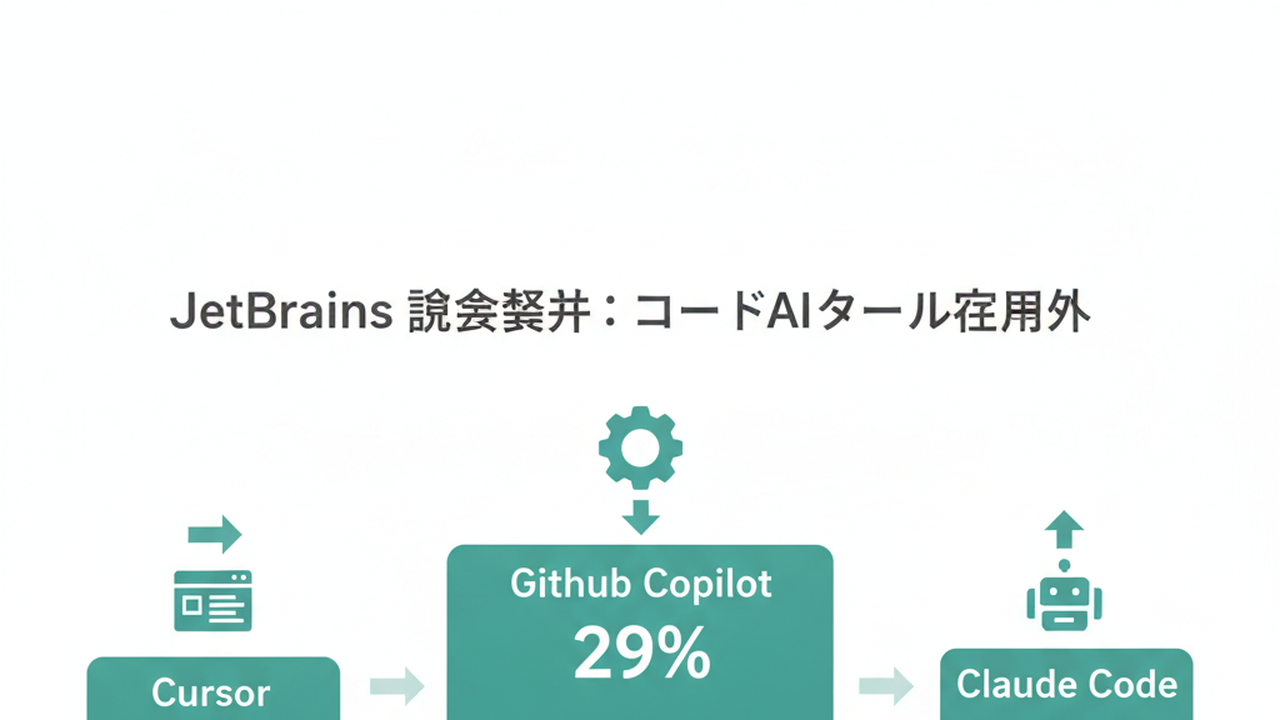
JetBrains’ 10,000+ developer survey published in April 2026 shows GitHub Copilot at 29% adoption, Cursor at 18%, and Claude Code at 18%. Those three numbers signal a rule change in the AI coding tools market.
Claude Code in particular jumped from about 3% in Q2 2025 to 18% in January 2026. A 6x surge in 9 months.
What business teams and AI decision-makers face today is the question: “Is Copilot alone actually good enough?” Here I’ll translate the JetBrains numbers into 5 axes you can use as selection criteria.
Three Numbers From JetBrains’ 10,000-Developer Survey
First, the factual foundation.
JetBrains The Research Blog (published April 2026) surveyed 10,000+ developers on “which AI coding tools do you use at work.” At 10,000+ respondents, it’s one of the largest surveys in the industry.
Three numbers at the core.
First: GitHub Copilot at 29% adoption. Fewer than 1 in 3 developers worldwide use it at work. Awareness: 76% — still dominant. Restrict to companies with 5,000+ employees and adoption climbs to 40%.
Second: Claude Code at 18% adoption. From ~3% in Q2 2025, through ~12% (prior JetBrains survey, September 2025), to 18% in January 2026. A 6x jump in 9 months. Awareness went 31% → 49% → 57% — up 26 points in six months.
Third: Cursor also at 18%. Neck and neck with Claude Code, both closing fast on Copilot.
The market picture, summarized:
- Copilot 29%: the incumbent, but growth stalling
- Cursor 18%: established as a major player
- Claude Code 18%: surging, rapidly closing the gap
Not “Copilot versus the field” — instead, “a three-way race.” That’s the first fact from JetBrains.
A natural follow-up: will the growth continue? JetBrains itself notes that “Copilot’s awareness and adoption growth has slowed.” Claude Code, meanwhile, is trending upward across all three metrics — awareness, adoption, and satisfaction. The growth direction has literally reversed from Copilot’s peak years.
Why Claude Code’s “6x Surge” Really Happened

The “6x” figure gets attention in isolation, but breaking down the structure changes the picture.
The 18% adoption number is built from three stages.
Stage 1: Awareness 31% → 57%. Up 26 points in six months. Raw awareness of Claude Code expanded.
Stage 2: Rising trial rate among the aware. Conversion from “I’ve heard of it” to “I’ve tried it” accelerated.
Stage 3: Retention among trial users. Conversion from “I tried it” to “I use it at work every day” took hold.
CSAT and NPS are what back up that retention. Claude Code’s CSAT (customer satisfaction) is 91%; NPS (net promoter score) is 54 points. JetBrains rates both as “best in class.”
CSAT 91% means 9 in 10 users report being satisfied. NPS 54 — a 54-point spread between promoters and detractors — sits in the “exceptional” band for SaaS benchmarks.
In short: awareness expansion, layered with “tried it, liked it → keeping using it → recommending it to others.” That 3-layer accumulation produced “18% adoption, 6x.” This isn’t a number inflated by ad spend.
I evaluated Claude Code myself during the same period — skeptical at first. After two weeks of real work use, the friction in the “chat → reflect in code → check result” loop was measurably lower than other tools. That felt experience lines up with CSAT 91%.
Support from experienced engineers is also notable. Among senior developers I know, “Claude Code is now my main tool” comes up repeatedly. Copilot, on the other hand, mostly gets “I keep using it because I’m familiar with it.” Experienced engineers are gravitating toward best-of-breed tools. (Author’s observation — not quantitatively confirmed in JetBrains’ primary data; treat as field knowledge)
“Product Excellence > Ecosystem” — The Moment Selection Criteria Changed
JetBrains’ own commentary captures the core of what this survey shows.
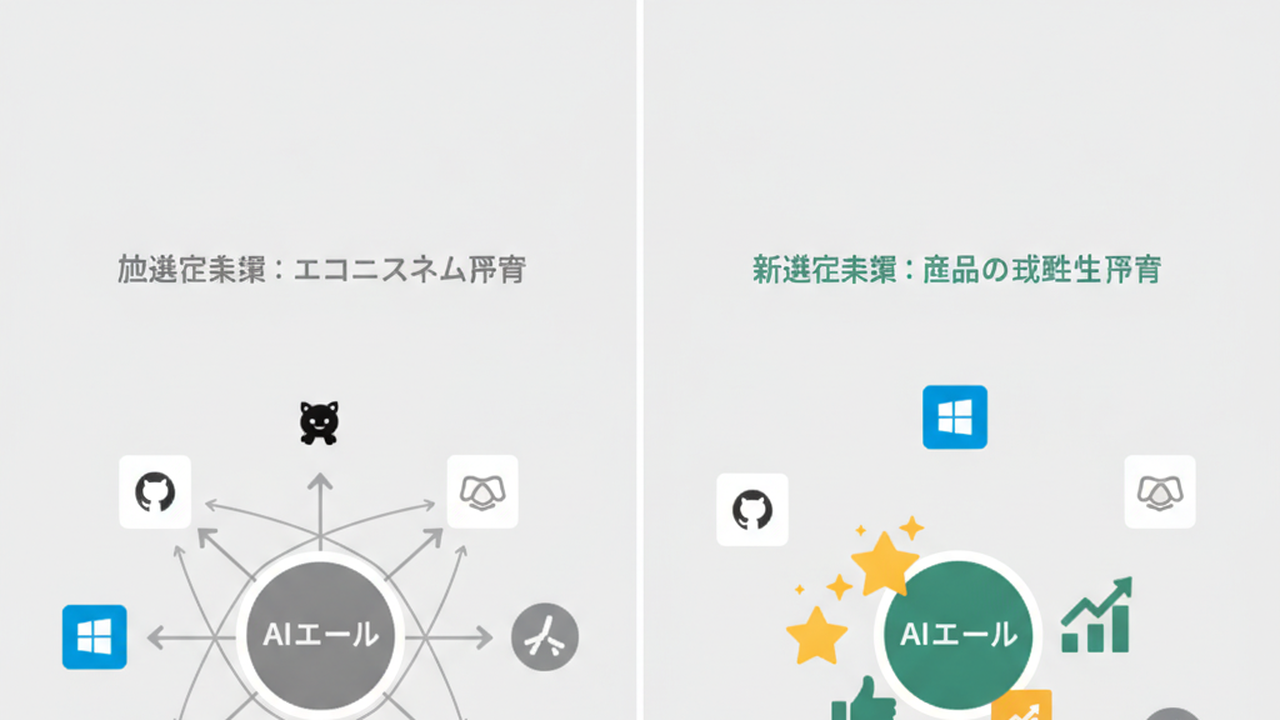
“The shift to top-tier agentic tools indicates that product excellence is becoming more important than ecosystem. Developers are moving to the best individual tools rather than integrated stacks.” (JetBrains The Research Blog)
That sentence carries weight.
Until now, “go with Copilot” had a simple logic: GitHub integration, Microsoft enterprise ecosystem, existing IDE connectivity. “Other tools look interesting, but the realistic choice is the one with the ecosystem already in place.”
In the 2026 survey, that premise broke. Developers started choosing “if an individual tool is better, I’ll take it — ecosystem constraints be damned.” The movement of experienced engineers toward Claude Code is the field evidence. (Author’s observation)
For business decision-makers, the fact to absorb is: the era when “ecosystem lock-in was a dead weight on the decision” is over.
This has direct implications for how you run the selection process.
The old selection question: “Which tool plays well with our GitHub/Microsoft environment?” — choosing a tool from within the ecosystem.
The new selection question: “Which tool actually drives results for our work? Figure out ecosystem alignment afterward.” The causality inverted.
That inversion flows directly into procurement guidelines and evaluation criteria. “Other companies are using it” or “it’s the IT standard” is no longer a sufficient reason for selection.
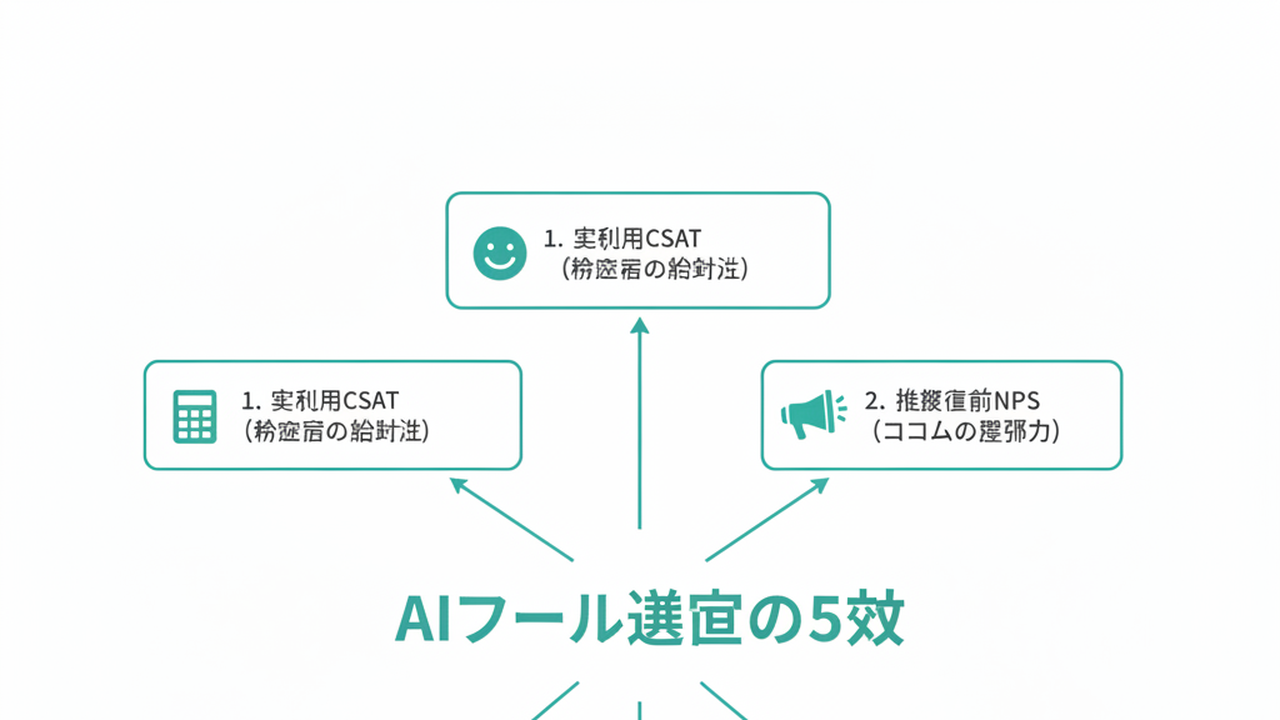
5 Tool Selection Axes for Business Teams
Translating the JetBrains data into “criteria your organization can actually use” produces 5 axes.
Axis 1: Actual-use CSAT (absolute satisfaction). Measures whether users who have tried it say they’re satisfied. Claude Code at CSAT 91% means 9 in 10 users are satisfied. During internal evaluation, measure satisfaction from users in your PoC period. Benchmark: 80%+. Below that, expect dropout during rollout.
Axis 2: NPS (word-of-mouth amplification). Measures whether users would recommend it. Claude Code’s NPS 54 puts it in the “exceptional” SaaS tier. High-NPS tools spread naturally inside organizations. Low-NPS tools need active IT department promotion to propagate — the true adoption cost is higher than it appears.
Axis 3: Senior developer preference (what experienced engineers choose). The observation that senior engineers are gravitating toward Claude Code (author’s observation) signals what experienced practitioners are evaluating. They judge holistically — feel, output quality, behavior under edge cases. Interviewing senior developers in your organization is worth the time.
Axis 4: Growth curve (market direction). Claude Code’s 6x surge vs. Copilot’s growth stall. That gap signals relative market positioning 12–24 months out. Don’t just look at current adoption (a snapshot) — look at growth rate (the vector). Tools with reversed momentum will also fall behind on feature velocity and community depth.
Axis 5: Adoption rate by company size (your context). Copilot is particularly strong at 40% adoption in companies with 5,000+ employees. Claude Code is seeing stronger growth at startups and mid-size firms. Ask vendors or check public case studies for who in your size and industry is actually using the tool. “Who close to us is using it” is the foundation for internal consensus.
These 5 axes fit in a single Excel sheet you can share internally. Evaluate Copilot, Cursor, and Claude Code in three columns; pick the highest scorer for PoC. This alone gets you out of “renewing Copilot by default.”
What Experienced Engineers’ Choices Reveal
Among the 5 axes, axis 3 — “senior developer preference” — is worth a deeper look. What does the observation that experienced engineers are gravitating toward Claude Code actually mean?
Experienced engineers can put into words how something “feels.” Given a new tool, they’ll have a verdict in five minutes. Their judgment is typically stricter than junior developers’ — because they’ve been burned by over-hyped tools enough times to be wary.
That cohort choosing Claude Code signals: Claude Code holds up under real-world validation.
Three elements I believe are driving this:
First, long-context handling. Senior engineers care about “can it make relevant suggestions on a large repository, with awareness of past context?” Claude Code is earning strong marks here.
Second, agentic behavior. “Give it a task and it autonomously handles multiple files and multiple steps” is the key differentiating axis from Cursor and Copilot.
Third, conversation quality. Word-of-mouth among senior engineers in my network: “it reads intent accurately without elaborate prompts.” (All author observation, not from JetBrains primary data)
One caveat: “senior engineers prefer it ≠ best choice for junior engineers.” For juniors, Copilot’s autocomplete-first, IDE-integrated, low-friction experience still has genuine value.
That means: depending on your internal skill distribution, the optimal tool may differ. This is an important branch point in the selection process.
Should You Switch From Copilot or Coexist? The Decision Flow
My answer to “should we switch from Copilot?” is: don’t make it black or white.
Three branches.
Case A: Current Copilot contract, getting stuck on important projects once a week or more.
→ Start evaluating Claude Code as a parallel option. Set a 3-month PoC, measure 5-axis scores. Route stuck cases to Claude Code; keep Copilot for autocomplete. The two-tool setup is the mainstream option in 2026.
Case B: Current Copilot contract, getting stuck less than once a week.
→ Status quo + quarterly reassessment. If Copilot is getting the job done, there’s no compelling reason to pay the switching cost (training, ops, contract transition). Track market trends though. Every 3 months: “Has the senior developers’ view changed?” — internal check.
Case C: No current Copilot contract, evaluating from scratch.
→ Start with a Claude Code-only evaluation. With no ecosystem inertia, your selection criterion can be pure “product excellence.” CSAT and NPS numbers are rational starting points. Include Copilot in the comparison, but Claude Code goes first.
When sharing this decision flow internally, always pair it with “review conditions at 3 months and 6 months.” The AI coding tools market changes landscape in six months. Don’t decide once and lock in; build the habit of quarterly reassessment to maximize ROI.
Switching cost breakdown: training is 2–4 hours per user (tutorial + on-the-job adaptation); operations is 1–2 person-days for IT permission and billing management; contract transition depends on Copilot cancellation lead time. At that overhead level, the tradeoff against “how often senior engineers get stuck” yields a clear answer.
3 Actions for This Week
For those ready to act — 3 things you can start within 7 days.
Action 1: Build the 5-axis scoresheet (90 min).
Open one Excel sheet. Put Copilot, Cursor, Claude Code on the horizontal axis; the 5 axes on the vertical. Fill each cell with JetBrains survey numbers and internal interview results. That’s all it takes to move from gut feel to a document you can bring to a decision meeting.
Action 2: Interview 3 senior developers (45 min).
Ask your top 3 senior engineers: “Have you tried any new AI coding tools recently? Which seem usable in practice?” A 15-minute conversation yields decision-making material grounded in your organization’s context. Their words carry more weight than survey numbers.
Record the interview notes and plug them into axis 3 of the scoresheet. The 5-axis scoresheet becomes a company-specific document.
Action 3: Run Claude Code on 1 real task for 5 days.
Check the Claude Code pricing plans and start a trial on a PoC-eligible plan for a single focused task.
Key: one task, not company-wide rollout. Something concrete — “next week’s repository cleanup,” “a standalone research task.” After 5 days, self-rate on CSAT: on a 10-point scale, “would I use this again?”
For getting started with Claude Code, the Claude Code Getting Started guide covers the 30-minute setup — installation, initial configuration, first command — in one article.
3 actions total: completable within 7 days, under 8 hours of work combined. At the end, you’ll have your organization’s answer to “renew Copilot, run parallel with Claude Code, or switch.”
Summary: The Selection Logic Has Inverted
Key takeaways:
- JetBrains’ 10,000+ developer survey (published April 2026): Claude Code grew ~3% → 18% in 9 months, a 6x surge
- Copilot holds the largest share at 29% but growth is stalling; Cursor and Claude Code both at 18% are closing fast
- Claude Code CSAT 91% · NPS 54 (JetBrains survey), plus strong support from experienced engineers (author’s observation), indicate high-quality retention
- JetBrains itself analyzes that tool selection has shifted to “product excellence > ecosystem”
- Business teams can evaluate with 5 axes: CSAT, NPS, senior developer preference, growth curve, company-size adoption
- Don’t go black-and-white on switching from Copilot: 3 branches based on “how often you get stuck” and “ecosystem inertia”
- 3 actions this week: 5-axis scoresheet, 3 senior developer interviews, Claude Code 1-task trial
For more depth on the adoption journey, Claude Code Enterprise Adoption: The First 30 Days and Claude Code Enterprise Adoption Goes “Product” pair well with this.
The fork between “users” and “the used” comes down to curiosity about tools. What JetBrains showed us is this: “a 6x surge happened because the market has already moved.” While you’re not moving, the gap quietly widens.
Make a 5-axis scoresheet this week. That’s the first step toward taking control of tool selection rather than defaulting to it.

AIを使いこなせない方は、この先どんどん差がつきます。僕はAIエージェントを毎日動かして、壊して、直して、また動かしてます。そういう泥臭い実践の記録をここに書いてます。理論は他の方にお任せしました。僕は動くものを作ります。朝5時に起きてウォーキングしてからコードを書くのがルーティンです。