Claude Code Corporate Training: Compare 6 Providers by Subsidy 75%, Duration & Target
As of June 2026, 6+ providers offer Claude Code corporate training. A comparison table of Uravation, Digirise, AI Brain Partners and more—plus how to use the 75% subsidy and a 3-week self-study route before you commit.
What you'll learn in this article
- Where pricing and adoption questions around Claude Code stand right now
- Which plan or rollout stage fits the reader's situation
- Which follow-up article to open next for setup, cost, or bigger-picture context
June 2026: Claude Code corporate training has become a market with real options.
Uravation, Digirise, AI Brain Partners, ZETTAi, Goodpatch, Internet Academy, and others—6+ providers now offer enterprise programs. Six months ago, the most common question in my circle was “Who inside the company is going to teach Claude Code?” Now it’s shifted to “Which training provider should we pick?”
More options is a good thing. But it also creates a new problem: the differences between providers are hard to see. “2-day intensive,” “4-month hands-on,” and “10-day implementation-focused” are all on the table, with no clear criteria to choose by.
Today, I’m laying out a comparison table of 6 currently available corporate training programs, along with how to correctly apply the 75% government subsidy, and a 3-week self-study route to run before you even pick a provider. By the end, you’ll be able to decide whether your company’s right fit is “training-first,” “self-study-first,” or “hybrid”—and why.
3 Pieces of Evidence That Claude Code Corporate Training Became a Market
The landscape looks completely different from May 2026 to June 2026.
In May, the Digirise program I covered in “The Day Claude Code Enterprise Became a Product” was the symbol of marketization—60 videos, hands-on sessions, and guided support locking in the first 10 companies. By June, multiple services started to follow.
Three pieces of evidence that a real market exists:
First: training formats have diversified. Against Digirise’s 4-month cohort model, Uravation launched a 2-day intensive format (Uravation Claude Code corporate training page). AI Brain Partners offers fully customizable period, modules, and enrollment per company (AI Brain Partners corporate training page). Three distinct patterns have emerged: “build the foundation fast,” “drive long-term organizational change,” and “design it around our specific challenge.”
Second: government subsidies are now standard. Uravation lists eligibility for up to 75% subsidy for SMEs; AI Brain Partners cites reskilling support (¥960/person/hour wage subsidy). Reducing out-of-pocket training costs has become a baseline expectation, not a bonus.
Third: how media covers it has changed. VOIX biz, codecamp.jp media, and other tech-trend outlets reported AI Agent Camp’s launch by name. The framing shifted from “topic among tech-forward companies” to “one reskilling option under the government’s human resource development subsidy.”
When I started using Claude Code in late 2025, it was a personal productivity tool. Six months later it became something companies adopt organizationally. Six months after that, it became something you comparison-shop for training on. The pace is fast—delaying the decision is structural disadvantage.
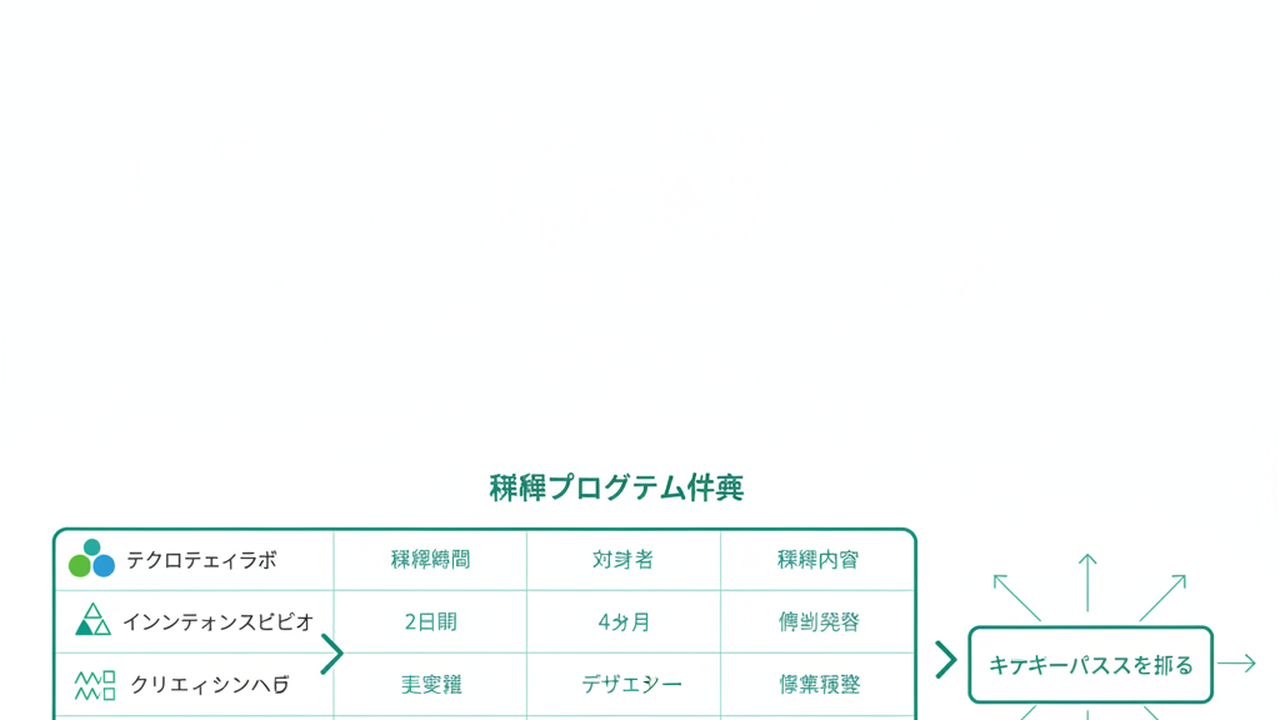
Compare 6 Claude Code Corporate Training Providers
Here’s a summary of 6 providers, based on publicly available information and official announcements.
Uravation
2-day intensive format. Day 1: fundamentals and environment setup. Day 2: custom implementation on your own business workflow. 5.5 hours/day × 2 days. Designed for both non-engineers and engineers, with a 30% lecture / 70% hands-on ratio (Uravation official). Eligible for the government’s Human Resource Development Support Subsidy (Business Restructuring Reskilling Support course)—up to 75% for SMEs. Press release also announced a dual-track “Claude” general training program alongside the Claude Code program (PR TIMES, May 15, 2026).
Digirise
4-month cohort model. Three pillars: 60 on-demand video lessons (~5 hours total) × 4 hands-on sessions (3 hrs each) × Slack/Teams ongoing support. Formally launched May 1, 2026 with a cap of 10 companies (Digirise dedicated site). Led by Masahiro Chaen of “Chaen’s AI Research Lab.” The Claude Code package is positioned as a standalone track layered on top of existing video training. The longer timeline makes it better suited for mid-to-large enterprises that want to pair Claude Code adoption with organizational transformation.
AI Brain Partners (AI Agent Camp)
Training specialized for Claude Code and Cursor. One-click environment setup and AWS deployment support included, designed for non-engineers. Period, modules, and enrollment are fully customizable per company, with job-specific tracks for marketing, sales, accounting, and HR (AI Brain Partners official). Eligible for reskilling support (¥960/person/hour wage subsidy). The press release emphasizes the concept of “building core AI adoption talent from within” (PR TIMES, May 29, 2026).
ZETTAi
Markets itself as “Claude Code training for non-technical beginners,” with a 10-day program aimed at reaching implementation competency. The training is framed around corporate reskilling and HR development (ZETTAi official). The goal: elevate business professionals to the point where they can build their own department-level tools. The design is unapologetically focused on producing “people who can build something that works” in a short window.
Goodpatch HRmony AI
Half-day (4 hrs) and full-day (8 hrs) formats. Audience: department leads and implementation staff. Covers all three Claude modalities (chat, API, Claude Code), with a hands-on-heavy curriculum (HRmony AI Claude corporate training page). Well-suited for departments that want a complete overview in one session, or for generating internal buy-in before a larger rollout.
Internet Academy
Engineer-focused Claude Code training. 6 sessions, 12 total hours, covering environment setup, prompt design, MCP integration, and security considerations in a practical-first format (PR TIMES, May 20, 2026). The stated goal is “day-one job readiness,” making it the natural choice for companies that want to upskill a core engineering cohort in one go.
Beyond these 6, consulting-adjacent options are also growing—Classmethod’s Claude comprehensive support service (Classmethod official) and AI Management Lab’s SME-focused onboarding guides are worth checking depending on your needs.
3 Subsidy Pitfalls to Avoid Before You Apply for the 75% Government Grant
The subsidy question is unavoidable when selecting corporate training.
The program all providers reference is the Ministry of Health, Labour and Welfare’s Human Resource Development Support Subsidy (人材開発支援助成金). The 2026 version focuses on the “Business Restructuring Reskilling Support Course,” which covers a portion of training fees and wages. Uravation explicitly states “up to 75% for SMEs”; AI Brain Partners lists wage subsidy of ¥960/person/hour. Check each provider’s official page for the latest terms—conditions do change.
Three pitfalls to avoid:
Pitfall 1: Meeting the “Business Restructuring Reskilling Support Course” Requirements
The Human Resource Development Support Subsidy has multiple tracks; for AI-related training, the Business Restructuring Reskilling Support Course is the relevant one. Qualifying purposes include launching new businesses, restructuring existing operations, and driving digitalization. “AI adoption for efficiency improvement” can qualify, but your application documents need to explicitly connect the training to your business plan. Boilerplate language typically won’t pass.
Pitfall 2: Pre-Submission of the Training Plan Is Mandatory
The application plan must be submitted to the prefectural Labor Bureau before training starts. Failing to align your Uravation training date with your submission timeline means you lose subsidy eligibility. The safe rule: submit at least one month before your training start date. Before signing any contract, confirm exactly how much administrative support each provider offers for this step.
Pitfall 3: Payment Application Must Be Filed Within 2 Months of Training Completion
After training ends, you have 2 months to file for the subsidy payment. Both Uravation and AI Brain Partners offer support through the payment application stage, but supporting documents—attendance records, business journals, curriculum completion records—need to be maintained on your end. Compare providers not just on training cost, but on the total administrative burden of the application process.
In my experience, subsidies are worth using when available—but if you don’t decide upfront who within your organization owns the application process, it stalls. Assign the responsible person (HR, general affairs, or planning) before signing the contract. For current eligibility ranges and application procedures, always verify with the MHLW’s official page (Human Resource Development Support Subsidy) and your regional Labor Bureau.
Answer 3 Questions to Decide Training-First vs. Self-Study-First in 30 Minutes
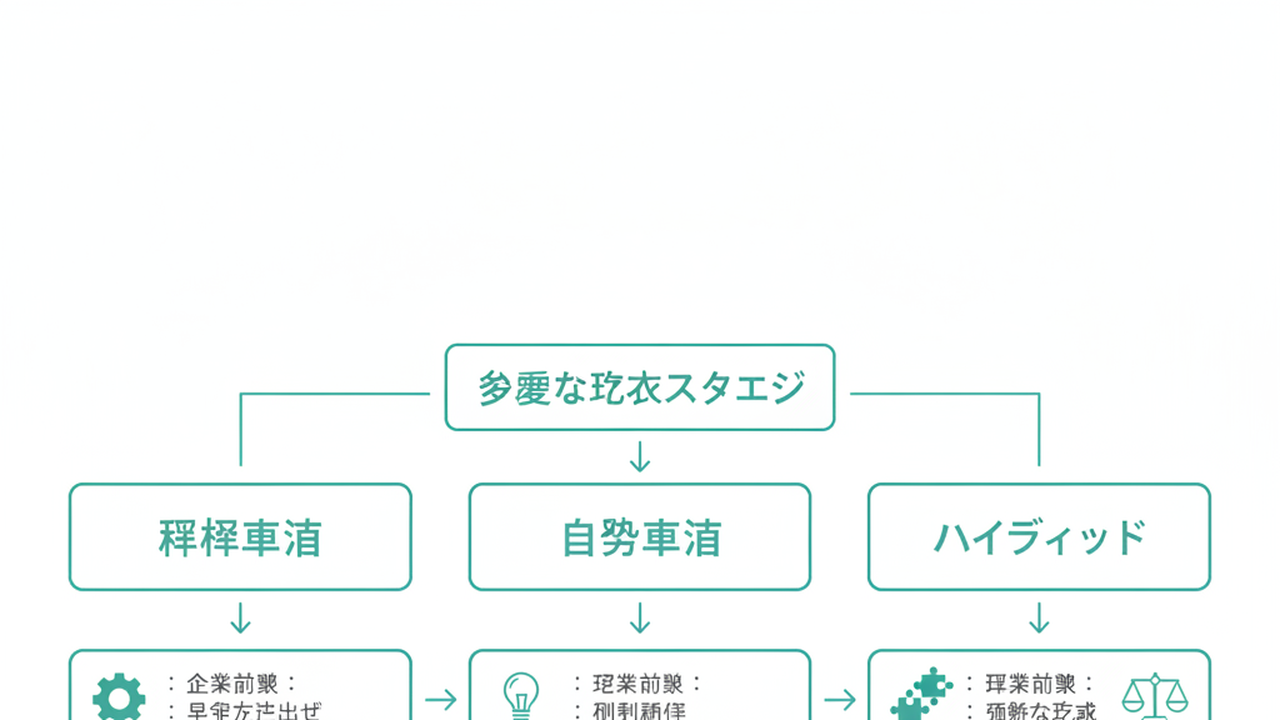
Before you “just book a training,” there’s one more layer of consideration: deciding between “training-first,” “self-study-first,” and “hybrid.” The choice shapes your ROI.
I use 3 questions to make the call.
Question 1: Does anyone inside the company know Claude Code already?
Claude Code runs from the command line. Some employees will inevitably get stuck on initial setup. Without “someone to ask” inside the company, questions dissolve after training ends.
If even one person already has hands-on Claude Code experience, self-study-first is viable. Organizations starting from absolute zero will see better adoption rates with training programs that include ongoing support (Digirise or AI Brain Partners-style).
Question 2: Can you carve out 20 hours of work time this month?
Getting to a level where Claude Code is genuinely integrated into someone’s workflow requires at minimum around 20 hours of “touch time.” That’s 30 min/day × 20 weekdays (10 hrs) plus 2 hrs × 4 weekends (8 hrs)—call it 18 hours.
If you can realistically give employees that time, self-study-first works. If you can’t block even 30 minutes per person per day, structured training—where time is forced onto the calendar—is more practical. Uravation’s 2-day intensive or Goodpatch’s half/full-day formats are designed for exactly this scenario.
Question 3: Does your team have capacity to handle the subsidy paperwork?
Using subsidies means someone handles the application documents. Organizations where HR and general affairs are stretched thin will get better time-efficiency from providers that manage the admin. The flip side: organizations that can run it internally have real room to compress costs with minimal training plus self-study.
The 3 questions yield 3 archetypes:
- Training-first (no internal guide, can’t protect time, admin capacity available): consider Digirise or AI Brain Partners long-form programs
- Self-study-first (internal guide exists, time can be protected, limited admin): self-direct, then add targeted training once you see the bottleneck
- Hybrid (internal guide exists, can’t protect time, admin capacity available): use Uravation 2-day or Goodpatch 1-day to align the whole org, then self-study for depth
Which archetype you pick up front determines how the next 3 months go.
Self-Study 3 Weeks Before Training: Build Your Own Baseline
For those who said “I want to try it myself first” or “I’m going self-study-first and need a 3-week roadmap”—here’s the route I’ve actually used.
Time budget: 30 min/weekday × 5 days + 2 hrs/weekend × 1 session = 4.5 hrs/week.
Week 1: Setup and First Command
Weekday 30 min × 5: read the Claude Code official documentation and set up your local environment. Get the API key, install the Claude Code CLI, and run your first command. Complete all of this within the week.
Weekend 2 hrs: bring one piece of your own business data and have Claude Code read it. Start with something non-confidential—a daily report, weekly summary, or sales data.
Week 1 goal: “a working environment exists.” Don’t push for actual workflow improvements yet. If you get stuck, the Claude Code getting-started article is a useful reference.
Week 2: Write One Business Script
Weekday 30 min: pick one repetitive task (templated email replies, data aggregation, meeting note summaries) and practice giving Claude Code instructions. Start short: “extract the total and average from this CSV” or “summarize this text from 3 angles.”
Weekend 2 hrs: the main event of Week 2. Pick one thing you currently do in Excel and try to replicate it in Claude Code. It doesn’t have to work perfectly. Understanding “what it can replicate and what it can’t” is the actual Week 2 goal.
By the end of Week 2, you’ll have a gut-level read on what Claude Code could mean for your organization’s specific workflows.
Week 3: MCP Connection and Link to Internal Data Sources
Weekday 30 min: learn the basics of MCP (Model Context Protocol) and run a connection test with one MCP server. MCP is the standard protocol that lets Claude Code connect to external tools—Slack, Notion, GitHub, and more. For a first pass, just getting an existing public server running is enough to get the feel.
Weekend 2 hrs: connect to one tool your company uses daily (e.g., Notion) via MCP and practice pulling data out. By the end, you’ll have a concrete picture of what “connected to our internal data sources” actually looks like.
Three-week goal: “able to make your own call on whether to invest in training, based on firsthand experience.” Whether you decide to go training-first or not, you’ll be making that decision from a position of direct knowledge, not speculation.
In my own experience, whether you develop the feeling “this fits our workflow” in the first 3 weeks is the strongest predictor of long-term adoption. Touch it before you train on it—this is the fastest path to maximizing your training ROI.
4 Questions to Ask Every Vendor Before You Sign
Before finalizing a provider, ask these 4 questions in your first sales meeting. Write them down in advance and compare the answers across providers.
Q1: What post-training implementation support is included?
“Training ends = support ends” is very different from “ongoing Slack/chat/recurring check-ins included.” Digirise builds follow-on support explicitly into the package; AI Brain Partners allows you to select it as a module. Uravation’s 2-day intensive is self-contained, with post-program support as a separate arrangement in most cases. Clarify exactly what the standard support window is before signing.
Q2: How do you handle skill-level variance within a cohort?
Corporate training groups often mix engineers, non-engineers, and executives. “One curriculum for all” vs. “branching by level” produces very different satisfaction rates. If you’re running the whole company through together, branching is more realistic. AI Brain Partners offers job-specific tracks (marketing, sales, accounting, HR); ZETTAi is designed specifically for non-technical beginners—your target audience determines which matters.
Q3: How often is the curriculum updated?
Claude Code evolves fast. A curriculum built 6 months ago may already be outdated. Ask for the last update date and next planned revision. Video-heavy packages carry higher content-aging risk; hands-on formats with live instructors can incorporate the latest developments in real time.
Q4: How far does the subsidy application support extend?
If you’re using the government subsidy, get clear on whether support stops at “providing document templates” or extends to “handling communication with the Labor Bureau.” The difference in your internal administrative load is significant. Chasing a cheap program and then burning down your team on paperwork is a trap worth avoiding.
Training Alone Won’t Stick: Design the 3-Part System, Then Start This Week

Organizations that successfully adopt Claude Code company-wide consistently run all 3 of these in parallel:
- Training: the fastest way to get people started
- Self-study: employees apply Claude Code to their own actual work
- Operations: knowledge accumulation and improvement loops become internal assets
Training is the “launch mechanism.” It doesn’t produce adoption on its own. Pure self-study creates a widening gap between early adopters and everyone else—Claude Code never becomes an organizational tool. Operations is what converts training and self-study outputs into lasting internal capability.
In my experience, if any one of the three is missing, the typical 3–6 month post-mortem is “we invested a lot but didn’t see results.” Design all three before picking a vendor.
The KAG case study (Claude Code Company-Wide Rollout: The Department-Level Use Case Map KAG Designed) organized use cases for 4 departments first, then activated Claude Code across all departments simultaneously. Digirise’s program (The Day Claude Code Enterprise Became a Product) embedded self-study and operations into the 60 videos × hands-on × 4-month cohort design. Both built “training + self-study + operations” as a single system, not training alone.
3 Actions for This Week
1. Run the 3-question assessment on your own organization. Answer “do we have an internal guide,” “can we protect the time,” and “do we have admin capacity” in your head. Takes 30 minutes. You’ll come out knowing which archetype—training-first, self-study-first, or hybrid—fits.
2. If you assessed as self-study-first, start with Week 1 setup. Follow the Claude Code getting-started article and get one person to install the CLI. In 3 days you’ll have a working environment. Cost baseline: Anthropic Claude Pro at around $20/month (check Anthropic’s official pricing page on the day you subscribe for current rates).
3. If you assessed as training-first, send simultaneous RFQs to 3 providers. Contact Uravation, Digirise, and AI Brain Partners with the same specs: headcount, target departments, desired timeline. Comparing responses reveals market pricing and each provider’s real strengths. For SMEs, include the subsidy admin support question in the same outreach.
When training becomes the goal itself, Claude Code adoption fails. First visualize what tasks will be running on Claude Code 3 months from now. Then design training and self-study backward from that image. Don’t get the sequence wrong.
Conclusion: Claude Code Corporate Training Has Entered the “Judgment” Phase
As of June 2026, Claude Code corporate training is a real market with 6+ services to choose from. More options means the selection decision is harder. The summary:
- Market snapshot: 6+ training providers, ranging from 2-day intensive to 4-month cohort
- 6 providers: 2-day intensive (Uravation) · 4-month cohort (Digirise) · custom (AI Brain Partners) · 10-day implementation (ZETTAi) · half/full-day (Goodpatch) · engineer-focused (Internet Academy)
- 75% subsidy: Human Resource Development Support Subsidy is now standard. Confirming the pre-training plan submission and post-training payment application timelines is the prerequisite
- Decision framework: “internal guide,” “time to protect,” and “admin capacity” → training-first / self-study-first / hybrid
- 3-week self-study route: Week 1 setup, Week 2 one business script, Week 3 MCP connection—then make the training investment call
- 4 vendor questions: post-training support / skill variance / curriculum updates / subsidy admin before signing
- 3-part system: training + self-study + operations—training alone doesn’t stick
The gap between organizations that start moving now and those that wait is closing fast—and the separation is happening in the next 6 months. Starting today with a 30-minute 3-question self-assessment is the move. That 30 minutes of judgment is what opens or closes the 6-month gap in organizational capability. Let’s go.

AIを使いこなせない方は、この先どんどん差がつきます。僕はAIエージェントを毎日動かして、壊して、直して、また動かしてます。そういう泥臭い実践の記録をここに書いてます。理論は他の方にお任せしました。僕は動くものを作ります。朝5時に起きてウォーキングしてからコードを書くのがルーティンです。