5 Traits of Successful Solo Founders: Reading Fast Company Through a 'What to Quit' Lens
Fast Company's 5 traits of the most successful one-person businesses, cross-referenced with Intuit QuickBooks Entrepreneurship in 2026 data and reframed through 'what to stop doing' — so you can identify one concrete action to take this week.
What you'll learn in this article
- The key point to grasp before reading the full article
- How the issue changes practical decisions after reading
- Which follow-up article is worth opening next

We’ve hit the ceiling on additive information. The 5 traits of solo founders I’m covering today shouldn’t be read as a list of things to add — they need to be read as a subtraction exercise.
Fast Company’s breakdown of “what the most successful one-person businesses have in common” — 5 traits, cross-referenced with Intuit QuickBooks Entrepreneurship in 2026 Report data — gets translated here into a “what to quit” framework. The Fortune piece (2026-05-18) arguing AI has hit its limits came out recently, and that context makes subtraction more powerful than addition right now. In my previous piece on Fortune’s “limits” story, I wrote that “there’s a ceiling on the ‘keep adding tools’ direction.” This article is the next step.
Three things you’ll be able to do after reading this:
- Read Fast Company’s 5 traits through a “what to quit” lens instead of “what to add”
- Convert U.S. 30M solopreneur market data into your own decision-making inputs
- Decide on one thing to quit this week and start testing it from Monday
Why Read “Successful Solo Founders” Through a Subtraction Lens Right Now
Three reasons: market data, the flow of AI coverage, and the reality on the ground for Japanese solo founders. In that order.
The U.S. numbers first. According to the Intuit QuickBooks Entrepreneurship in 2026 Report, non-employer businesses in the United States — operations run by one person with zero employees — number around 30 million and generate $1.7 trillion (roughly ¥255 trillion at ¥150/$). That’s 6.8% of U.S. GDP. In August 2025 alone, around 500,000 business applications were filed, of which fewer than 30,000 projected any hiring. That means 9 in 10 new businesses are designed from day one to run solo.
The AI coverage trajectory. On 2026-05-18, Fortune published “Solo founders are using AI to do the work of entire teams—but going it alone has limits.” The solo founder × AI combination is genuinely powerful — but has limits, the piece argued. In my previous article (Round 94, 2026-06-12), I broke down those limits into three buckets: ceiling on specialization, inconsistent quality in customer-facing work, and absence of strategic thinking. I called this the “implementation reinforcement phase.”
The reality for Japanese solo founders. Eight out of ten independent-track individuals I meet through consulting spend their time adding AI tools. Slack replaced by Discord, Claude Code stacked on top of Notion, Canva sitting next to Figma. Before long, 30 SaaS subscriptions are lined up. Monthly totals are eating into fixed costs. The switching cost becomes psychologically heavy.
What emerges from laying these three side by side is the ceiling on “addition.” The market isn’t saturated. AI is powerful. But one person’s time and decision-making capacity has a hard ceiling. That’s why I’m reading the Fast Company 5 traits today not through “what to add” but through “what to cut.” Subtraction as the second move in the implementation reinforcement phase.
One terminology note: “solopreneur” (a blend of “solo” and “entrepreneur”) refers to someone running a business independently. Fast Company’s article uses “one-person business.” In this piece I’ll use “solo founder,” “solopreneur,” and “one-person business” interchangeably depending on context.
Breaking Down the Fast Company 5 Traits
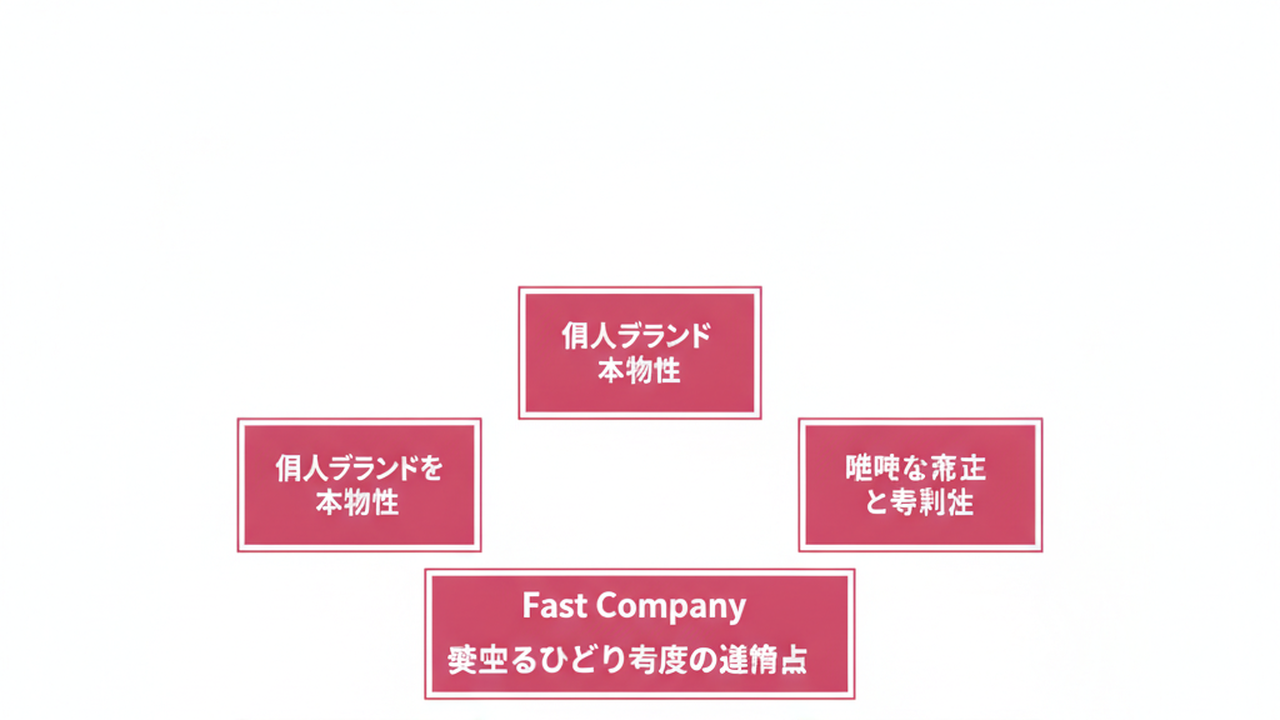
Fast Company’s “The most successful one-person businesses do these things” listed 5 traits. Based on what’s verifiable from the published snippet, here they are in Japanese context:
1. Clear Focus & Specialization
The most successful solopreneurs occupy what looks, from the outside, like a strangely narrow micro-niche. One clear offer, aimed at one clear customer segment, refined to a sharp edge. They resist generalization and lean all the way into specialization.
2. Strong Systems & Automation
Their delivery process doesn’t require the owner’s constant involvement. They have one reliable customer acquisition channel that consistently generates demand. They’ve also translated the personal from systemic — the business runs on documented process, not on individual muscle memory.
3. Leveraging Technology & AI
The highest performers are executing a combination of business fundamentals plus leading-edge technology. AI tools have dramatically reduced the production cost of content, code, design, and customer support. Client volumes that would have required a team of five two years ago are now manageable solo.
4. Emotional Intelligence & Work-Life Balance
They treat their own mental state as part of their business infrastructure. The era of hustle-driven burnout is over; the era of emotional intelligence as a core entrepreneurial competency has begun — that’s the field-level read the article presents.
5. Strong Personal Brand & Authenticity
They build trust as their genuine selves rather than projecting a polished corporate persona. They don’t imitate companies.
Stopping here makes it easy to feel like you have to do all five. I felt that way too, right after going independent. I bought the books. Hired the coach. Tried to execute everything at once. The result: nothing went deep enough to matter. I was a year behind where I should have been.
These 5 traits aren’t designed to be executed all at once. They need to be read in sequence, through a subtraction lens. The next section sets up the reading with U.S. data.
What the Intuit QuickBooks 2026 Numbers Actually Mean
The Intuit QuickBooks Entrepreneurship in 2026 Report, referenced in the Fast Company piece, significantly changes how the 5 traits should be read.
The surge in aspiring founders. The survey found 1 in 3 U.S. adults plans to start a business or side hustle this year — up 94% from the prior year. Nearly double. What’s important here is how the composition of “people with a plan” has changed. The salaried side-hustle crowd has shifted into primary-income mode. Japanese data follows: Doda’s survey showed the freelance implementation rate crossed 20% in 2025. The same wave is crossing the Pacific.
AI as baseline, not experiment. Over 60% of those planning to start a business said they plan to use AI in launching or operating it. This isn’t “trying AI” — it’s “designing with AI as a given assumption.” Trait 3 (Leveraging AI) is becoming standard equipment for more than half the new-business population. Invert that: not integrating AI doesn’t just limit differentiation — it means you can’t even reach the same starting line.
The networked solo format. Here’s the most interesting data point. According to the QuickBooks Entrepreneurship in 2026 Report, 66% of solopreneurs plan to use freelancers in the next 12 months. Separately, 60% plan to hire at least one employee or contractor. A different study from Gusto found that the contractor networks built by solopreneurs form a “hidden economy” worth $72 billion.
This redefines what “solo founder” means. Not “completely alone,” but “one person at the core, coordinating external collaborators as needed.” I call this the “networked solo.” As I’ll discuss shortly, Trait 2 (Systems & Automation) includes standardizing that external coordination.
Translating to Japan. Mapping U.S. numbers directly onto Japan is sloppy, but the direction is clear. Small and Medium Enterprise Agency white papers show freelance populations rising consistently year over year. Among my clients — solo founders three years in or more — more than half say they plan to expand contractor use “eventually.” The problem is whether they have a framework for deciding when, where, and with whom.
Viewed through these numbers, the Fast Company 5 traits transform from an “everything to do” list into a checklist for deciding what to hand off. The next section rewrites each trait through the subtraction lens.

Implementing the 5 Traits Through Subtraction
Here I reframe each trait not as something to add, but as something to stop — while preserving the original intent, through Mikoto’s implementation lens.
1. Specialization is implemented by keeping the “don’t expand” rule
People who intellectually understand “stay in the niche” expand in practice anyway — because it’s scary. “Can I really live on just this?” triggers anxiety, and you reach into adjacent territory. Right after going independent, I took SEO projects, consulting projects, anything social media-adjacent. Specialization thinned out. Referrals dried up. I lost a year.
What to stop: the reflex to expand. Concretely: for any incoming inquiry outside your core area, don’t say yes on the spot. Run it through three criteria: ① Is this a derivative of an existing client relationship? ② Does it deepen your specialization? ③ Can you refer it to a peer? Any “no” and you decline. That alone stops the drift.
2. Systematization advances by stopping the habit of doing everything yourself
People who struggle to build systems believe that handling everything personally is faster. It is — at first. It collapses around month three. Tasks pile up; you become the single point of failure.
What to stop: the design where everything runs through you. Write an SOP (Standard Operating Procedure) and hand it to a freelancer, or delegate to an automation tool. As Nagi noted in the article “AI Agents Enter the Operations Phase”, AI agents in 2026 have moved from “tools to try” to “infrastructure to run.” For solopreneurs, that means each manual task can be cut from your plate, one by one.
3. AI adoption gets better by stopping the habit of hoarding every SaaS
Keep adding AI tools and your monthly fixed costs balloon. Switching costs become psychologically heavy. The energy for evaluating new tools drains away. A negative spiral.
What to stop: the reflex to “just subscribe.” Evaluate any new SaaS against three criteria before signing up: ① Can it replace and cancel one existing SaaS? ② Can its impact be measured within 30 days? ③ Is cancellation a 5-minute process? With these gates, your tool stack stays at 3 to 5 tools. Referencing the use-case patterns in Nagi’s “Claude Code: 8 Use Cases”, picking the single one closest to your work is the practical recommendation right now.
4. Emotional intelligence and work-life balance improve by stopping the “hustle syndrome”
The self-deceptions — “working weekends means I’ll grow faster,” “watching Slack 24 hours shows commitment” — are outdated. Fast Company’s article and the Intuit QuickBooks survey both indicate that solopreneurs who burn out have lower business continuity rates.
What to stop: always-on mode. Concretely: on Monday morning, list out the week’s decisions, and designate one day per week as a “zero-decision day.” I block Tuesdays and Thursdays — no meetings, Slack only in the evening. Thinking quality returns.
5. Personal brand gets built by stopping the “imitate a corporation” reflex
When solopreneurs mimic corporate marketing, it almost always fails. Press release-style posts. Corporate-logo-style profile photos. SaaS product page-style landing pages. All of it works in the direction of erasing personal distinctiveness.
What to stop: the habit of imitation. Switch your social media tone from formal to your natural voice, put your face on the landing page, stop hiding failures. Fast Company’s “Authenticity” doesn’t mean polished perfection — it means unprocessed, genuine you.
That’s all five traits reframed through subtraction. The next section provides a decision framework for picking just one to act on this week.
The One Thing Japanese Solo Founders Should Quit This Week
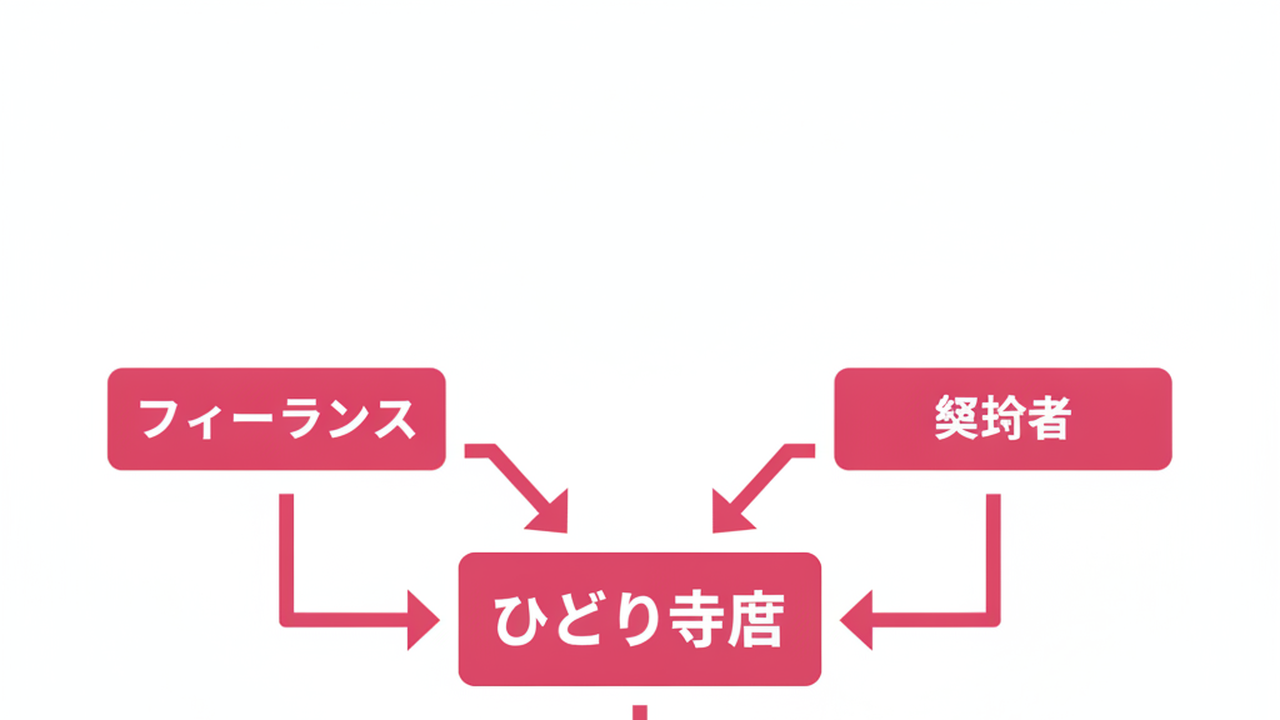
Quitting all five is impossible. Pick one. I’ll say that without hedging. But without a selection framework, you’ll always reach for the same items (3 or 5, typically) while the critical 1 and 2 stay permanently deferred. So here’s the framework.
Step 1: Write your bottleneck in 1 minute
In your business right now, what is the one thing that, when it jams, stops everything? Answer in 60 seconds. If nothing comes, list the tasks you’ve postponed in the past two weeks and look for what they have in common.
- If sales/acquisition is stuck → Trait 1 (stop expanding) or Trait 5 (stop imitating corporations)
- If delivery/fulfillment is stuck → Trait 2 (stop handling everything yourself) or Trait 3 (stop hoarding SaaS)
- If your own time is stuck → Trait 2 or Trait 4 (stop the hustle syndrome)
- If recognition/differentiation is stuck → Trait 1 or Trait 5
Between the two traits that map to your bottleneck, choose the one you feel more resistance toward. More resistance means you’ve been avoiding it — and avoidance means more room for improvement.
Step 2: Design a 7-day test
For the one trait you’ve chosen, decide on a single thing to measure across Monday through Sunday.
- Trait 1 (stop expanding): number of outside-scope inquiries declined, and time saved
- Trait 2 (stop handling everything yourself): number of tasks converted to SOP and contractor delegation rate
- Trait 3 (stop hoarding SaaS): number of subscriptions cancelled and monthly savings
- Trait 4 (stop the hustle syndrome): number of zero-decision days achieved and 5-point self-rating of mental clarity
- Trait 5 (stop imitating corporations): number of authentic-voice posts published and engagement rate
One metric. Coarse data is fine. All you need is enough to answer: “Did I actually stop?”
Step 3: Monday start and Sunday check-in
Monday morning, write the one trait you chose in a visible place — notebook, Notion, Slack standup, anything works. Sunday night, record the number you measured in one line. That’s it.
I’ve picked my own one item for this week: Trait 3 (stop hoarding SaaS). I listed out every SaaS I’ve contracted in the last 6 months — 12 total. I’m actively using 4. I’ve decided to start by cancelling 2 of the remaining 8. Monthly savings: roughly $80 (~¥12,000 at ¥150/$). I’ll write up results in next week’s piece. No hiding failures. No polishing successes. Just the record.
Connection to Nagi’s “Organization Management” article
Nagi’s piece “AI Agent Organization Management” organizes the idea of treating AI agents as “colleagues.” For solopreneurs, this becomes the implementation foundation for Trait 2 (stop handling everything yourself). AI agents get the same treatment as outsourced contractors — a cycle of contracting, directing, and evaluating. If what you’re stopping is “doing everything yourself,” what goes in its place is “delegation to AI agents.” That’s the direction the next piece will take.

Summary: You Don’t Need to Do All Five — Just Quit One
The 5 traits Fast Company surfaced in the most successful solo founders don’t all need to be executed. Reading the Intuit QuickBooks Entrepreneurship in 2026 Report data, even among the U.S.’s 30 million solopreneurs, no one is executing all five perfectly. The people getting results are the ones going deep on one.
Two things I wanted to say in this piece. First: we’ve already hit the ceiling on additive information. AI tools, contractors, SaaS — the addition approach isn’t moving the needle anymore for most people. Second: choosing just one of the five traits to quit is enough to move your bottleneck. No perfect plan required. Pick one trait this week.
I chose Trait 3 — stop hoarding SaaS — for this week. I’ll write the results in next week’s piece. Failures don’t get hidden. Successes go in as-is. That’s what the on-the-ground record of the “implementation reinforcement phase” looks like.
Stop waffling and move. Failing is fine. First-movers win. But decide one thing before you move: “What am I quitting this week?”
References
- Fast Company “The most successful one-person businesses do these things”: https://www.fastcompany.com/91556512/the-most-successful-one-person-businesses-have-these-things-in-common
- Intuit QuickBooks Entrepreneurship in 2026 Report: https://quickbooks.intuit.com/r/small-business-data/entrepreneurship-in-2026/
- Gusto “Not So Solo: How Solopreneurs Build Contractor Networks and Power a $72 Billion Hidden Economy”: https://gusto.com/resources/gusto-insights/72b-solopreneur-economy-2026
- Fortune “Solo founders are using AI to do the work of entire teams—but going it alone has limits” (2026-05-18): https://fortune.com/2026/05/18/solo-founders-ai-automation-entire-teams-entrepreneurs/

女性だからこそ、AIを使いこなさなきゃって思ってる。仕事も、副業も、推し活も、旅行も、全部やりたい。人生一度きりなのに時間は足りないじゃん?だからAIに任せられることは全部任せる。浮いた時間で本当にやりたいことをやる。それがあたしのスタイル。ここにはあたしが実際にやったことをまとめてるだけ。誰かのためになったらいいなって思って書いてるよ。