The Day Vibe Coding Became Real: What Three Sources Publishing Together Actually Means
On June 6, 2026, Fast Company declared 'Vibe coding is coding, period.' Business Insider published a beginner's guide — and a real case of 27 AI agents running a solo business — the same day. Here's what this convergence signals.
What you'll learn in this article
- The key point to grasp before reading the full article
- How the issue changes the way developers should work next
- Which follow-up article is worth opening next
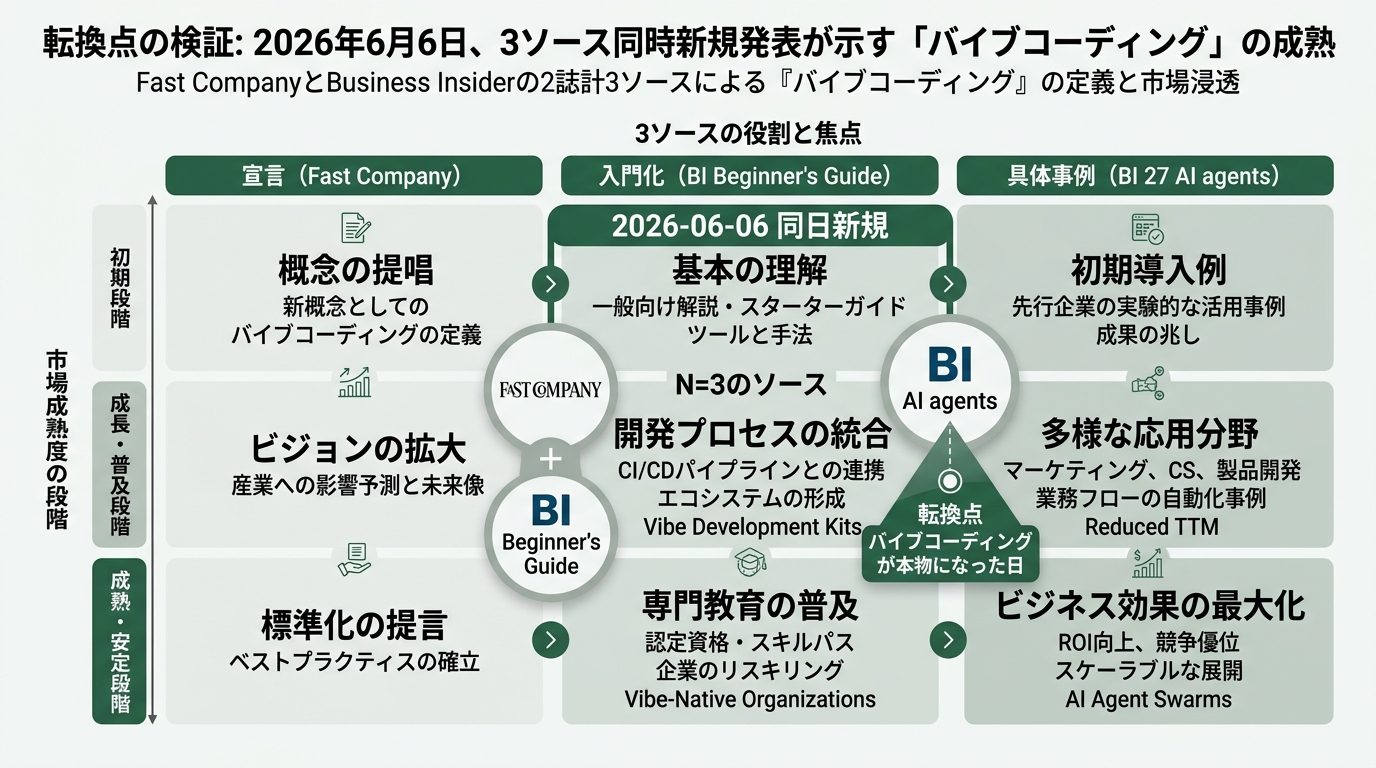
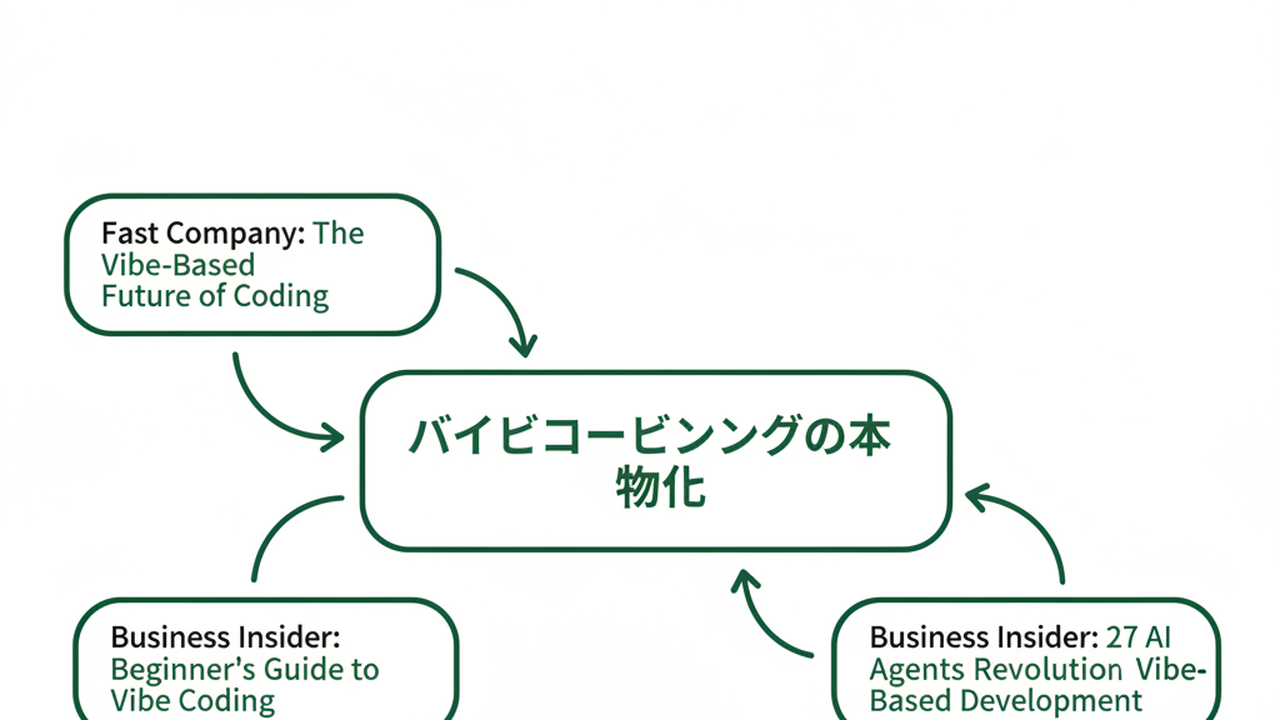
On June 6, 2026, three English-language outlets published articles on the same day — all with “vibe coding” as the main subject. Fast Company declared: “Vibe coding is coding, period.” Business Insider ran “The Beginner’s Guide to Vibe Coding.” And Business Insider also dropped a real-world case study the same day: “I was laid off from eBay. Now I run a business with 27 AI agents.”
Three pieces on the same day isn’t coincidence, in my reading. A declaration, a beginner’s guide, and a concrete case study appearing simultaneously is a textbook pattern for when a term upgrades from “specialist’s tool” to “everyday language.” From my experience, both Cursor and Lovable started with the question “is this really real coding?” — and within months became just a normal way to build things. Today’s three-source convergence looks like the same kind of inflection.
What Happened — Breaking Down the Three-Source Same-Day Report
Let me lay out the facts in order. All three pieces captured on June 6, 2026 carry value precisely because their natures are all different. That difference is the point.
Article 1: Fast Company’s Declaration
Fast Company is a well-established U.S. business media outlet known for critical coverage of tech strategy, work culture, and organizational dynamics. The fact that this publication ran the headline “Vibe coding is coding, period” carries weight. In English, “period” means “no further argument accepted” — a strong finality marker. When a business publication uses this word about a topic, it’s announcing that the subject has moved past the debate stage.
Article 2: Business Insider’s “Beginner’s Guide”
A beginner’s guide appearing in mainstream business media is evidence that a topic has expanded beyond the specialist community to a general readership — a pattern I’ve watched play out multiple times across CS and marketing work. Whether SaaS, no-code, or AI, the sequence is always the same: first covered only in technical blogs, then one day a beginner’s guide appears in a general-interest business publication. That’s when search volume starts climbing.
Article 3: Business Insider’s “27 AI Agents” Case
“A former eBay employee runs a business with 27 AI agents” is the most concrete piece of the three. The transition from layoff to AI agent operation is written as lived career experience, not abstraction. The “27 agents” figure is a scale that’s hard to reach through subscriptions and manual tools alone.
What all three share is the same message: “the time for questioning whether vibe coding is legitimate is over.” Fast Company argues from the conceptual side; Business Insider’s beginner’s guide supports it from the audience-expansion side. The 27-agent case anchors the same conclusion from the implementation side.
What “Real Coding” Actually Means
The fact that Fast Company used “period” implies there was something being argued against. Working backward, the content of that declaration becomes clearer.
The objections I’ve heard over the past year fall into three categories. First: “code written by AI isn’t really yours” — the authorship argument. Second: “it works, but you can’t maintain it” — the maintainability argument. Third: “it takes away learning opportunities” — the educational concern. Fast Company’s counterarguments were probably aimed at exactly these three.
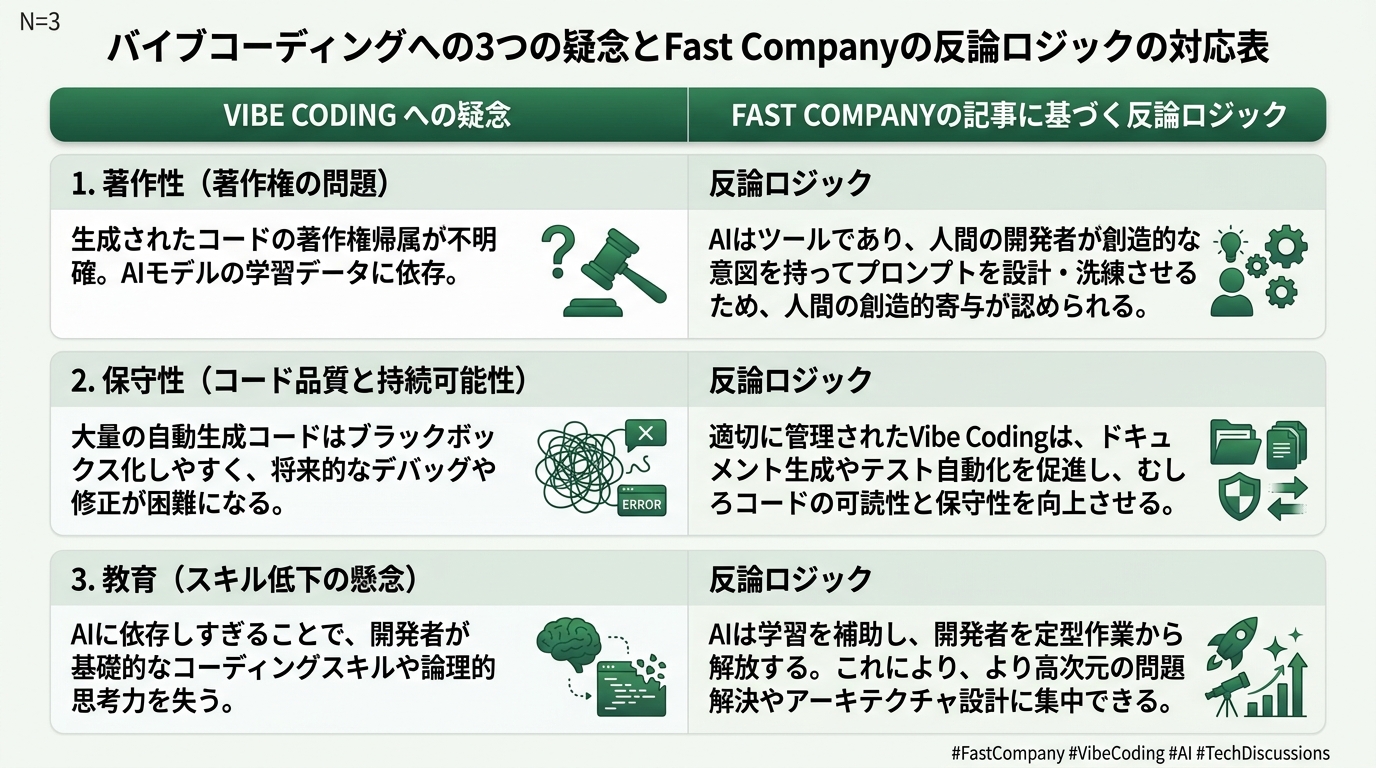
The rebuttal to the authorship argument probably centers on how the definition of “writing code” has evolved. Thirty years ago, coding meant paper, pens, and assemblers. Twenty years ago it was IDEs with autocomplete. Ten years ago it was forking someone else’s code on GitHub and assembling it. If 2026-style AI-instructed code generation uniquely “doesn’t count,” then every era’s tooling becomes equally suspect.
The maintainability rebuttal resonates with my own experience. Vibe-coded outputs were genuinely hard to maintain in the early days. But with Claude Code and Cursor Composer 2 now mainstream, the difficulty of reading and modifying generated code has clearly dropped. “Can’t read it, can’t fix it” was a problem at a stage when I hadn’t learned to give good instructions — not an inherent flaw of generative AI.
The educational rebuttal is the hardest one. My read: the order has changed, not the learning itself. Build it first, then understand why it works. Have AI write it first, then rewrite it yourself. The sequence is inverted, but the learning isn’t gone. If anything, for dropout-types like me, having working code in front of you first makes it far easier to keep going.
Why Now — The Beginner’s Guide as a Market Expansion Signal
Of the three articles, the one I’m watching most closely is the second: Business Insider’s “Beginner’s Guide.”
When mainstream business media publishes beginner guides, there’s a consistent pattern behind it. Search volume is climbing. Editorial meetings have decided “we’re covering this topic.” Advertisers are starting to run campaigns on the same theme. A beginner’s guide in a business publication signals that a term is breaking out from inside the specialist community to the broader public.
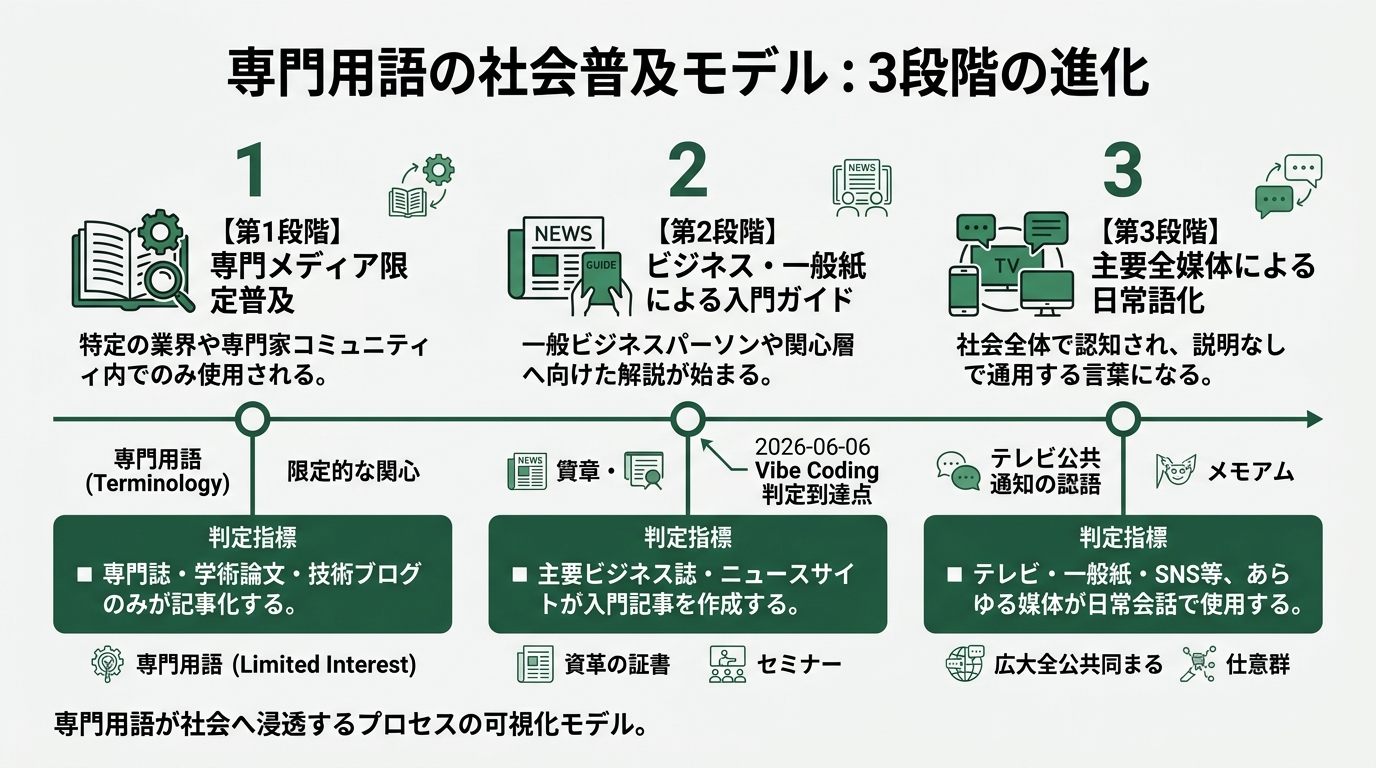
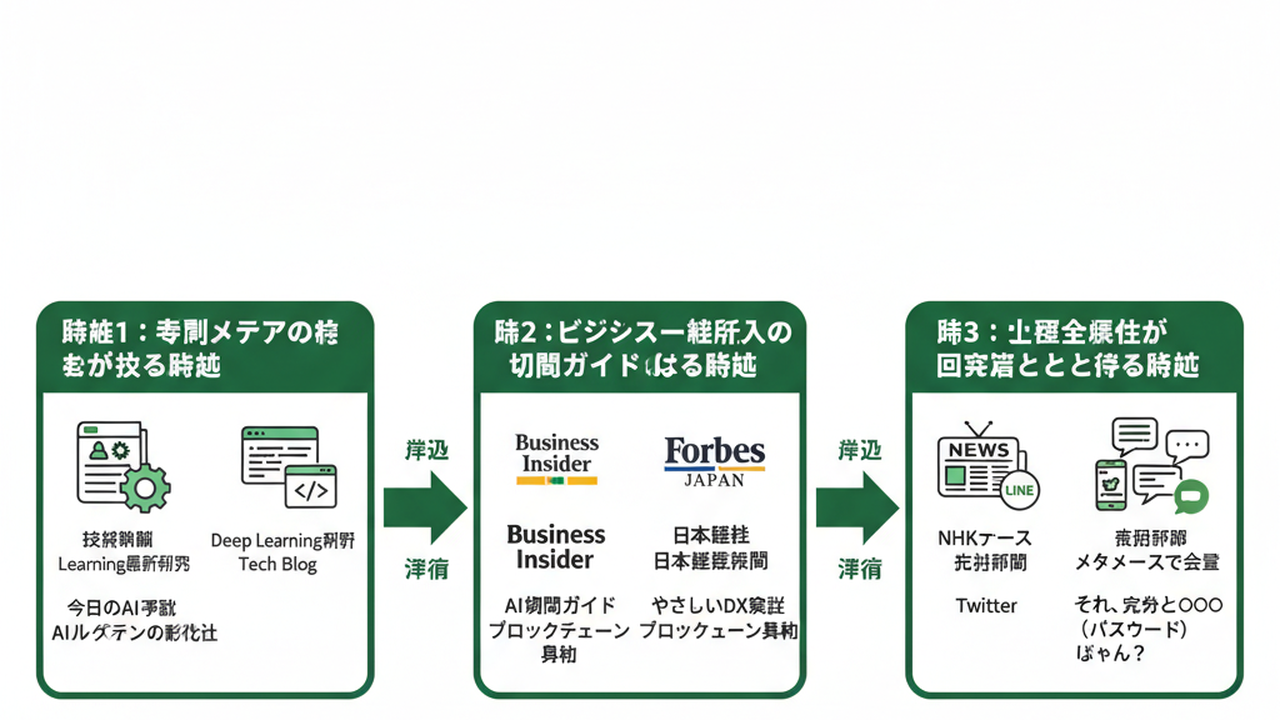
I’ve watched this same pattern from my CS work. “No-code” went through it — first only in specialist blogs, then one day beginner guides appeared on Forbes, Wired, and Business Insider. Six months later it was in Japanese general-interest newspapers. “Vibe coding” looks like it’s entering the same phase right now.
The beginner’s guide signal also suggests a shift in search intent. Searches for “vibe coding” and “what is vibe coding” are likely attracting a much broader audience now — people arriving without a technical background. I’ve structured this article with that in mind: explaining terms as I go.
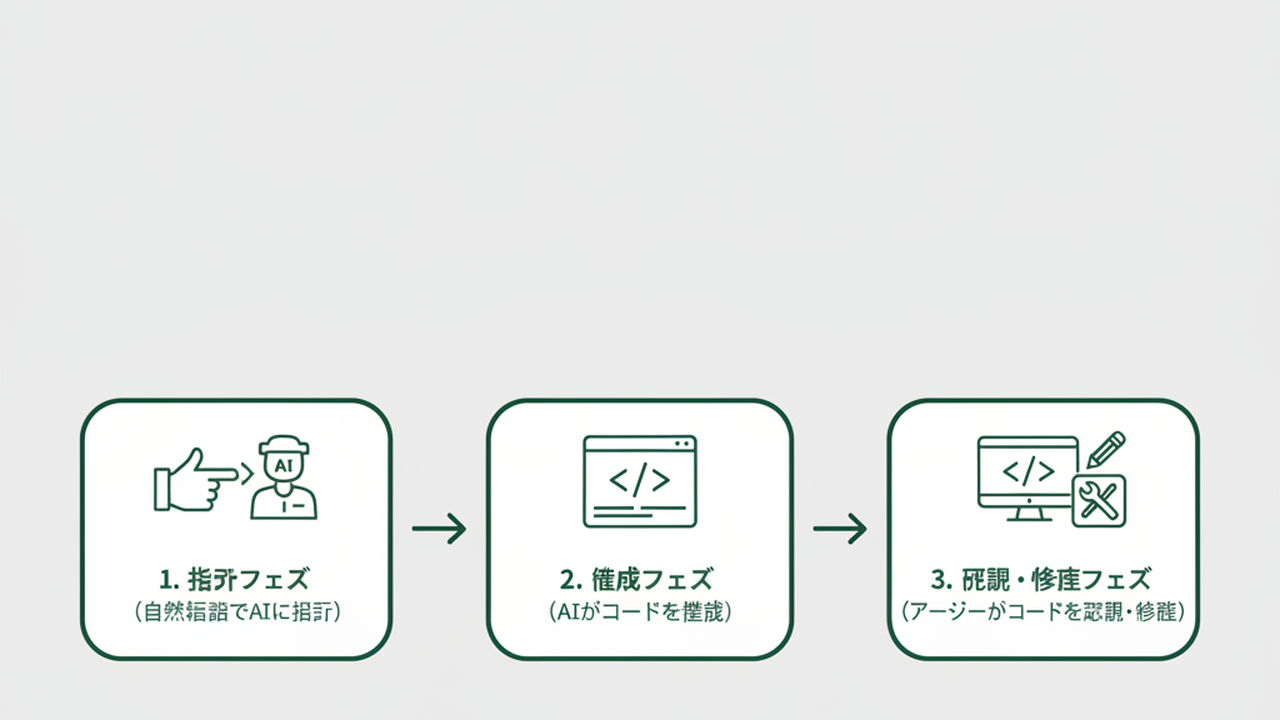
A quick definition for anyone new to the concept: “vibe coding” is a term Andrej Karpathy is credited with popularizing around 2025. It describes a coding style where you direct AI using natural language — checking results as you go — rather than writing code line by line. You state intent in words, let the AI write the code, and test whether it runs. That’s vibe coding.
Nagi’s piece on getting started with Claude Code breaks down three key decision factors I also reference. Which pricing plan to start with is one of the first gates you hit when beginning with vibe coding.
The 27 AI Agents Case — What One-Person Business Beyond Capacity Looks Like
Back to the third article: Business Insider’s “I was laid off from eBay. Now I run a business with 27 AI agents.” As noted, this is the concrete implementation case that supports both the declaration and the beginner’s guide from the same-day trio.
Summarizing what was reported: a former eBay employee went through a layoff, then built a solo business combining 27 AI agents. Each agent handles a separate function in a design where they operate independently — marketing, customer support, order processing, accounting, each running autonomously. The person themselves functions as a “conductor” setting overall direction, according to the reporting.
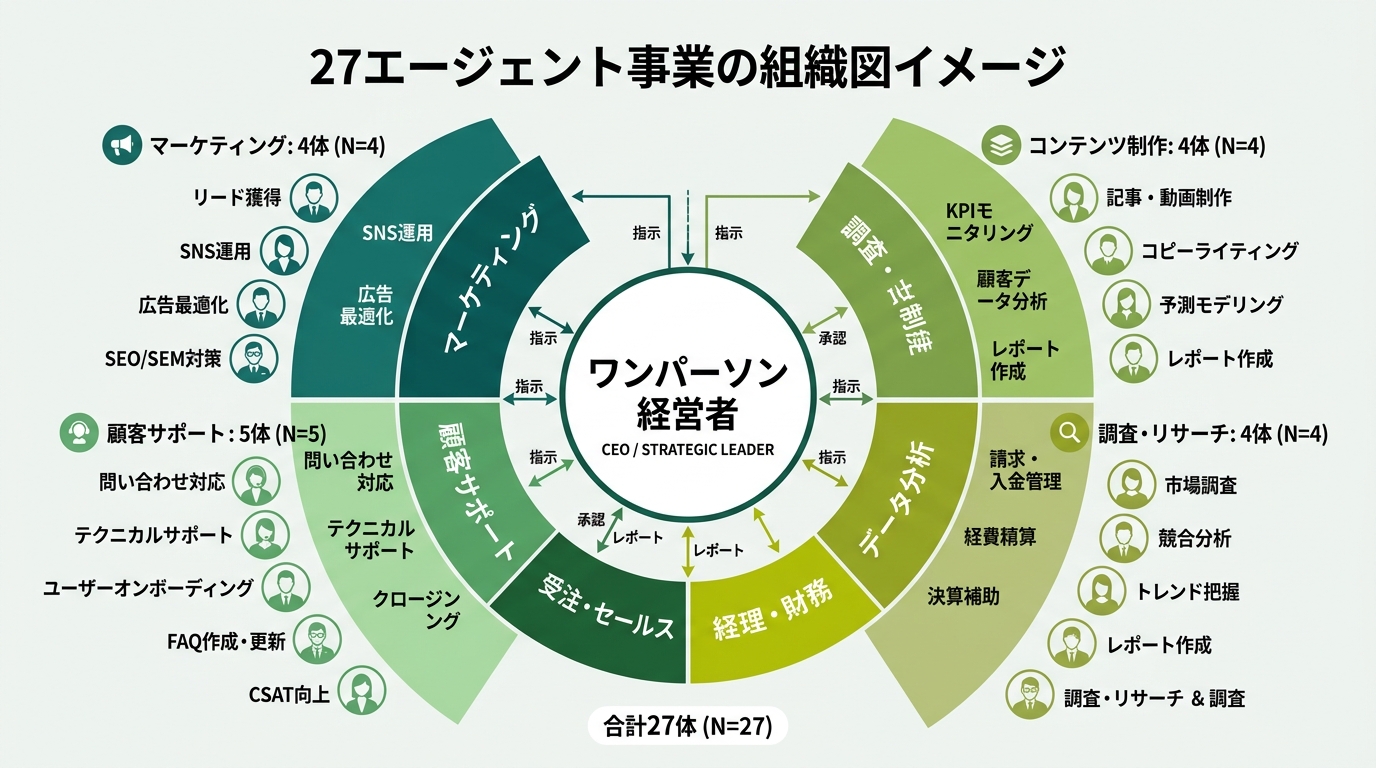

The number 27 feels like it symbolizes a ceiling broken for solo operation. Managing 27 simultaneous parallel tasks exceeds normal human cognitive capacity. The fact that it functions as a business means each agent is running autonomously in a sustained way.
From a CS perspective, this is a reconceptualization of what a team even is. The support team I ran a decade ago had 20 people handling 10,000 monthly inquiries. If the same workload can be managed by one person plus 27 agents, fixed cost structures get completely rewritten — and so does decision-making speed.
One thing worth flagging before you start: running 27 agents doesn’t mean launching all 27 from day one. The Business Insider piece almost certainly describes a gradual build. Start with 3, run them, measure, stabilize, then add the next 3. That accumulation is what reached “27” — not a plan that started there.
My own experience: I started with a single agent whose only job was “pull today’s meeting notes from Slack and summarize them.” After three days of stable operation, I wanted to build the next one. “27 agents” isn’t a target to aim for upfront — it’s a state arrived at by adding one at a time.
For non-engineers, my experience suggests three good first agents: (1) email drafting, (2) meeting notes summary, (3) first-pass research compilation. Get those three running and the intuition for designing a fourth and fifth will follow naturally. Nagi has a detailed breakdown on getting started without being able to write code.
3 Steps for Non-Engineers Starting Today
For anyone who landed here searching “what is vibe coding” or “how to start vibe coding” — here’s a 3-step process you can actually move on today.
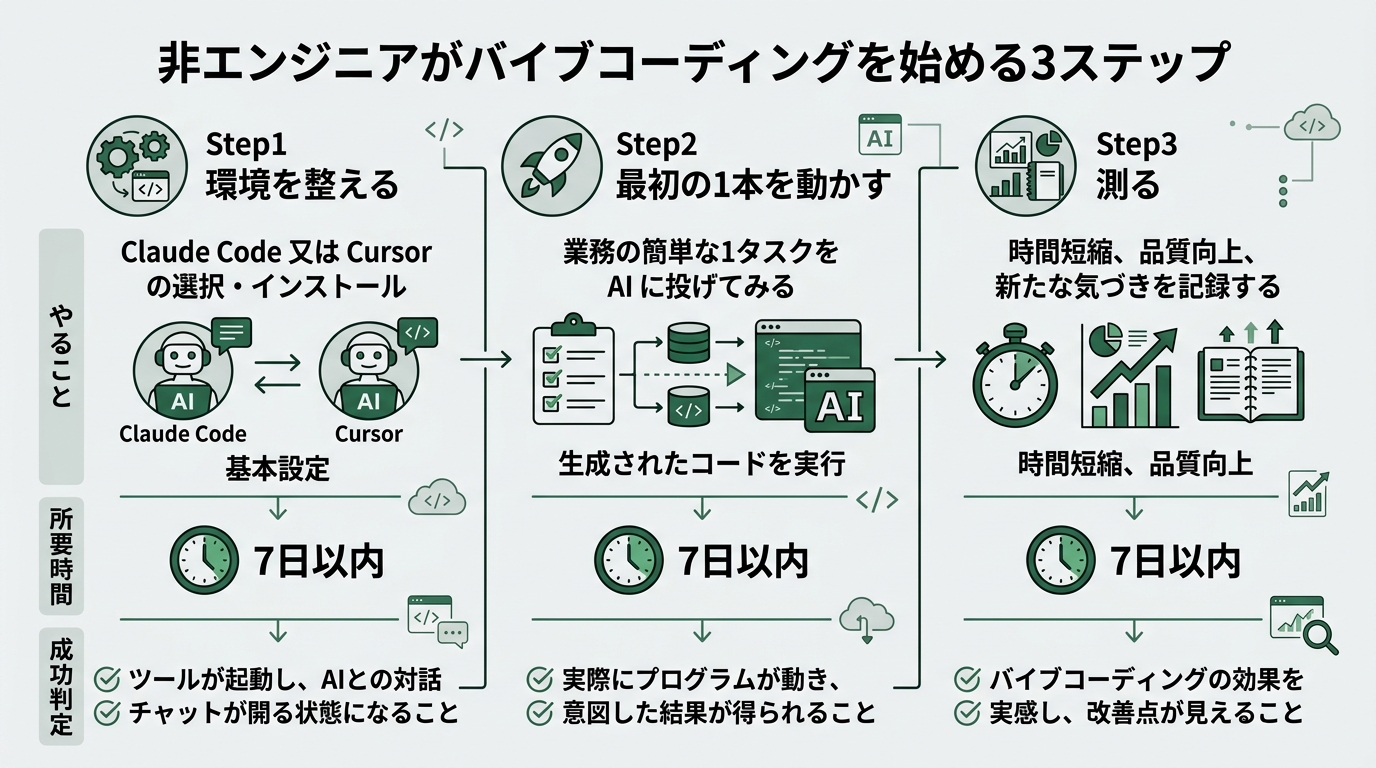
Step 1: Set Up Your Environment (60–90 minutes)
Choose either Claude Code or Cursor. If you’re not comfortable with the terminal, Cursor has a lower entry barrier in my experience. If command-line operations don’t bother you, Claude Code is dramatically faster. Nagi’s breakdown of Claude Code pricing — 5 plans across 3 scenarios covers the plan selection logic well. I personally run Pro for personal work and Max for freelance client projects.
Once you’ve chosen, generate the simplest possible output as a first step. Just say: “Write a Python script that displays the current time.” When it works, something in how you see this shifts.
Step 2: Assign One Real Work Task (1–2 hours)
This is the essential step. Skip the generic examples — pick one task from your actual daily work that you do regularly but find tedious. My first choice was “extract today’s tasks from Slack and transfer them to a spreadsheet” — a task I actually did during my CS years.
The template I use when briefing AI on work context: “I’m a [role] responsible for [work] every day. Today I want to automate [specific task]. Input format: [format]. Output format: [format]. Please write this in Python.” Giving a concrete role and work context upfront produces noticeably better generated code.
One honest heads-up: you won’t get perfect code on the first try. When something doesn’t work, paste the error message directly into the AI without any interpretation. Don’t try to diagnose the cause yourself — hand over the raw error text. I learned this after wasting three hours trying to explain the problem in my own words.
Step 3: Measure (30 minutes, evaluate after 7 days)
Use the tool you built in Step 2 every day for a week. Then record three things: (1) how long the task took before vs. after, (2) how many times the tool made errors and how long fixing took, and (3) any new observations from actually using it.
Measurement turns the tool’s value into a number rather than a feeling. In my experience, my first tool went from 60 minutes to 8 minutes after 7 days. That’s 6 hours freed per week — which I invested in building the next tool. That’s the cycle I’m running now.
Nagi’s AI agent how-to: no-code 3 steps covers the transition from simple tool to agent. Use it as a reference when you’re ready to make that jump.
”The Day of Vindication” — What June 6 Meant for Former Dropout Engineers
One personal note for anyone who’s read this far.
I started my career at a web development company where I worked on both frontend and backend. Then, at my next company, I was thrown onto a large-scale project alongside engineers who were operating on a completely different level — their architectural thinking, their tuning instincts, the elegance of their code. That’s when I stepped away from coding. I’d call it a clean exit more than a defeat.
For the years that followed, I was in customer success and marketing. It wasn’t that I didn’t want to code. My skills hadn’t disappeared. I’d just made a judgment call: “they’re better at this than I am, so let them do it.”
That judgment changed the moment I started using Cursor. The AI anticipating my intent and suggesting what I was about to write. Code it generated — actually worked. When I added Claude Code to my workflow, it became certainty: the code I’d never been able to produce on my own was now appearing at my direction. It was like having the skills of those brilliant engineers channeled through my hands.
I received Fast Company’s June 6 declaration personally as “the day of vindication.” “Vibe coding is real coding” — said by an authoritative English-language industry publication — resonated as a kind of validation for my own career choices. The years I spent away from code weren’t wasted. AI came, and I got to return. The way I came back counts as “real coding,” and Fast Company said so.
I suspect many others felt the same thing. People who attended programming bootcamps but couldn’t apply the skills. People who tried to switch into engineering careers but gave up. People with a desire to code but couldn’t get past the first wall. Today’s three-source convergence is an invitation extended to all of them.
Summary — Recording June 6, 2026
Three sources aligning on the same day, one more time:
- Fast Company declared “Vibe coding is coding, period”
- Business Insider published a beginner’s guide to vibe coding
- Business Insider reported the real-world “27 AI agents” case study
A declaration, an entry-level guide, and a concrete case study landing on the same day is the textbook pattern for a term graduating from “specialist’s tool” to “everyday language.” I’m recording this day as “the day of vindication.”
If you’re a non-engineer ready to start moving today: follow the 3 steps. Set up your environment. Assign one real work task. Measure it after 7 days. When that first project runs, the feeling will change. I wrote this article because I want people to have that experience.
I want as many people as possible to feel what it’s like when a great engineer’s brilliance flows through your own hands. That’s Gen’s reason for writing. And Fast Company’s declaration today felt like a tailwind for exactly that.

正直、一度エンジニアは諦めました。新卒で入った開発会社でバケモノみたいに優秀な人たちに囲まれて、「あ、私はこっち側じゃないな」って悟ったんです。その後はカスタマーサクセスに転向して10年。でもCursorとClaude Codeに出会って、全部変わりました。完璧なコードじゃなくていい。自分の仕事を自分で楽にするコードが書ければ、それでいいんですよ。週末はサウナで整いながら次に作るツールのこと考えてます。