GEO Is Over. AI Visibility Design Is What Comes Next: 7 Tactics, 3 Traps
Spent two years on GEO and still not getting cited by AI? The problem isn't your tactics — it's that you're still optimizing when you should be designing. Here's the shift, the 7 practical moves, and the 3 traps you'll definitely step in.
What you'll learn in this article
- What changed in AI search and content discovery
- Which metric or operating rule matters before shipping more content
- Which follow-up article expands the strategy from another angle

Two years of GEO work. Still not getting cited by AI.
If that’s where you are, you’re not alone. I was there too. Added FAQ sections, cleaned up heading structure, put in schema markup, cited primary sources. Did everything on the checklist. But when I searched my own topics in ChatGPT, Claude, or Perplexity — nothing.
The reason turned out to be simple. I was still in the “optimization” mindset.
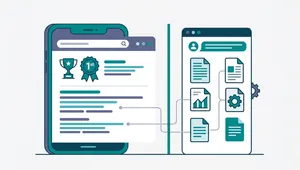
In mid-2026, the industry context has clearly shifted. The optimization phase is over. What comes next is the design phase. Design what? The structure that gets cited. The format that gets selected as an answer. The trust that accumulates in layers. Assembling those three things with intention is now the core job for anyone serious about content marketing.
This article lays out 7 practical tactics for the design phase and 3 traps that almost everyone steps in. Take home 3 concrete actions you can start this week.
[[IMG:1]]
Why This Is the Design Phase: Three Turning Points
“From optimization to design” isn’t abstract. Here’s what actually changed.
Turning Point 1: The search entry point moved to AI
Google AI Overviews launched in the US in May 2024, expanded to 100+ countries by October 2024 — including Japan from August 2024 — and as of mid-2026, the top real estate on the search results page is an AI-generated answer (Google Official Blog).
At the same time, ChatGPT’s weekly active users reportedly crossed 400M (Brad Lightcap, reported by CNBC, February 2025). Claude, Perplexity, and Gemini are all expanding independently. The segment of users who “search and then read an article” has been materially replaced by users who “ask AI and let it summarize.” It’s no longer a fringe behavior.
“Rank #1 on Google” is no longer the marketing finish line. “Get cited by AI” and “make it into the AI’s answer” is the new target. I covered this structural problem in Ranking #1 on Google But Invisible to AI.
Turning Point 2: Optimization can’t keep up anymore
The standard GEO to-do list looked like this:
- Add target keywords to articles
- Expand FAQ sections
- Implement structured data (FAQ / HowTo / Article schema)
- Cite primary source URLs explicitly
- Clean up heading hierarchy
All correct. All works. But all of it is additive — layering elements onto existing content.
The problem: AI citation decisions aren’t made based on how many elements you’ve added. AI evaluates whether the content is structured to be easily incorporated into an answer and whether there’s context that supports the trustworthiness of that answer. Satisfying both requires redesign from the ground up — not addition.
Turning Point 3: The industry vocabulary moved to “design”
Across the industry heading into 2026, terms like “AI visibility,” “answer engine optimization,” and “LLM citability” have been showing up with increasing frequency — observed across multiple industry stat compilations, conference session titles, and editorial coverage. My observation across sources, not a single confirmed primary source, but the pattern is consistent enough to treat as a real signal.
What these terms share: they put structure at the center, not optimization. Not “what do we optimize” but “what structure do we build.” When vocabulary shifts, the underlying mental model has moved.
[[IMG:2]]
What AI Visibility Actually Means: 3 Components
When I say “design,” what exactly gets designed? Break AI visibility into three components. These are my working framework from two years of real deployments — not established industry terminology, but practical enough to use in actual meetings.
Component 1: Citability
The structure that causes AI to choose your content as something worth citing. Citation decisions aren’t simple text quality scores — what matters is whether your content is broken into extractable units.
Specifically: does the heading directly lead into the answer? Does the definition function independently as a standalone sentence? Can the key points be extracted from a list format? This is “cuttability.” As I covered in BLUF Format for GEO, conclusion-first structure is the foundational principle of citability.
Component 2: Answerability
Whether a single article functions as a complete answer to a specific question a user would ask AI. Citability is a point-level evaluation. Answerability is a line-level evaluation.
Take “what is Claude Code.” If the article covers definition, capabilities, how to use it, pricing, and caveats — it’s complete. If two of those are missing, AI will combine your article with another source. Your citation probability splits across candidates.
Designing for answerability means: for one target question, assemble all the necessary pieces within a single article.
Component 3: Trust Layer
The cross-site trust signals that cause AI to decide “this source is worth using.” Individual article quality matters, but so does site-wide and author-level transparency.
Elements: author name and credentials clearly stated, operator/about information complete, outbound links to primary sources, both publication date and last updated date displayed, internal links to related articles. AI evaluates not just the article but the structural credibility of the site it lives on.
The trust layer can’t be fixed with a single article edit. It requires going into site-wide design decisions.
These three aren’t independent — they reinforce each other. Great citability with an incomplete answer still doesn’t get you selected. A complete answer on a thin-trust site won’t be chosen as a source. All three simultaneously. That’s what “design phase” means.
[[IMG:3]]
7 Practical Tactics: Use These in Your Next Meeting
These 7 can be presented directly as implementation proposals in a company meeting. Ordered by priority.
Tactic 1: Build an “Answer Completeness” Checklist
Select 10 core articles on your site. For each, run a 3-question check: “What is this?”, “How do I use it?”, “What are the caveats?” If the article addresses all three, mark ◯. One missing = △. Two or more missing = ×.
This exercise alone separates articles worth strengthening from articles worth deprecating.
Tactic 2: Put a “Conclusion Sentence” Directly Below Every H2
Under every H2 heading, write 1–2 sentences summarizing the conclusion of that section. The heading + those sentences alone should communicate the main claim without reading the full body.
AI frequently extracts content at the heading + first few lines unit. If that space is filled with background setup instead of the conclusion, your content is less likely to be selected for citation.
Tactic 3: Always Explicitly Name the Comparison
When explaining something, don’t stop at “A is…” Rewrite as “Unlike B, A has the following characteristics.”
AI answers often target what the user really wants to know — the difference between A and B, not just A. When your article contains the comparison, AI can use it as a citation source for comparison queries.
Tactic 4: Replace Vague References with Specific Numbers and Proper Nouns
Eliminate “many companies” and “recent research” and replace with “As of April 2026, according to data published by [Organization X], [specific percentage].”
Numbers and proper nouns are the units AI prioritizes when extracting factual information. Vague phrasing signals low verifiability — AI tends to avoid it as a citation source.
Tactic 5: Put Author Information Directly Adjacent to the Article
Lock author name, title, 2-line bio, and 2 key credentials to the top or bottom of every article. AI factors in “who wrote this” as an input to its trust evaluation.
This is a site-wide template fix, not a per-article edit. Set your CMS to always output an author block.
Tactic 6: Place Internal Links “In Context” Inside the Body
Don’t just append a “related articles” list at the end of the post. Inside the body text, at the point where the topic is relevant, write “I covered this in detail in [article name]” and link there.
AI evaluates your internal link structure as a signal of how well your site covers a topic space. In-context links are a stronger signal than list-style related articles appended at the bottom.
Tactic 7: Display “Updated Date” and Refresh Every Quarter
Show both publication date and last updated date. Every quarter, update numbers, proper nouns, and time references. AI prioritizes fresh sources.
Updates don’t require rewriting the whole piece. Swapping numbers and adding explicit time-period markers is enough.
Tactics 1–4 can be started article by article. Tactics 5–7 are site-structure changes requiring engineering or CMS collaboration. Start with 1–4 this week.
[[IMG:4]]
3 Traps You’ll Step In During the Design Phase
Work through those 7 tactics and you’ll hit at least one of these three walls.
Trap 1: “Try to do everything and finish nothing”
Launching all 7 simultaneously guarantees everything stalls in the middle. First trap people step in when entering the design phase.
The fix: choose exactly 3 core articles and apply all 7 tactics only to those 3. Build a working exemplar first, then replicate it. Once one complete version exists, it becomes a visible benchmark. “Fix it to look like this article” is a concrete object. “Improve our content strategy” is not.
Trap 2: “No data after 3 weeks, tempted to revert”
AI visibility results are harder to measure than organic search. You can’t see “cited / not cited” daily, so after 3 weeks of no visible change, internal pressure builds to go back.
The fix: define 3 measurement metrics before you start. Open ChatGPT, Claude, and Perplexity. Once a month, manually search your site’s 10 primary topics and record whether your content was cited. Build a monthly tracking table and run it on the same date each month. Accept from the start that this metric only moves monthly.
[[IMG:5]]
Three months of that record and you’ll see movement. Get alignment upfront that “we continue until it appears.”
Trap 3: “Over-design until readers disappear”
This is the trap I’m most concerned about. Over-optimize for AI and the article becomes unreadable for humans. Bullet lists of heading + conclusion pairs, numbers and proper nouns firing on every line, mechanical comparison clauses everywhere.
AI might score it. But if a human reads it and thinks “this article has no soul,” it doesn’t spread via social, doesn’t get repeat visits, doesn’t retain the AI-referred reader who came in cold.
The fix: treat design and voice as separate layers. Structure (element placement, information architecture) = AI-optimized. Voice (tone, warmth, texture) = human-oriented. Keep structure tight, voice loose. Write the structural skeleton first, then layer the voice in. Do both simultaneously and one layer goes thin.
3 Actions for This Week
Completable within 7 days, without external tools, by one person.
Action 1: Choose 3 Core Articles (30 minutes)
Open GA4 or Search Console. Pull your top 20 by traffic. From those, choose 3 that cover your site’s primary themes.
Selection criteria: “this topic is what I want to be known for” AND “it already has some traction.” Don’t start from zero — strengthen what already has foundation.
Action 2: Run the Answer Completeness Check on Your 3 Articles (60 minutes)
Apply the 3-question check from Tactic 1 to each of the 3 articles. 20 minutes per article. In a Google Doc, write: article title → 3 questions → present/absent → specific improvement notes.
This doc becomes your task list for the second half of the week.
Action 3: Apply Tactics 2–4 to One Article Next Monday (90 minutes)
Pick one of your 3 articles. Apply Tactic 2 (conclusion sentences under H2s), Tactic 3 (explicit comparisons), and Tactic 4 (number and proper noun density). That single article becomes your site’s design phase exemplar. Use it as the template for the remaining 2 and for future core articles.
Total: 3 hours. Schedule-sized for this week.
Wrapping Up
In mid-2026, GEO has moved from the optimization phase to the design phase. The work hasn’t changed — the vantage point has.
- AI visibility is built from three layers: citability, answerability, trust
- Tactics 1–4 are per-article; tactics 5–7 are site-wide
- Avoid the three traps: trying everything / reverting on no data / designing out the reader
- This week: pick 3 core articles, run the completeness check, apply 3 tactics to one article
If you’ve spent two years on GEO, this shift is your advantage. You already have the tactical vocabulary. All that’s left is reframing it as design — stepping back, seeing the site as a structure, and rebuilding from that level. Use this week as your setup time.
Next month I’ll publish the results of applying all 7 tactics to my own site. Real numbers, no filters.

AIを使いこなせない方は、この先どんどん差がつきます。僕はAIエージェントを毎日動かして、壊して、直して、また動かしてます。そういう泥臭い実践の記録をここに書いてます。理論は他の方にお任せしました。僕は動くものを作ります。朝5時に起きてウォーキングしてからコードを書くのがルーティンです。