Workday's $150K Solopreneur Accelerator: A 5-Domain Operating Blueprint Powered by AI
Workday, Anthropic, and LISC teamed up to teach solo founders to run strategy, marketing, fulfillment, CRM, and finance with AI in 12 weeks. Here's how to run the same playbook without the $10K grant.
What you'll learn in this article
- The key point to grasp before reading the full article
- How the issue changes practical decisions after reading
- Which follow-up article is worth opening next

On May 12, 2026, U.S. enterprise SaaS giant Workday announced the “Solopreneur Accelerator.” The partners: Anthropic, the AI company behind Claude, and LISC (Local Initiatives Support Corporation), the largest community development finance institution in the United States. Fifteen participants selected nationwide. A $10,000 grant per person. Free Claude credits. A 12-week curriculum. Total pool: $150,000. The July cohort kicks off soon.
What caught my attention wasn’t the money. It was the five domains the three companies chose: strategy, marketing, fulfillment, CRM, and finance. Just those five.
The answer America gave wasn’t “teach AI.” It was “run operations with AI.”
What you can do after reading this
By this weekend, you can take the first step: pick one of the five domains—strategy, marketing, fulfillment, CRM, or finance—and complete a 90-minute AI-driven operations simulation with Claude.
What Workday, Anthropic, and LISC Built—And Why the “Solo CEO OS” Matters
On May 12, 2026, the Workday Foundation issued a joint press release with Anthropic and LISC. The program: the Workday Foundation Solopreneurship Accelerator Program. Fifteen applicants selected from across the United States. Each receives a $10,000 unrestricted grant. Total pool: $150,000. A set amount of Claude credits is also distributed free of charge. The primary source is the Workday official newsroom and LISC’s official site (links in the url_note at the end of the article).
What matters here is the combination of three organizations.
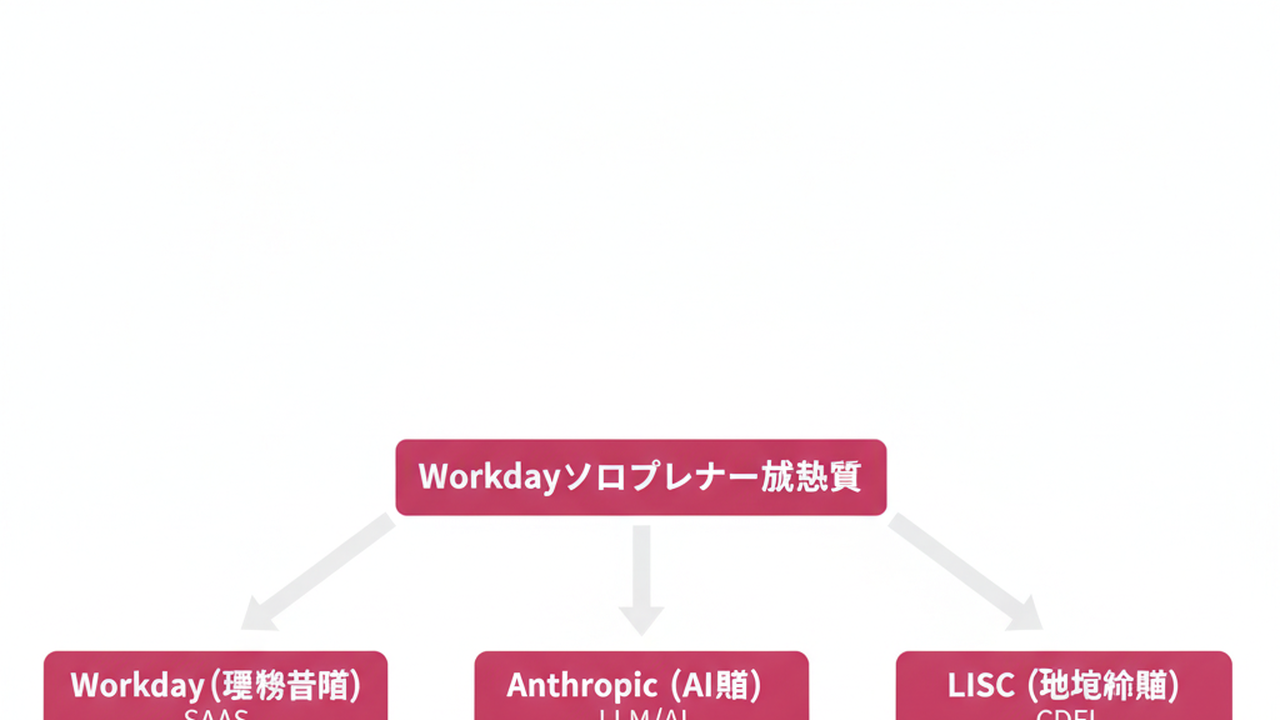
Workday is an enterprise HR and finance SaaS platform at roughly $60B market cap—the top operator in its space. Anthropic is one of the three leading U.S. AI companies and develops Claude. And LISC is not a government agency. It’s a nonprofit financial institution—a CDFI (Community Development Financial Institution)—that has spent nearly 50 years supporting local economic development.
In other words: “SaaS (business infrastructure) × LLM (AI intelligence) × CDFI (community finance)“—a three-layer structure. This isn’t a government-sponsored program. It looks like a design where the private sector supports solo founders faster than government programs ever could.
What’s in the $150,000:
- $10,000 unrestricted grant per person (no equity, no convertible notes, no ownership stake)
- A set amount of free Claude credits
- A 12-week AI curriculum designed by LISC
- Coaching through LISC’s BDO (Business Development Organization) network
It’s structured as “operating capital,” not prize money. Cohort runs 12 weeks, starting July 2026. The 15 participants are selected from across the United States.
The 5 Chosen Domains—Strategy, Marketing, Fulfillment, CRM, Finance—Are Built on the Assumption of Running Without Employees
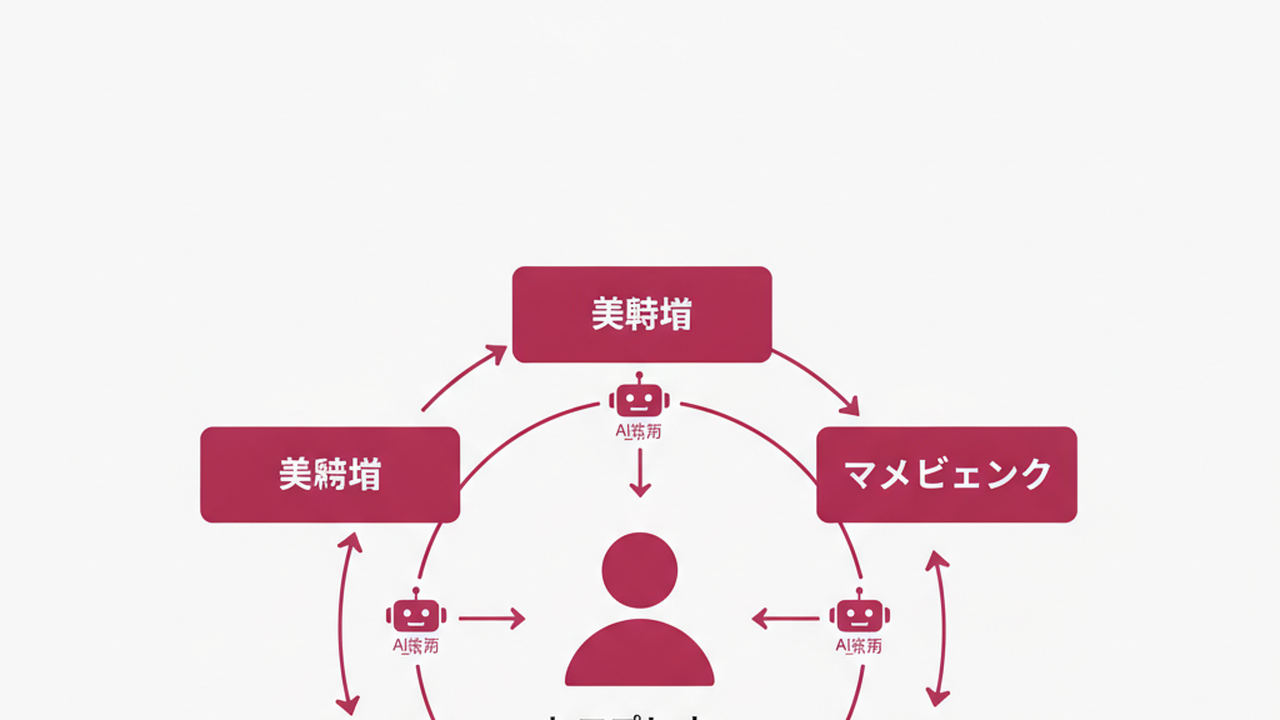
Reading through the press release, the 12-week curriculum covers five domains. The original language:
teaching participants to leverage generative AI for strategy, marketing, fulfillment, CRM, and financial management.
What do the five domains actually mean? Here’s my translation:
- Strategy: Deciding where to focus this week, which position to target in six months—the judgment calls
- Marketing: Running social content, SEO articles, landing pages, and ads
- Fulfillment: Handling delivery after a sale, quality control, customer success
- CRM (Customer Relationship Management): Managing your client list, improving retention, maximizing LTV
- Financial management: Cash flow forecasting, taxes, expense tracking
All five domains normally require separate headcount.
In a typical startup: strategy belongs to the CEO, marketing to the CMO, fulfillment to the COO, CRM to the sales team, finance to the CFO. Doing all five alone is the permanent condition of the solopreneur.
So the accelerator’s designers are being explicit: “Solo founders normally do the work of five people. Here’s how to cover those five domains with AI in 12 weeks.”
This is where AI gets repositioned—from “convenient tool” to “infrastructure that substitutes for headcount.”
Three things I noticed in particular:
- “Run” not “learn”: The curriculum’s verb is “leverage” and “scale”—not “understand.” This is an operations program, not a literacy program.
- CRM is included: CRM in a solopreneur curriculum is unusual. The common assumption is “solo business = CRM unnecessary.” The program designers disagree: even a solo founder needs to manage customer assets.
- Finance as a standalone domain: The language is “financial management,” not “accounting.” This isn’t bookkeeping—it’s finance for decision-making.
From these three, the target solopreneur is clearly not “someone side-hustling toward a few hundred thousand yen in annual revenue.” It’s the “scaling toward hundreds of millions to a billion yen” tier.
In other words: the U.S. is building the infrastructure to produce solo founders who can reach for $1B—not through government support, but through private coalitions. It’s Anthropic CEO Dario Amodei’s 2026 prediction of the “$1B solopreneur” being backed by the companies that want to see it happen.
I speak from experience here: in my second year of independence, I made the mistake of deprioritizing CRM. The moment my client count crossed ten, I couldn’t manage who had requested what and when from memory alone. My retention rate dropped, and that was the direct cause. When I saw the Workday curriculum require CRM as a mandatory domain, I recognized the exact blueprint I had needed back then.
The five domains are arranged to eliminate the blind spots solo founders fall into, in order.
Japan’s Current Position on the Subsidy Map: No Equivalent Public Investment Exists
Let me shift to Japan.
“If the U.S. has an accelerator like this, Japan must have something similar.” I looked. Here’s what I found.
Japan has no public grant-plus-mentoring program specifically for “AI × solo founder” as of June 2026.
| Program | Eligible | Amount | AI support |
|---|---|---|---|
| Jizoku-ka Subsidy for Small Businesses | Sole proprietors, micro-companies | Up to ¥500K–¥2M | None (focused on sales channel expansion) |
| IT Introduction Subsidy | SMEs and micro-businesses | 50–67% of tool cost | Tool purchase costs only, no ongoing support |
| Business Restructuring Subsidy | Primarily small corporations | Hundreds of thousands to tens of millions of yen | Corporation-based; sole proprietors often excluded |
| Monozukuri Subsidy | Primarily manufacturers | Hundreds of thousands to millions of yen | Equipment investment focus |
⚠️ Subsidy conditions change annually. Always check the latest official information from METI or the Small and Medium Enterprise Agency before applying.
None of these combine the “Workday + Anthropic + LISC” structure. In Japan, a solo founder has to independently find the right subsidy, independently learn AI, and independently locate a mentor. All three, sourced separately.
Is that bad news?
I don’t think so. “If public support doesn’t exist, use the U.S. blueprint directly.” That’s the answer.
The curriculum is publicly available in the Workday and LISC official materials. The five domains, the 12-week structure, the weekly themes—you can rebuild them yourself. The $10,000 grant won’t arrive, but Claude is available on a $20/month Pro plan, and domestic SaaS tools can substitute for Workday’s infrastructure.
Which means: “Japanese solo founders can run the same operations as those 15 U.S. cohort members, by themselves.”
There are small signs of movement at the municipal level in Japan. Tokyo’s startup grant program, Fukuoka City’s entrepreneurship support, Kobe City’s founder development programs. None are dedicated “AI × solo founder” programs, but there are growing cases where AI use is incorporated within mentoring tracks. However, the scale and number of slots are less than a fifth of the U.S. accelerator, and competition is high. That’s exactly why running the U.S. open-design independently is faster right now.

A Weekly 5-Domain Operating Template: Running Your Business With One Instance of Claude
Here’s the “5-domain weekly operations template” I built. This takes the five domains from the Workday accelerator curriculum and translates them into a solo founder’s work week.
Why five hours per week? Because solo founders spend about 80% of their daytime on sales, delivery, and customer inquiries. “Time available for operations” is frequently capped at one hour per day. Distributing that across Monday–Friday and placing a review on the weekend gives you roughly five hours. One month at this pace is 20 hours. The Workday accelerator’s 12-week design uses about 60 hours total—essentially the same density.
Monday: Strategy (30 min)
- Paste this week’s business situation into Claude: last week’s numbers, client updates, market signals
- Ask: “Propose the single domain I should invest the most time in this week, with three supporting reasons”
- Confirm the proposed domain with your own judgment
Do not let Claude decide. Let it generate the material. You make the call.
Tuesday: Marketing (90 min)
- Use Claude to draft this week’s three social posts and one SEO article
- Keep a revision template calibrated to your own writing style
- Tuesday ends at drafts—publishing is a separate task
Wednesday: Fulfillment (60 min)
- Use Claude to generate delivery emails and quality checklists for client work
- Ask: “What elements were missing from last week’s delivery?”
- Memo one fulfillment improvement for next week
Thursday: CRM (45 min)
- Paste your client list as CSV into Claude; ask it to extract “five characteristics shared by your highest-LTV clients”
- Generate a follow-up email draft to send only to clients whose retention appears to be dropping
- Actual sending is a separate task
Friday: Financial management (45 min)
- Paste this week’s income and expenses into Claude; ask it to generate “next month’s cash flow forecast”
- Request a review of tax memos and expense categorization
- Ask whether any invoices are at risk of being overlooked at month-end
Weekend: Review (30 min)
- Self-score each of the five domains out of 10
- Pick the weakest single domain for next week’s focus
Total: approximately five hours per week. This is the 5-domain operating blueprint with one instance of Claude.
Do not try to run all five domains with Claude from day one.

For the first four weeks, run only your weakest single domain with Claude. From week five, expand to two domains. From week nine, three. From week thirteen, all five. This mirrors the staged design of the Workday accelerator’s 12-week curriculum.
Trying to do everything at once leads to over-relying on Claude and losing your own judgment. Build the habit one domain at a time—learning which parts to delegate to AI and which decisions to keep for yourself.
The idea of expanding five domains into an AI team is covered in AI Agent Org Management: Expanding Scope Without Hiring. Reading it alongside this article traces the path from “solo founder running AI” to “building roles without adding headcount”—and shows where the Workday accelerator’s vision points.
Three Moves for Japanese Solo Founders Before the July Cohort Begins
Here are this week’s three moves.
Move 1: Build a 5-domain scorecard (15 min)
Paper is fine. Write the five domains—strategy, marketing, fulfillment, CRM, finance—vertically, and score your current operating level for each out of 10.
The domain with the lowest score is where you start with Claude. From my experience, most solo founders give their lowest score to either “strategy” or “finance.” That’s not a problem—it’s natural. Strategy and finance are the first to get deprioritized because they don’t convert to revenue immediately.
Move 2: Run a 90-minute AI operations simulation in the one domain you selected
Say you chose “strategy.” Feed Claude the following:
- This month’s revenue and profit
- Updates on your three to five key clients
- The top three tasks you spent time on in the past three weeks
- One thing you’re currently struggling with
Then ask: “Generate three strategic options for my solo business this week, each with supporting rationale and anticipated risks.”
If you’re new to Claude for business operations, getting the plan basics squared away first saves wasted effort. Claude Code Getting Started: Three Decision Points and Pricing Explained covers the three-question check that gives you the same starting point as cohort participants.
For 90 minutes, your work is the dialogue with Claude and your own judgment notes. You make the decisions. Claude is your sparring partner, nothing more.
Move 3: Declare your own 12-week cohort
Write it on paper.
“Starting June 17, 2026, for 12 weeks, I will run my solo business across five domains with AI. I will update my 10-point score every weekend.”
That’s it. No need to show anyone.
Workday’s 15 participants will spend 12 weeks from July doing exactly this training—with $10,000 in operating capital. In Japan, we don’t get the $10,000, but we can run the same training on Claude’s $20/month Pro plan.
Move before the July cohort starts, and by the time the cohort ends in October, you can say: “I also ran 12 weeks.”
Stop deliberating. Write the scorecard.
Closing
The “Solopreneurship Accelerator” announced by Workday, Anthropic, and LISC on May 12, 2026, boils down to this: the real value is not the $150,000—it’s the five-domain curriculum.
Strategy, marketing, fulfillment, CRM, finance. Designed to teach solo founders to run all five domains with AI. The U.S. has now entered a posture of supporting solo founders not as “independent contractors” but as “AI-operated mini-enterprises.”
Japan has no equivalent public support. But the blueprint is public. With Claude’s $20/month Pro plan, you can run the same 12-week training without the $10,000 grant.
This week’s three moves:
- Build your 5-domain scorecard (15 min)
- Run a 90-minute Claude operations simulation in your lowest-scoring domain
- Write your own 12-week cohort declaration on paper
The time you spend being jealous of the July cohort is time you could spend starting your own.
We’re not the ones waiting to be selected. We’re the ones who can run the same training by ourselves.
“The ones who actually did it win.” Get the scorecard written by this weekend.

女性だからこそ、AIを使いこなさなきゃって思ってる。仕事も、副業も、推し活も、旅行も、全部やりたい。人生一度きりなのに時間は足りないじゃん?だからAIに任せられることは全部任せる。浮いた時間で本当にやりたいことをやる。それがあたしのスタイル。ここにはあたしが実際にやったことをまとめてるだけ。誰かのためになったらいいなって思って書いてるよ。