OpenAI's 3-Move Counterpunch After Claude Code's Triple Crown
WIRED reported that OpenAI is now the one playing catch-up in AI coding. Here's a clear breakdown of the Codex desktop update, the $100 Pro tier, and the $4B Deployment Company—and three questions to guide your tool decision this week.
What you'll learn in this article
- Where pricing and adoption questions around Claude Code stand right now
- Which plan or rollout stage fits the reader's situation
- Which follow-up article to open next for setup, cost, or bigger-picture context

Yesterday, I covered Cursor Composer 2—the move Cursor made the day after the Triple Crown (JetBrains 91% CSAT, Business Insider’s “Claude has won” report, and the GitHub outage).
The same week, WIRED.jp published a piece that caught my attention: a May 25th report titled “The Inside Story of OpenAI—Now Playing Catch-Up to Claude Code.”
“Playing catch-up.” That’s a loaded phrase. Until a year or two ago, OpenAI was the center of gravity for generative AI. The company that gave the world ChatGPT is now being described as chasing Anthropic in the coding wars.
As someone who walked away from software engineering frustrated and came back through AI, I want to lay this out clearly. What did OpenAI decide in the span of one week? Here’s how I read the three moves—Codex’s new release, the ChatGPT Pro $100 tier, and the $4B “Deployment Company”—as OpenAI’s answers in the wake of Claude Code’s triple crown.
This is for the people asking: “I’ve been using OpenAI—is this the moment to switch?” and “What’s the actual deal with Codex?” Let me organize the information and build a decision framework for this week.
The Week After the Triple Crown—OpenAI’s Inside Story Moves
Quick recap of the lead-up. You don’t need this to follow today’s piece, but here it is.
In late May, three things lined up. JetBrains surveyed 10,000 developers—Claude Code CSAT 91%. Business Insider ran “Claude has won AI coding wars.” GitHub’s major outage exposed the fragility of centralized infrastructure. Then Cursor Composer 2 dropped the next day, entering what I’d call the counterattack phase. That’s where things stood going into this week.
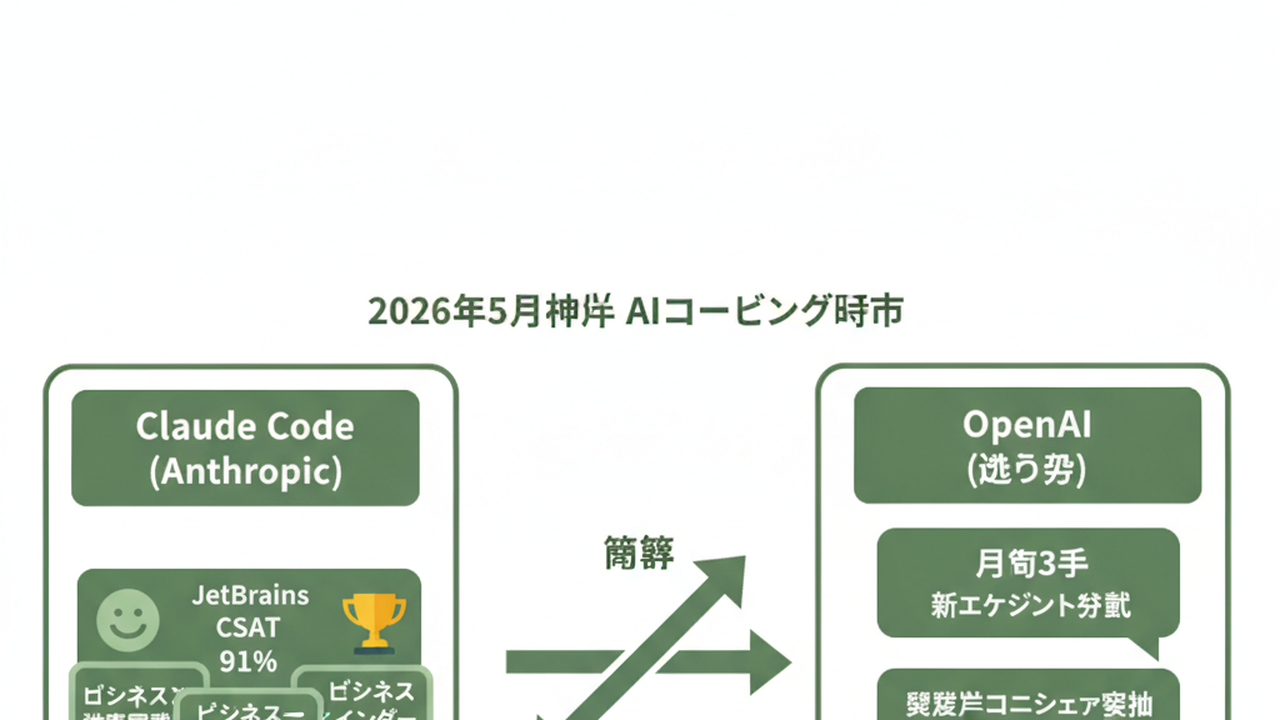
Into that context, WIRED.jp’s May 25th report used language one notch stronger than anything I’d read.
Three specific facts from the WIRED.jp report that I want to anchor this in.
First: a significant IBM stock decline. This followed Anthropic’s announcement that Claude Code could replace COBOL legacy systems running on IBM hardware. COBOL is a language designed in 1959 that still lives inside banks, insurance companies, and governments at enormous scale. The announcement landed as a credible signal that a long-immovable wall had started to shift.
Second: OpenAI’s Super Bowl advertisement. The company bought a slot—running millions of dollars per second in the most expensive US ad inventory—and ran it for Codex, not ChatGPT. Buying that specific slot for that specific product is a visible statement about where they’ve placed the priority.
Third: The Wall Street Journal’s February 2026 report noted that Claude Code triggered major IT stock declines. “If coding automation accelerates, the existing IT contracting model breaks” was the market’s read, and it showed up in the price action.
Put those three together and one picture forms: OpenAI is at the starting line of being the chaser. The week following the triple crown made that response visible.
Reading OpenAI’s Current Position Through the WIRED Report
I want to validate OpenAI’s “chaser” positioning with multiple sources before reading the moves. I try not to reason from a single report.
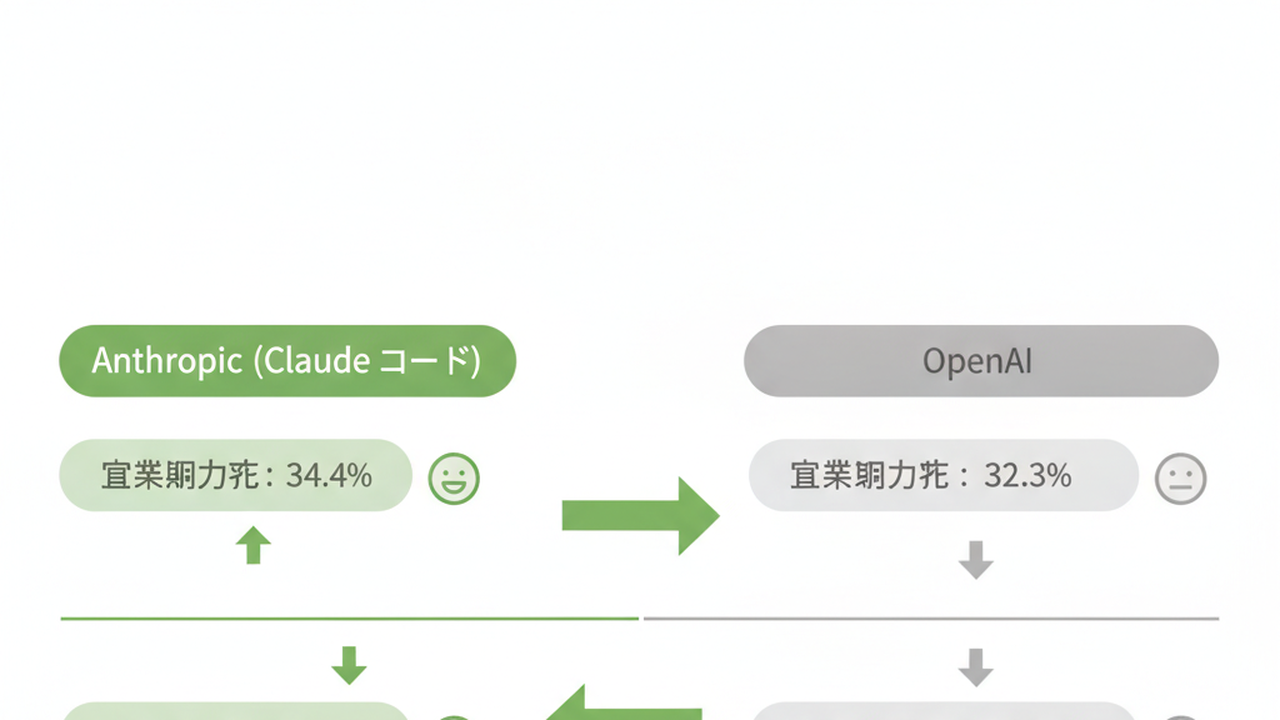
Enterprise adoption rates first. According to Ramp’s May AI Index, as of May 2026 Anthropic holds 34.4% and OpenAI 32.3%. eWeek reported that this marks the first time Anthropic has pulled ahead. The gap is only 2.1 percentage points. But the difference between “ahead” and “behind” is everything when it comes to narrative.
Claude Code revenue numbers add context. By February 2026, Claude Code had reached $2.5B ARR (annualized run rate). Year-over-year, Claude Code drove the majority of Anthropic’s ARR growth.
Valuation comparison: On May 28th, CNBC reported that Anthropic’s Series H raised at a $965B valuation—surpassing OpenAI as the highest-valued AI startup. “Nearly $1 trillion” as a shorthand for Claude Code’s market signal is striking.
On OpenAI’s side: large-scale compute contracts with Oracle, Microsoft, NVIDIA, and others. The scale is significant. The structure involves locking in compute ahead of revenue—meaning “we must generate revenue to justify this” is now a live pressure.
Stack those numbers together and what becomes visible is that for OpenAI, “Codex counterattack” is not just a product strategy. Taking back coding leadership is woven into the thesis for recovering the return on a massive financial commitment. That’s why the pace is fast.
One thing I want to flag upfront: seeing these numbers and reading “switch to Claude Code and you win” is premature. AI coding leadership is a current market snapshot, not a permanent guarantee. If OpenAI’s counterattack works, the picture could look different in three months. The safer move is to look clearly at what happened this week.
Counterpunch Move 1: Codex—Desktop Control
OpenAI’s first move is product expansion. TechCrunch reported on April 16th on an updated Codex. OpenAI’s official page has the feature details.
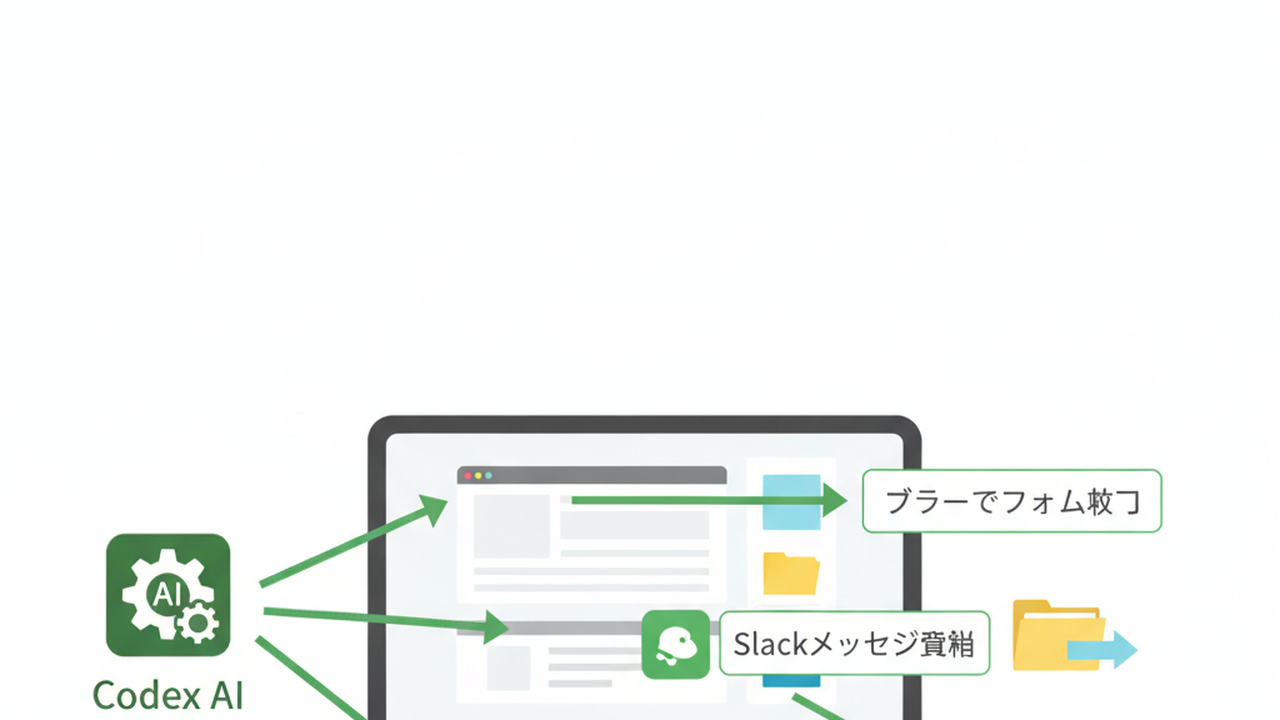
The centerpiece: desktop control. Codex now runs in the background and can open applications, fill forms, send Slack messages, move files—operating directly on your computer. It’s autonomous execution of tasks across your local environment.
This is directionally similar to the “Computer Use” capability Anthropic already shipped for Claude Code. TechCrunch noted it directly: “Some of the features OpenAI is adding are similar to ones Anthropic has already released for Claude Code.”
What “desktop control on top of coding” means, from my perspective as someone who came from software engineering: it’s a range expansion from “AI that writes code” to “AI that automates your entire workflow.” If a workflow was “pull data from a spreadsheet, process it, and post to Slack”—that used to require writing code. With desktop control, the AI executes it by operating the browser directly. The set of things that don’t require code at all grows.
The thing I want to flag first: desktop-control AI carries real “unexpected behavior” risk. If the AI clicks the wrong button in a browser—what happens? If a file gets deleted by mistake, is there a recovery path? Before using this in production, sandboxed testing is mandatory. “Vibe-coding” energy of “if it runs, it’s good” is especially dangerous here.
OpenAI made a strategic choice by moving fast. “Feature parity” alone is still just chasing. “Feature parity + competing on price and integration” is how a chaser wins. The next move goes there.
Note: I haven’t been able to fully audit the Codex API spec or supported languages at this point. I plan to run a hands-on review next month.
Counterpunch Move 2: ChatGPT Pro $100/Month (5x Codex)
The second move is a pricing play. CNBC reported on April 9th on the ChatGPT Pro tier.
$100/month (roughly ¥15,000) buys 5x the Codex usage of the $20 Plus plan. It’s a price architecture aimed at heavy individual users.
Both companies use the name “Pro.” Claude Code Pro is $20/month. Codex Pro is $100/month. Same label, 5x price difference. Whether to buy “5x Codex for $100” or “Claude Code Pro starting at $20”—that’s the axis where user decisions split.
My honest read: $100/month is the “hmm, not sure” price range for freelance engineers and independent developers. Consolidating three $30 subscriptions into one tool at $100 requires serious usage conviction upfront. I read this as OpenAI targeting enterprise-adjacent heavy individual users.
The thing I’d flag: “5x usage” sounds compelling. But the premise is “you actually use 5x the volume.” If you’re spending an hour on weekends testing, the $20 Plus and $100 Pro plans feel identical. Measure your actual monthly Codex usage before deciding. That’s how you avoid regret.
OpenAI chose $100/month to try to “own coding as the primary tool.” Anthropic continues at $20/month trying to “widen the base and hold the center.” The gap in their pricing philosophies is visible here.
Counterpunch Move 3: The $4B “Deployment Company”
The third move is an organizational play. OpenAI reportedly established a $4B “Deployment Company” and formed partnerships with 19 private equity and consulting firms (per multiple reports; direct URL not yet verified).
A “Deployment Company” means embedding AI engineers directly inside enterprises to accelerate Codex adoption—an expansion from “sell the tool” to “own the implementation.”
Anyone from an enterprise software background will recognize this structure immediately. It looks like how SAP and Oracle ran large ERP implementations: consulting firms parachuted in, handled customization, managed rollout. “You can’t just buy the tool and expect it to work” is the honest reality. The vendor owns implementation accountability.
Anthropic’s own enterprise moves are in The Day Claude Code Enterprise Deployment Became a Product. Anthropic has also published its own first-30-days program for enterprise adoption (Claude Code Enterprise: Your First 30 Days). But a $4B “Deployment Company” with 19 partners is operating at a different order of magnitude.
One thing worth noting from my software engineering background: “the tool is better” has almost never been sufficient for enterprise adoption on its own. Sales. Implementation support. Customer success. Retention. All four functions have to be present before anything takes root in actual workflows. OpenAI made the judgment that “feature parity isn’t enough to win” and is playing the organizational side. As a strategic choice for the chaser, this is rational.
The caveat I’d call out: “$4B deployed” is a dramatic number. But the outcome depends on how those 19 partners actually operate. If McKinsey and Bain come in genuinely selling Codex adoption—that’s one outcome. If they absorb it into their own solutions and move on—the value of this move is much more limited. The honest metric is actual enterprise deployments in 3 months, not the announcement.
Your Decision Framework for This Week—3 Questions
I’ve laid out all four pillars: the WIRED report, Codex desktop control, Pro $100, and the $4B Deployment Company. Compress it to a decision framework you can use this week.
Question 1: Do you want to automate workflows beyond code?
“YES” → Codex’s new version is worth testing. The desktop control feature enables automation that reaches past coding into general business tasks. Sandboxed testing required first.
“NO, I want to focus on code” → Start with Claude Code. Its depth for coding-specific work is the right entry point. The getting-started guide is in Claude Code: Getting Started Without the Confusion.
Question 2: Do you want to go deep while keeping costs in check?
“YES” → Claude Code Pro at $20 is the rational choice. You can put it on real projects from month one. Pricing details are in Claude Code Pricing: What It Really Costs.
“NO, $100/month is fine with me” → Try ChatGPT Pro. If your workflow volume can absorb 5x Codex usage, the ROI is there.
Question 3: Are you thinking about rolling this out to your whole organization?
“YES” → Compare both companies’ enterprise plays. OpenAI’s $4B Deployment Company includes hands-on implementation. Anthropic offers enterprise programs plus self-guided deployment. “Outsource implementation” versus “run it in-house” is the decision axis.
“NO, I’m using it solo or with a small team” → Questions 1 and 2 decide it. Enterprise moves are worth watching 3 months from now—you don’t need to act on them today.
Three action patterns for this week. Testing Codex: set up a sandbox environment first. Starting Claude Code: start by asking about one function in a current project. Enterprise scope: draft a pilot deployment plan for H2 2026.
Where I currently stand: Claude Code is my main tool. I’m planning to test Codex within the month, but the decision to switch mains isn’t ready yet. I’ll update my read once I have real application data over the next 3 months. At the breaking-news stage, “getting the facts straight” matters more than forming a verdict.
Summary
The week after the Triple Crown, OpenAI moved.
Labeled “playing catch-up” by WIRED.jp’s May 25th report, OpenAI made three moves visible in one week. Codex gets desktop control as a new expansion direction. ChatGPT Pro at $100/month targets heavy individual users. A $4B Deployment Company accelerates enterprise adoption.
All three moves run on a foundation of large financial commitments. “Taking back coding leadership” is running as financial necessity, not just product strategy. That’s why the pace is fast.
Three-line summary for this week. “Want workflow automation” → test Codex. “Want to go deep, keep costs down” → Claude Code Pro at $20 is rational. “Thinking enterprise-wide” → track both companies’ enterprise moves in 3-month intervals.
AI coding leadership will look different again next month. Three axes to track in parallel: hands-on Codex evaluation, Anthropic’s response, and real data on Cursor Composer 2.
A developer who once believed he’d never compete with the talented engineers around him found his way back into the work through AI. I want to keep reporting the market’s actual state so others can find the same path. Today’s answer is “Anthropic in front, OpenAI shifted to an organizational battle.” Next week the answer might change. I want to keep tracking that change together.

正直、一度エンジニアは諦めました。新卒で入った開発会社でバケモノみたいに優秀な人たちに囲まれて、「あ、私はこっち側じゃないな」って悟ったんです。その後はカスタマーサクセスに転向して10年。でもCursorとClaude Codeに出会って、全部変わりました。完璧なコードじゃなくていい。自分の仕事を自分で楽にするコードが書ければ、それでいいんですよ。週末はサウナで整いながら次に作るツールのこと考えてます。