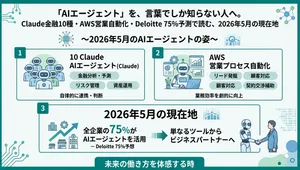
Anthropic Reshaped 3 Industries in 8 Days: Finance, Legal, and SMB Agent Packages Decoded
10 finance agents, 12 legal plugins, 15 SMB workflows launched in 8 days. Breaking down the shared 3-layer architecture and the industry-package playbook — plus 3 actions for this week.
What you'll learn in this article
- The key point to grasp before reading the full article
- How the issue changes practical decisions after reading
- Which follow-up article is worth opening next
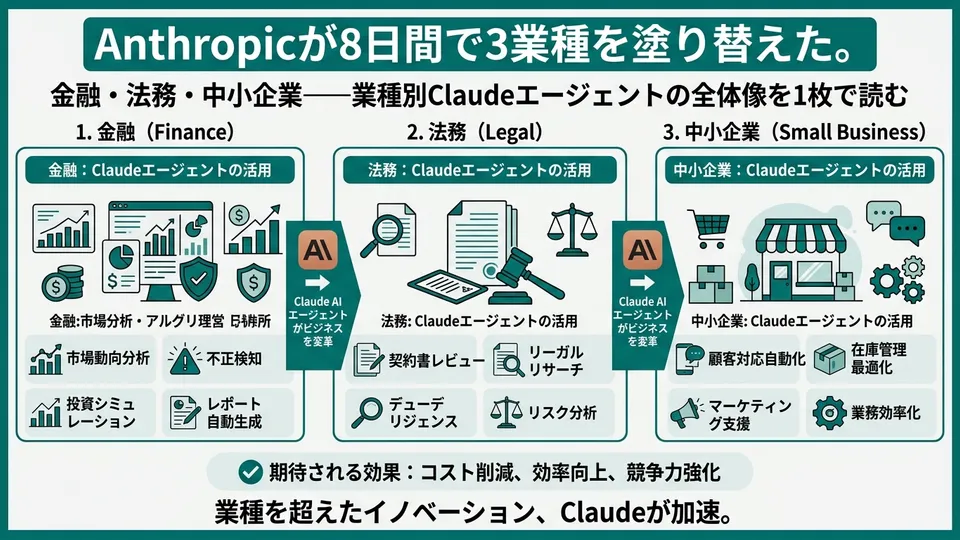
May 5: 10 agent templates for financial services. May 12: 12 plugins for legal. May 13: 15 workflows for small business. Anthropic dropped three industry-specific packages in 8 days.
Those are the facts. But stopping there means you just read three news articles.
What I noticed after spending the week chasing official releases and plugin specs was a pattern that only becomes visible when you put the three packages side by side: the rule of “industry packaging.” The AI industry is at an inflection point — a pivot from general-purpose AI to industry-specific AI. These 8 days are a sharp illustration of that fork.
Today I’m putting the three packages in a single view, tracing the shared 3-layer structure underneath, then giving you a judgment framework for applying it to your own industry — plus 3 actions you can move on this week. This piece follows two earlier articles (Finance AI agents: 10 types and Claude for Small Business). Legal AI appears here for the first time.
What Happened — The 8-Day Timeline
First, the three announcements in order.
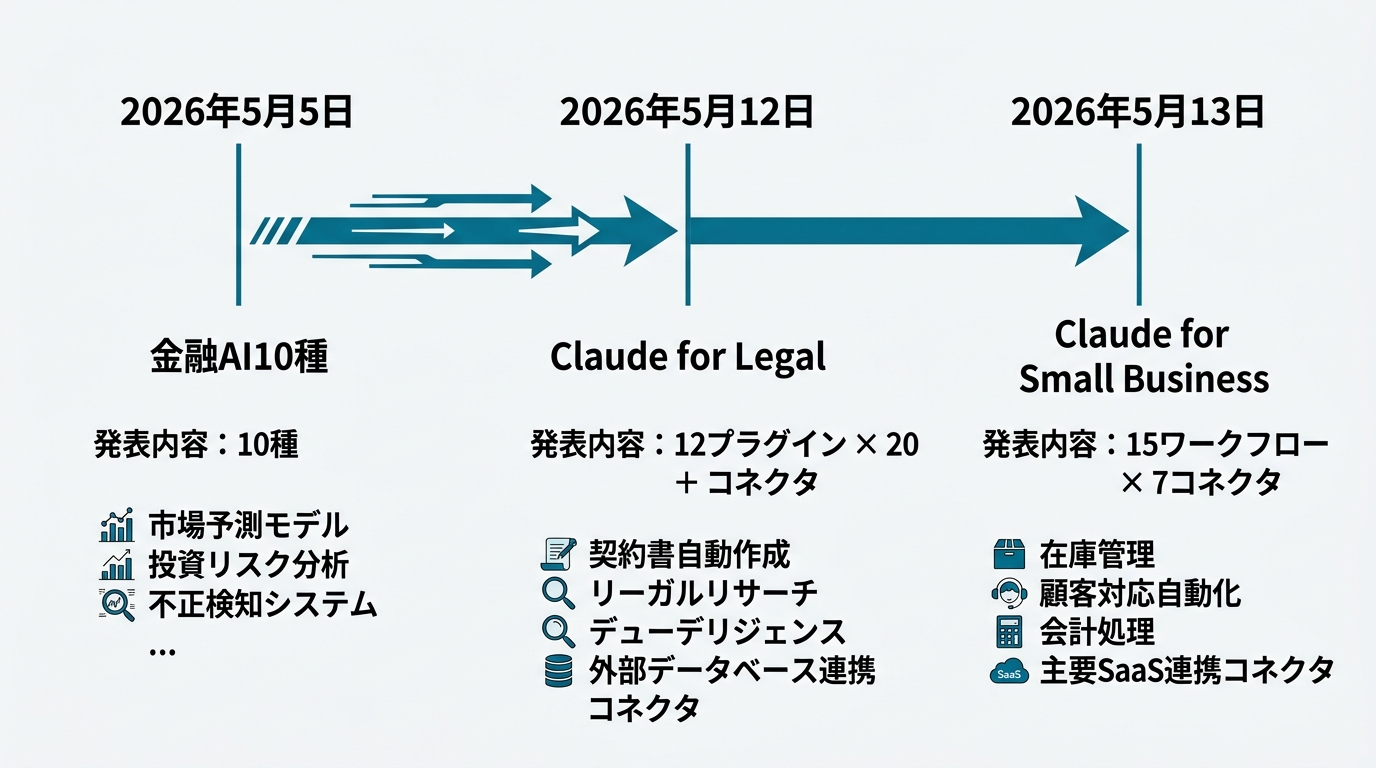
May 5: Agents for Financial Services (10 types)
Starting point: the Anthropic official blog “Agents for financial services” (anthropic.com/news/finance-agents). 10 agent templates — 5 front-office, 5 back-office. JPMorgan CEO Jamie Dimon appeared at the launch event; Fortune covered it as their top story (2026-05-05).
Details and how non-finance organizations should read the implications are in the May 14 article.
May 12: Claude for Legal (12 Practice-Area Plugins × 20+ Connectors)
Covered simultaneously by Artificial Lawyer (2026-05-12) and Legaltech Hub (2026-05-13). Unlike the Finance and SMB packages, I have not found a standalone Anthropic official announcement page for this package; this section relies primarily on those secondary sources. I’ll add the primary URL once confirmed.
Contents: 12 practice-area plugins and 20+ MCP connectors. Practice areas covered: corporate law, M&A, employment, privacy, IP, litigation, regulatory compliance, AI governance, product counsel, legal clinic, and more. Representative connectors: DocuSign, LexisNexis, Thomson Reuters, Everlaw, Ironclad, CoCounsel. Claude embedding itself into the daily-use software of law firms and corporate legal departments.
A note on “MCP connectors”: MCP (Model Context Protocol) is a standard Anthropic published for connecting AI to external systems. Anthropic has stated it as an open design principle — connections made for Claude can theoretically be reused with other AIs. Actual compatibility depends on each AI service’s implementation, so treat this as a design philosophy statement.
May 13: Claude for Small Business (15 Workflows × 7 Connectors)
The day after the legal announcement, Claude for Small Business launched (Anthropic official: Introducing Claude for Small Business). Three components: 15 ready-to-run workflows, 15 skills, and 7 official connectors (Intuit QuickBooks, PayPal, HubSpot, Canva, DocuSign, Google Workspace, Microsoft 365).
Detailed breakdown by business domain is in the May 16 article.
Three packages in 8 days: Finance, Legal, SMB. I don’t read this as coincidental consecutive announcements. My read: Anthropic came to define “industry package” as a new distribution unit.
The Full Landscape: All 3 Packages Side by Side
| Package | Announced | Primary unit | Quantity | Key connectors | Target users |
|---|---|---|---|---|---|
| Agents for Financial Services | 2026-05-05 | Agent templates (10 types) | Front 5 + Back 5 | Moody’s MCP, internal data warehouse | Investment banking, asset management, finance back-office |
| Claude for Legal | 2026-05-12 | Practice-area plugins (12) + MCP connectors (20+) | 12 + 20+ | DocuSign, LexisNexis, Thomson Reuters, Everlaw, Ironclad, CoCounsel | Law firms, corporate legal departments, in-house counsel |
| Claude for Small Business | 2026-05-13 | Workflows (15) + Skills (15) + Connectors (7) | 15 + 15 + 7 | QuickBooks, HubSpot, Google Workspace, Microsoft 365 | SMB owners, solo accounting, sales managers |
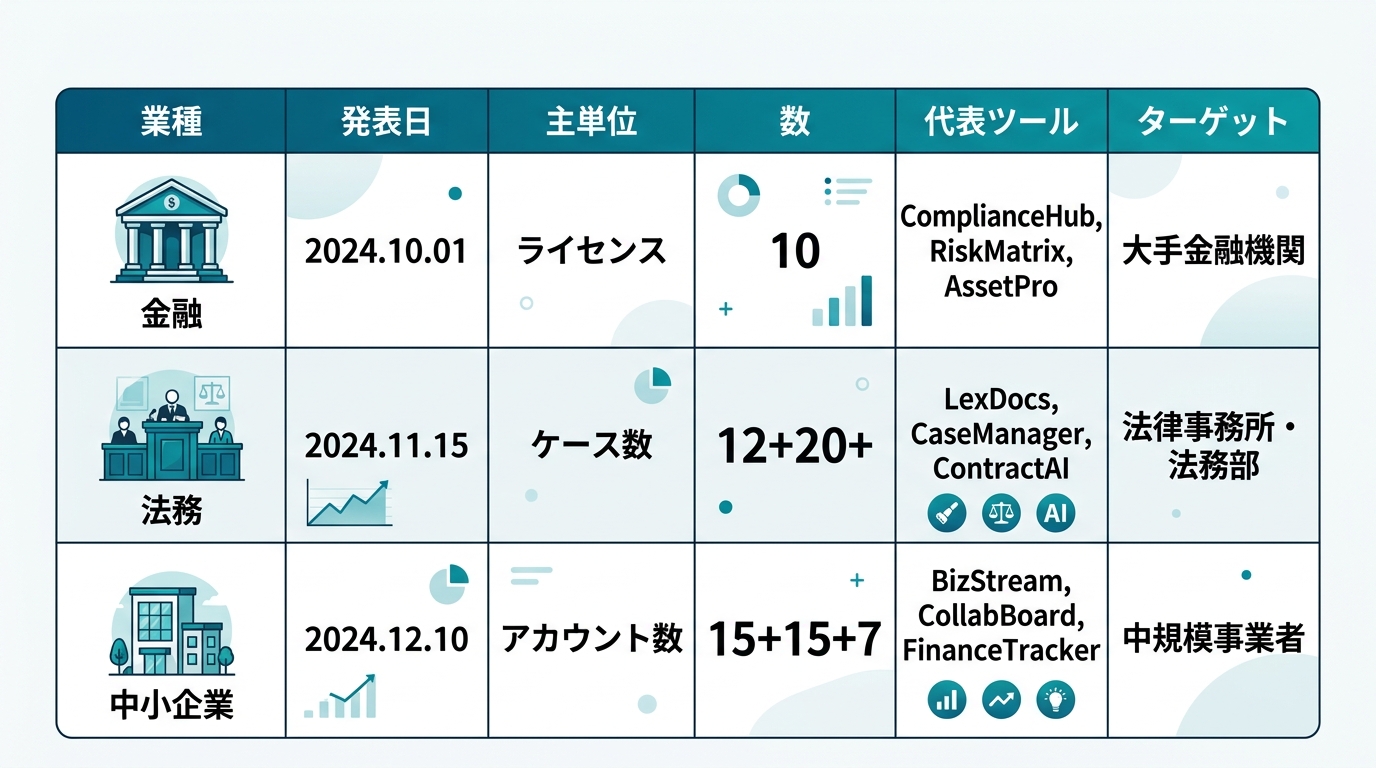
Three things that stand out immediately:
First: The delivery unit naming differs by industry. Finance uses “template,” legal uses “plugin,” SMB uses “workflow.” All running on the same Claude, but the naming was intentionally differentiated. Template = blueprint, plugin = insert, workflow = flow. The terminology was aligned to what each industry’s practitioners actually say.
Second: External system connection units differ. Finance connects to internal data warehouses and industry-specialized sources like Moody’s. Legal connects to specialized tools like LexisNexis and Everlaw. SMB connects to general SaaS like QuickBooks and Google Workspace. The “daily-use software” of each industry is placed directly as the connection target.
Third: How domain knowledge is embedded differs. Finance has Skills containing business knowledge like “month-end close.” Legal has M&A checklists and litigation discovery plugins. SMB has payroll planning and invoice follow-up workflows. Common across all three: industry-specific tacit knowledge is baked into the design itself.
From this, one law emerges: Industry package = industry’s daily software × industry’s tacit knowledge × Anthropic’s execution layer.
The Shared 3-Layer Architecture
The naming differs, but the structural design is identical across all three. Let me map it out.
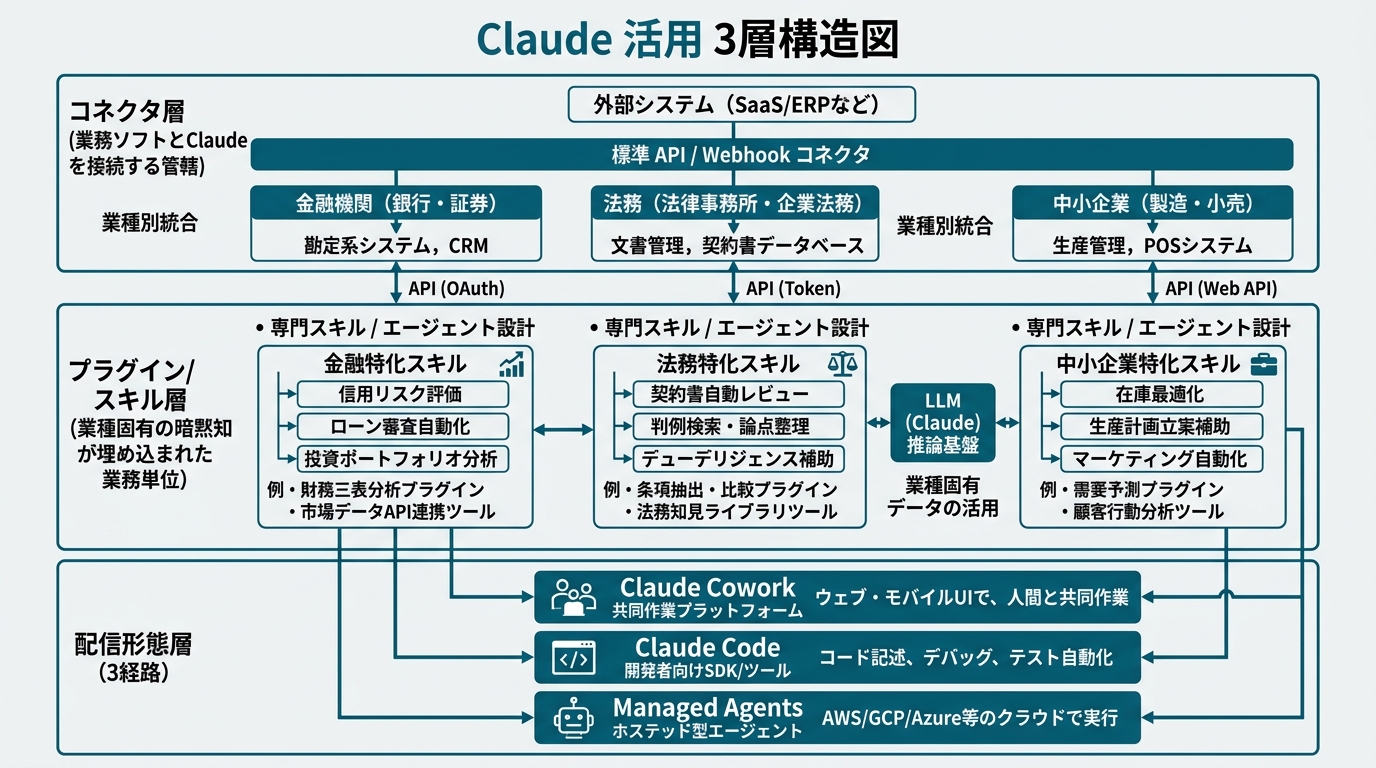
Layer 1: Connector Layer (Business Software Integration)
All three place “connectors” linking business software to Claude at the structural foundation. Finance: internal data warehouse and Moody’s. Legal: DocuSign and LexisNexis. SMB: QuickBooks and Google Workspace.
Connectors run on MCP as a shared standard. Anthropic has stated MCP as an “open design reusable by other AIs” — with the caveat that actual compatibility depends on each AI’s implementation. The key structural point: industry packages are designed as bundles of open connections, not closed lock-ins. This is one reason Anthropic can go deep into multiple industries simultaneously.
Layer 2: Plugin/Skill Layer (Industry-Specific Tacit Knowledge)
Different names, same function: units with industry tacit knowledge embedded at the workflow level. Finance: 10 front/back-office types. Legal: 12 practice areas. SMB: 15 workflows.
This layer contains the “correct procedures,” “checkpoints,” and “risk awareness” specific to each industry. Think of it as the knowledge inside an expert’s head with 10 years in the field, transcribed into a form AI can retrieve.
Layer 3: Delivery Layer (How It’s Accessed)
Common across all 3 packages: three delivery paths. Claude Cowork (team collaboration interface), Claude Code (developer environment), Claude Managed Agents (headless API).
Covers all cases: end users accessing through a UI, developers embedding it, servers running it automatically. The “released with the distribution problem already solved” design referenced in the April 10 Managed Agents article carries through to industry packages.
Summary: an industry package is a product form that delivers “business software × domain knowledge × delivery path” as a single set.
Why Industry Packages — The Background of General AI Folding Into Verticals
Step back and ask: why did Anthropic release three industry packages in quick succession in May 2026?
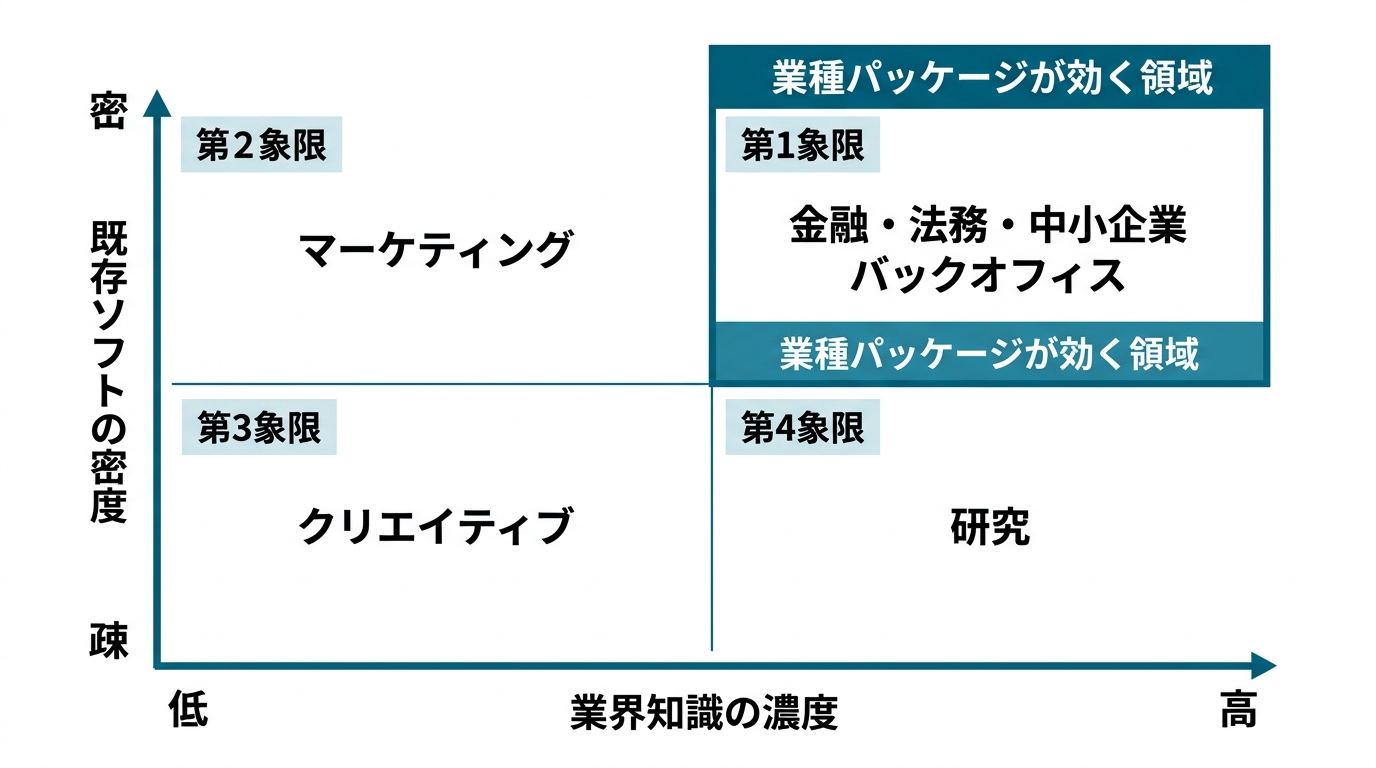
Three conditions common to all three industries:
Condition 1: High density of domain knowledge. Legal has case law and contract conventions. Finance has regulations and accounting. SMB back-office has tax and labor law. All are domains where “a novice jumping in without preparation causes accidents.” AI with domain knowledge can deliver significant time savings.
Condition 2: High density of existing software. All three industries already run daily operations on specialized software. LexisNexis, QuickBooks, Moody’s — connecting via connectors immediately creates value. The advantage of not needing to build UI from scratch is significant.
Condition 3: Deep knowledge silos. Legal knowledge siloed by firm, finance by department, SMB by individual. Transcribing into templates, plugins, and workflows makes knowledge shareable across teams. That’s where new distribution value emerges.
Conversely, industries where packages work less well: marketing (distributed existing software, weak systematic domain knowledge), creative (individual sensibility at center), research (limited existing specialized software, general tools sufficient). Industry packages aren’t universally applicable. The more realistic picture is that they’ll be carved out industry by industry as conditions are met.
I won’t predict Anthropic’s next industry, but candidates where Conditions 1 and 2 are strong — healthcare, education, construction, real estate, tax services — seem likely. This is a hypothesis to verify against the next 3–6 months of announcements.
How to Think About Your Own Organization — 3 Decision Axes and This Week’s Move
The structure is now clear. Now: what do you actually move in your own organization?
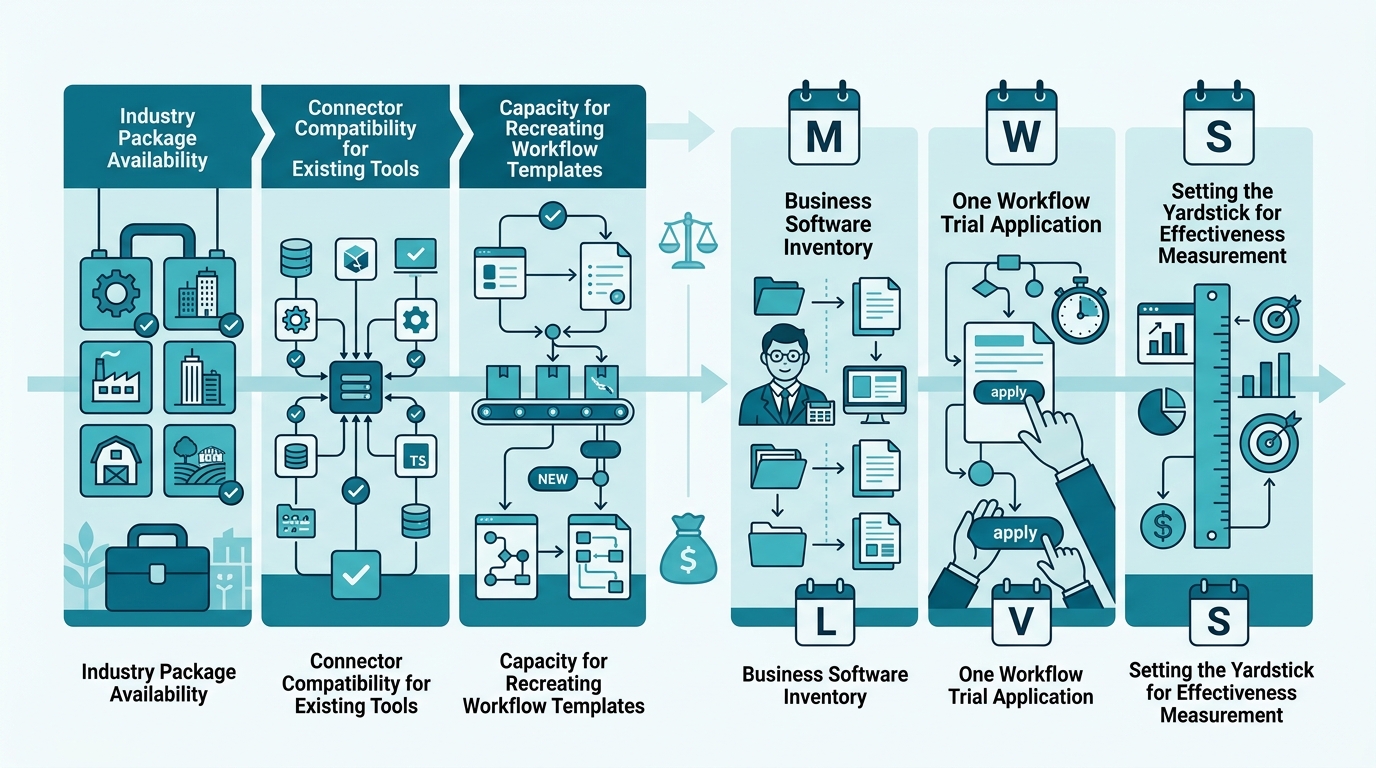
Axis 1: Does Your Industry Already Have a Package?
Legal departments, financial institutions, and SMB back-office operations can start today — the relevant package page is a click away. For industries not yet covered, the 3-layer structure (connectors, skills, delivery) can be translated to your own industry.
In my own AI consulting work, I use the industry package structure directly as a design template. Articulate the client’s domain knowledge as “skills,” connect their business software as “connectors,” then choose which delivery form (Cowork, Code, Managed) to use. The 3-layer frame works surprisingly well as a general-purpose framework.
Axis 2: Do Your Existing Tools Have Official Connector Support?
Cross-reference the official connector lists from the 3 packages against your current business software. QuickBooks, HubSpot, DocuSign, Microsoft 365, Google Workspace — the most commonly used SaaS tools are largely covered. Three or more overlaps: you’re in a good position to benefit quickly.
Fewer overlaps: the decision becomes whether to wait for connector additions or build your own MCP connections. Former: time cost. Latter: engineering cost. Which to choose depends on your organizational phase.
Axis 3: Do You Have Capacity to Produce Internal Templates?
Rather than using the 15 official SMB workflows as-is, creating 1–2 company-specific versions is also an option. This requires “people who can articulate workflows in language.”
Building business templates is close to the work of eliciting knowledge from experienced practitioners. Organizations with people who can transcribe that knowledge into a form AI can receive can create their own versions while referencing official packages. Organizations that don’t have this should start with official packages and build toward articulation through operations.
This Week’s Move (3 Actions, Within 3 Days)
Action 1 (Monday, 30 min): List the business software your organization uses daily — it should be 10–15 items. Cross-reference against the official connector lists from all 3 packages and count the overlaps. 3 or more: proceed to Action 2.
Action 2 (Wednesday, 60 min): Select the package closest to your industry and enter the official trial signup form. Claude for Small Business is a strong candidate as the general-purpose option when no industry-specific package exists — it runs across many SMB verticals. Set “run just one of the 15 workflows” as your goal for the week.
Action 3 (Saturday, 60 min): Decide how to measure the effect of the one workflow you ran. Time saved, volume handled, error reduction rate — pick one and record a number. The quality of next week’s decision depends on whether you have a number or not.
Summary: What Did 8 Days Reveal — and What’s Coming Next?
May 2026 was the week Anthropic introduced the industry package as a new distribution unit. Finance, Legal, and SMB share three characteristics: high industry knowledge density, high existing software density, and deep knowledge silos. That’s exactly why the “business software × domain knowledge × delivery path” 3-layer structure fit cleanly.
Three directions to read from this:
- Industry packages are designed as bundles of open connections via MCP (Anthropic has stated MCP as an open standard; other AIs can follow the same structure)
- The next industries will come in order of high domain knowledge + high existing software density. Healthcare, education, construction, and tax services are candidates.
- Waiting for your industry’s package isn’t the only option — you always have the choice of building your own version using the 3-layer framework
What I’m doing this week: using industry packages as reference while breaking down client operations into 3 layers. What you should do: start with the 30-minute Action 1 — write out your software list.
Reading the news and stopping at “I read it” versus advancing to “I tried running it” — the 3 packages that came together in 8 days have laid out exactly that fork in the road.
Industry packages are just getting started. Before the next vertical launches, getting your organization’s 3-layer picture clear puts you one move ahead.
Related Articles

AIを使いこなせない方は、この先どんどん差がつきます。僕はAIエージェントを毎日動かして、壊して、直して、また動かしてます。そういう泥臭い実践の記録をここに書いてます。理論は他の方にお任せしました。僕は動くものを作ります。朝5時に起きてウォーキングしてからコードを書くのがルーティンです。