The $400K Role OpenAI Is Embedding Inside Japan's Biggest Bank
OpenAI is placing $400K+ Financial Data Engineers at MUFG. Breaking down the FDE role, why the salary is justified, 3 pitfalls to know, and a 3-step path for career-changers.
What you'll learn in this article
- The key point to grasp before reading the full article
- How the issue changes the way developers should work next
- Which follow-up article is worth opening next

“Financial Data Engineer” — have you heard that job title?
Most people haven’t. I hadn’t either, until a few days ago.
A Business Journal report from early June 2026 stopped me cold: compensation north of $400K, and OpenAI reportedly embedding engineers inside MUFG. Almost zero English-language coverage existed.
If the word “placement” caught you off guard, you’re not alone. OpenAI’s brand identity is built around products — ChatGPT, Codex, the API. Selling products, not people. So what does it mean to send engineers into a bank? What’s driving that salary figure? I want to unpack that.
I’ll translate this from the perspective of a former failed engineer. What FDE actually is, why OpenAI is embedding people at banks, what’s behind the salary mechanics, and how to build a bridge to this career from where you are now. If you’ve ever wondered, “What comes next after AI engineer?” — this is for you.
FDE — A New Job Title Has Landed in Japan
Financial Data Engineer, FDE. Until very recently, this role barely appeared in Japanese engineering conversations.
Piecing together Business Journal’s reporting, a rough picture emerges. FDE is a specialist role within OpenAI, stationed on-site at financial institution clients, responsible for designing and operating AI implementation at the business-process level. Multiple FDEs have reportedly been placed at MUFG (Mitsubishi UFJ Financial Group).
“Data engineer” has existed as a title before — designing data pipelines, writing ETL processes, feeding data into BI tools. Typical compensation in Japan runs roughly ¥8M–¥15M per year (roughly $55K–$100K).
FDE looks like a continuation of that, but it’s actually a different animal.
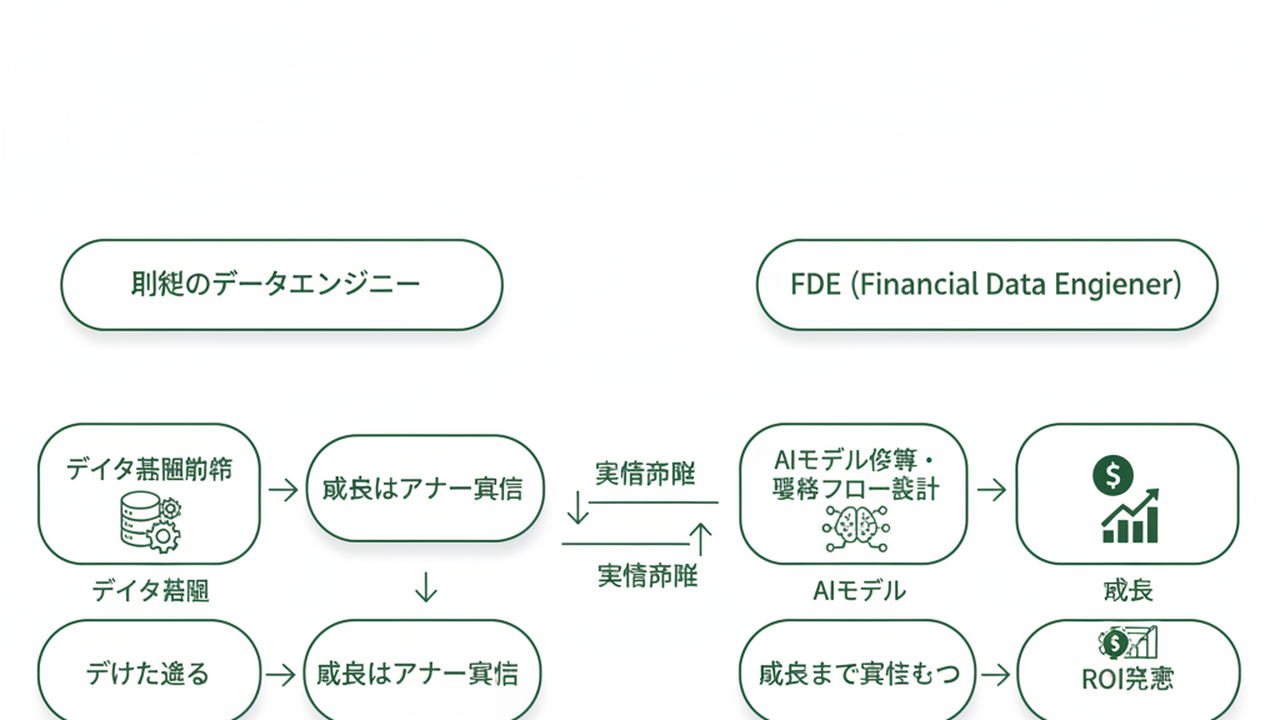
The gap isn’t just depth of skill. The organizational position is fundamentally different. If a data engineer is “infrastructure custodian,” an FDE sits closer to “business transformation partner.”

The biggest distinction is where accountability sits. Traditional data engineers build the internal data layer; field teams use it afterward. The engineer’s job ends at handoff — what happens next is someone else’s problem.
FDE is different. They embed at the client site, learn the business workflows, design the AI models, and take ownership through go-live. They explain ROI to executives and produce materials for further investment decisions. The job isn’t “hand off data” — it’s “drive measurable outcomes.”
Reading this, I recognized something familiar. It resembles a senior consultant — but one who writes production code instead of slide decks. Not a strategy presentation that lives in a shared drive, but a live AI system running on the production floor. That combination didn’t exist as a recognized job category before.
OpenAI hasn’t published detailed FDE job descriptions in Japanese yet. The specific title and scope can also vary by engagement. From here on, please distinguish between what has been reported and my own interpretation.
Why OpenAI Is “Placing Engineers at Banks”
The word “placement” should feel odd. It did to me.
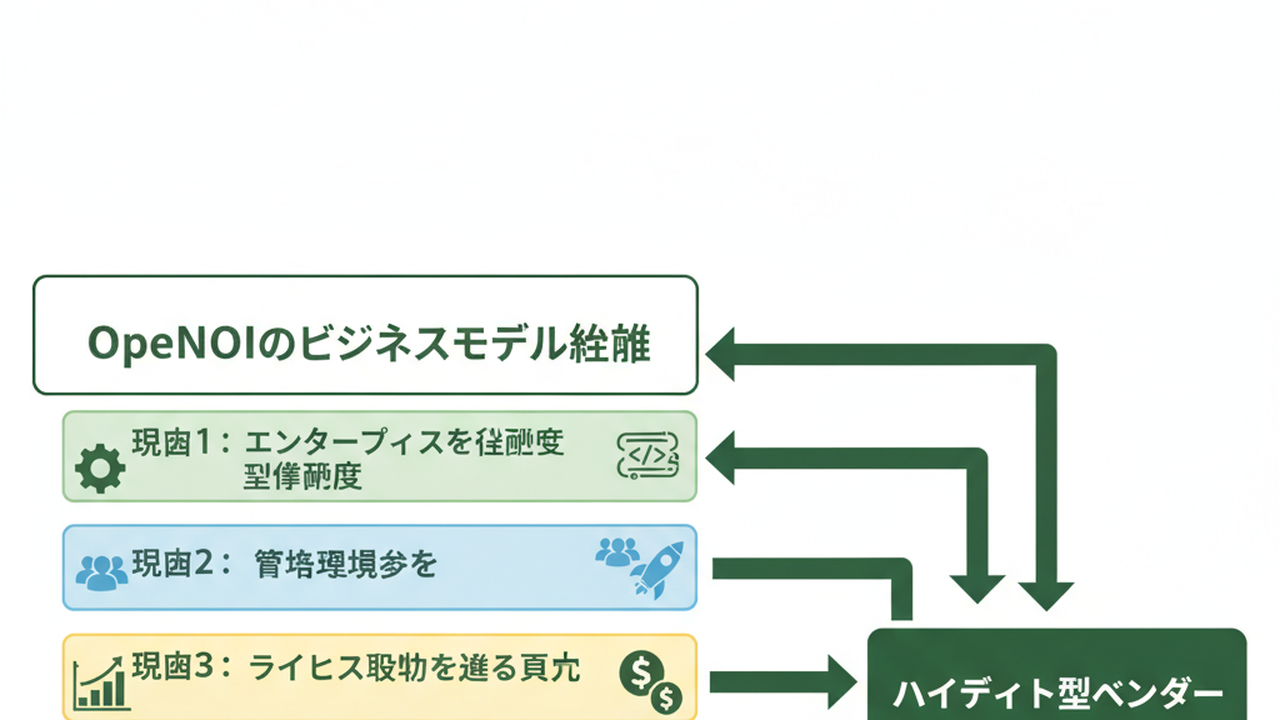
OpenAI’s business model, in most people’s mental model, is SaaS: API revenue plus ChatGPT Enterprise licenses. Build products, sell them globally. What Business Journal’s reporting reveals is that a second business line has been taking shape — what I’d call the “embedded implementation” model.
Why isn’t selling products alone sufficient? Probably three reasons.
The first is the enterprise implementation problem. Regulated industries are especially difficult. Signing a ChatGPT Enterprise contract doesn’t change day-to-day operations. Compliance requirements, systems integration, workflow redesign, internal alignment — none of that solves itself. A product can exist and the transformation can still stall. Someone needs to be present to push it through.
The second is competitive pressure. Anthropic and Google DeepMind have reportedly been aggressively building out enterprise implementation support. If OpenAI stays in “sell and walk away” mode while competitors embed themselves deeper into accounts, churn and switching become harder to prevent. Deeper involvement creates stickier client relationships — and that directly affects long-term revenue stability.
The third is a revenue ceiling on license fees. Monthly SaaS fees hit a hard ceiling for what you can extract from a major bank. A “professional services” contract with FDE placement can be structured at tens of millions of dollars per engagement annually — that’s conventional wisdom in enterprise services. Multiples of product revenue, from the same client.
My read: OpenAI is evolving into a hybrid vendor with both SaaS and embedded professional services lines running in parallel.
That MUFG appears to be among the earliest placements is probably not coincidence. Among Japanese financial institutions, MUFG has demonstrated strong appetite for AI investment and experience working with global technology vendors. From OpenAI’s perspective, it’s a high-value reference client for establishing a Japan market footprint.
The 3 Factors Behind the $400K+ Salary
Why does $400K+ make sense?
My first reaction to Business Journal’s figure was: isn’t that extraordinarily high? Japan’s IT engineer average sits around ¥5M annually, with top performers reaching ¥20M or so. ¥60M is a different magnitude entirely.
But when you decompose it into three factors, the number starts looking like market logic rather than an outlier.
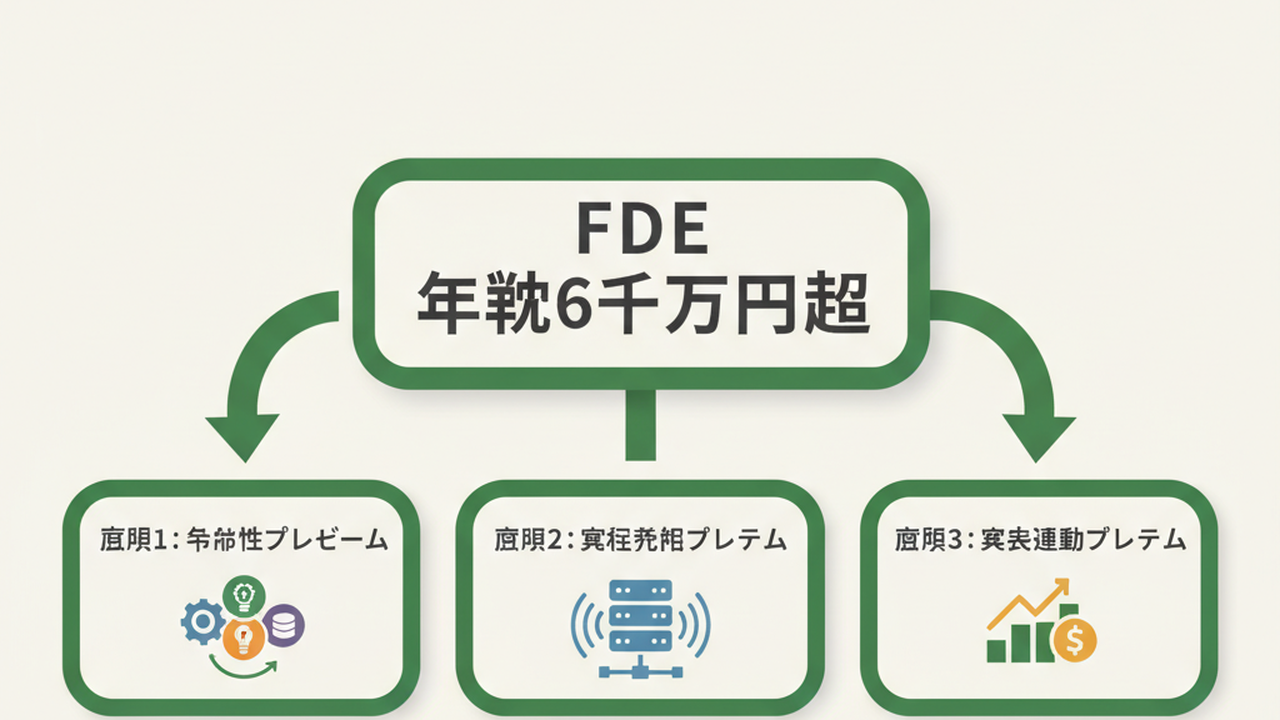
Factor 1: Scarcity premium
FDE requires three skills in combination: deep financial industry business knowledge, AI model implementation capability, and client communication ability. Each individual skill has a candidate pool. All three together is globally rare.
Financial engineers concentrate in system integrators. AI model implementation specialists cluster in tech company research roles. Client-facing consultative ability lives primarily in management consulting. Crossing all three through one career path is uncommon in any talent market. Compensation is roughly demand ÷ supply. A thin supply against growing demand creates a large upward multiplier.
Factor 2: Responsibility-scope premium
FDEs touch bank-grade infrastructure: settlement systems, risk management, credit decisions. A flawed design could produce losses in the hundreds of millions of yen. A sound design could dramatically improve operational efficiency and contribute directly to client revenues.
Higher responsibility commands higher pay — that’s a fundamental labor market principle. Senior investment bankers and enterprise project managers earn high compensation for structurally the same reason. FDE falls in that category.
Factor 3: Performance-linked premium
Embedded professional services contracts are frequently structured with performance-linked upside. If an AI deployment saves the client ¥1 billion in annual costs, a negotiated percentage of that outcome becomes additional compensation. Base pay plus performance upside means top-performing FDEs have been reported (in overseas media) hitting ¥100M+ annually.
Add these three together and ¥60M/$400K+ looks less like a staggering outlier and more like rational market pricing. If demand continues growing — which I expect — the average will likely climb further.
3 Reality Checks Before You Chase the Number
Here I want to pump the brakes. Stopping at “$400K” would be doing you a disservice. Three things I found while researching this that are worth knowing upfront — from a former failed engineer who values honesty over hype.
Reality check 1: On-site client work is more draining than it looks
If you’ve ever worked embedded at a client site, you already know this. The psychological load is higher than working within your own company. You’re constantly navigating an unfamiliar culture and unwritten politics. Failure tolerance is much lower. A schedule that’s 3–4 days per week at the client’s office can generate something like three times the fatigue of regular work. The $400K carries that weight built into it.
Reality check 2: Performance pay means real income variance
A base + performance comp structure can swing significantly year to year. A year where an AI deployment delivers clearly: ¥80M. A year where outcomes are contested: ¥30M. That’s a real spread. If you plan a mortgage or family finances around ¥60M as a floor, the lower end of that range will be painful. Plan with “there’s an upside and there’s a floor” in mind.
Reality check 3: OpenAI has organizational politics too
It looks all sparkle from the outside, but it’s still a company. Tension between research and implementation teams, budget battles between product and professional services, opaque performance evaluation systems. Overseas reporting has covered internal friction, and a fast-growth environment often means more structural distortions, not fewer. Relying purely on technical merit without reading the political landscape can produce surprises in performance reviews.
If you read all three of those and still think “I want this anyway,” FDE probably fits you. If any one reads as a dealbreaker, a different career path will likely make you happier. I finished writing this and reconfirmed: building business tools in-house is the right track for me. Aspiration and fit are different things.
Translated for the Former Failed Engineer
After all of this, some of you are probably thinking: “Fascinating story, but not for me.”
I disagree. This is an opening for people who changed paths after a false start.
By “former failed engineers,” I mean people like this: someone who joined a large SI firm out of school and left within a few years, a frontend developer who pivoted careers, someone who wanted to write code but ended up elsewhere. I’m one of them.
Why is this an opening? Because the three skills FDE requires — deep industry knowledge, AI implementation capability, client communication — are not easy for pure technical elites to assemble in one package.
Pure technical elites can write excellent code but often don’t know the business floor. Consultants understand business deeply but rarely write production code. Financial engineers touch both business operations and code but frequently struggle with the political dynamics of high-stakes client relationships.
This is where people who came from customer success, marketing, consulting, or adjacent industries have something to offer. The ability to understand business operations, explain them clearly, and translate them into working code is a set of muscles that AI-native early-career engineers haven’t had time to develop yet.
Where do you start? Three steps.
Step 1: Deepen your domain expertise in your current role. (Target: 6–12 months)
Become the person who understands current workflows better than anyone on the team. When you look at a complex spreadsheet and ask “why is this so complicated?” — that’s the starting point. What is it calculating, what approval processes does it run through, what’s causing friction for the people doing the work? That depth of understanding translates directly into AI design quality later. People with industry experience who can articulate operations clearly produce dramatically better AI designs. The user interview notes I kept during my CS days have been useful in tool design more times than I can count.
Step 2: Create one small-scale AI implementation success. (Target: 3–6 months)
Pick one small internal task and carry an AI automation prototype all the way through to production deployment. Invoice processing, query classification, automated report generation — the scale doesn’t matter. What matters is creating a demonstrable fact: “it ran, people used it, and the effect was measurable.” Cursor, Claude Code, ChatGPT — that’s enough tooling. Internal tool development has come within reach of career-changers.
In practice, when I automated internal query classification using the Claude API, design-to-production-deploy took less than two weeks. The first leap from “this won’t work” to “it worked” is the largest single step. See how Claude Code actually works in practice if you want a reference for starting.
Step 3: Portfolio your results. (Ongoing)
Document before-and-after metrics, internal reception, and operational lessons — then publish, both internally and externally. Internal decks, blog posts, SpeakerDeck. Stacking “industry + AI + measurable outcomes” as a track record will draw FDE-adjacent opportunities over time.
When publishing externally: write “what actually changed” in numbers rather than “what AI tools you used.” Cost reduction percentages, processing time changes, ticket volume decreases. Those numbers accumulate, and hiring managers eventually find them.
You don’t need to target FDE from day one. As you move through these three steps, multiple paths become visible — AI-adjacent SES work, business consulting, AI strategy roles. FDE is one possible destination among several. Keep it in the frame as one option.
Conclusion: The $400K Is Proof of Value, Not a Premium
One sentence summary of what I took from the FDE concept:
The $400K is not an absurd outlier. It’s proof of demonstrated value. If AI genuinely transforms business operations, some percentage of that value flows back to the person who made it happen. That’s healthy economic logic.
Which means: “touching AI” alone, or “writing code” alone, won’t get you there. Understand the client’s business, implement with AI, prove the outcome. All three together — that’s when you arrive.
For former failed engineers, this is not a discouraging story. It’s the opposite. There’s a route to this skillset that doesn’t run through the pure-technical-elite track. Customer success backgrounds, consulting experience, cross-industry pivots — all viable. If you carry industry understanding as an asset, there’s room to stack AI implementation on top.
I’ve written “FDE” in my notebook as a career waypoint I want to reach in three years. Not tomorrow. But worth aiming at.
This pattern won’t stay inside OpenAI. Anthropic and Google Cloud are already building similar client partnership models. IBM and others will follow. Demand is growing. Supply isn’t keeping up. That’s why starting preparation now has value.
One action for this week: write down one task in your current industry that AI could automate. That’s it. Thirty minutes is enough. When you finish, your career optionality will have expanded by exactly one.
The answer to “what comes after AI engineer?” might be right there.

正直、一度エンジニアは諦めました。新卒で入った開発会社でバケモノみたいに優秀な人たちに囲まれて、「あ、私はこっち側じゃないな」って悟ったんです。その後はカスタマーサクセスに転向して10年。でもCursorとClaude Codeに出会って、全部変わりました。完璧なコードじゃなくていい。自分の仕事を自分で楽にするコードが書ければ、それでいいんですよ。週末はサウナで整いながら次に作るツールのこと考えてます。