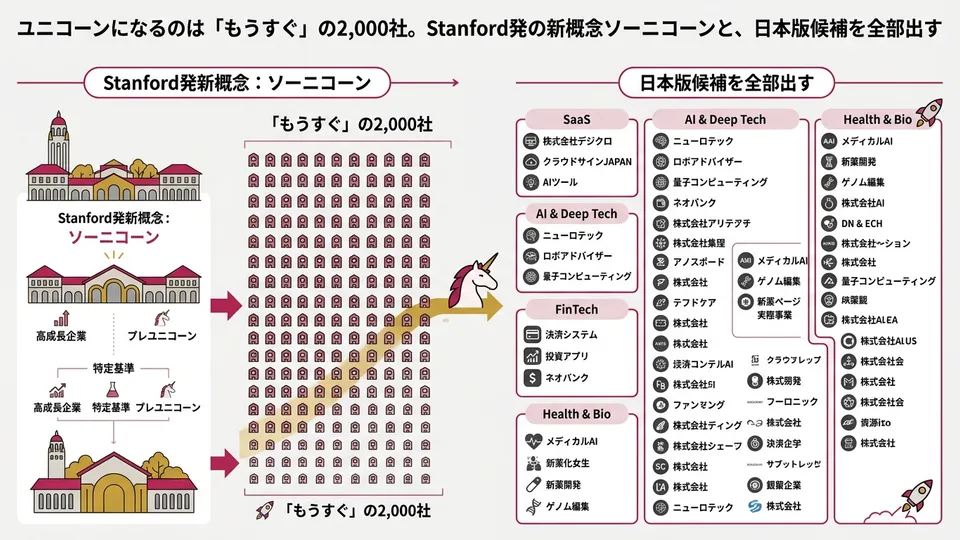
2,000 Companies on the Verge of Becoming Unicorns. The New Stanford Concept 'Soonicorn' and All the Japanese Candidates
When you ask people 'Do you know what a unicorn company is?', you usually get the same answer: 'A startup valued at over $1 billion, right?'
What you'll learn in this article
- The key point to grasp before reading the full article
- How the issue changes practical decisions after reading
- Which follow-up article is worth opening next
When you ask people “Do you know what a unicorn company is?”, you usually get the same answer: “A startup valued at over $1 billion, right?”
Correct. But here’s the thing — in 2026, the hottest topic in startup circles isn’t unicorns.
It’s Soonicorns.
Most people haven’t heard of it. There are almost zero articles written about it in Japanese. As far as I’ve researched, there’s still no Japanese content that properly explains this concept.
So today, I’m putting it all together. Knowing this concept will completely change how you see startups and investing.
What’s a Soonicorn? The Companies Sitting in the “Almost-Unicorn” Waiting Room
Soonicorn is a portmanteau of “Soon” and “Unicorn.”
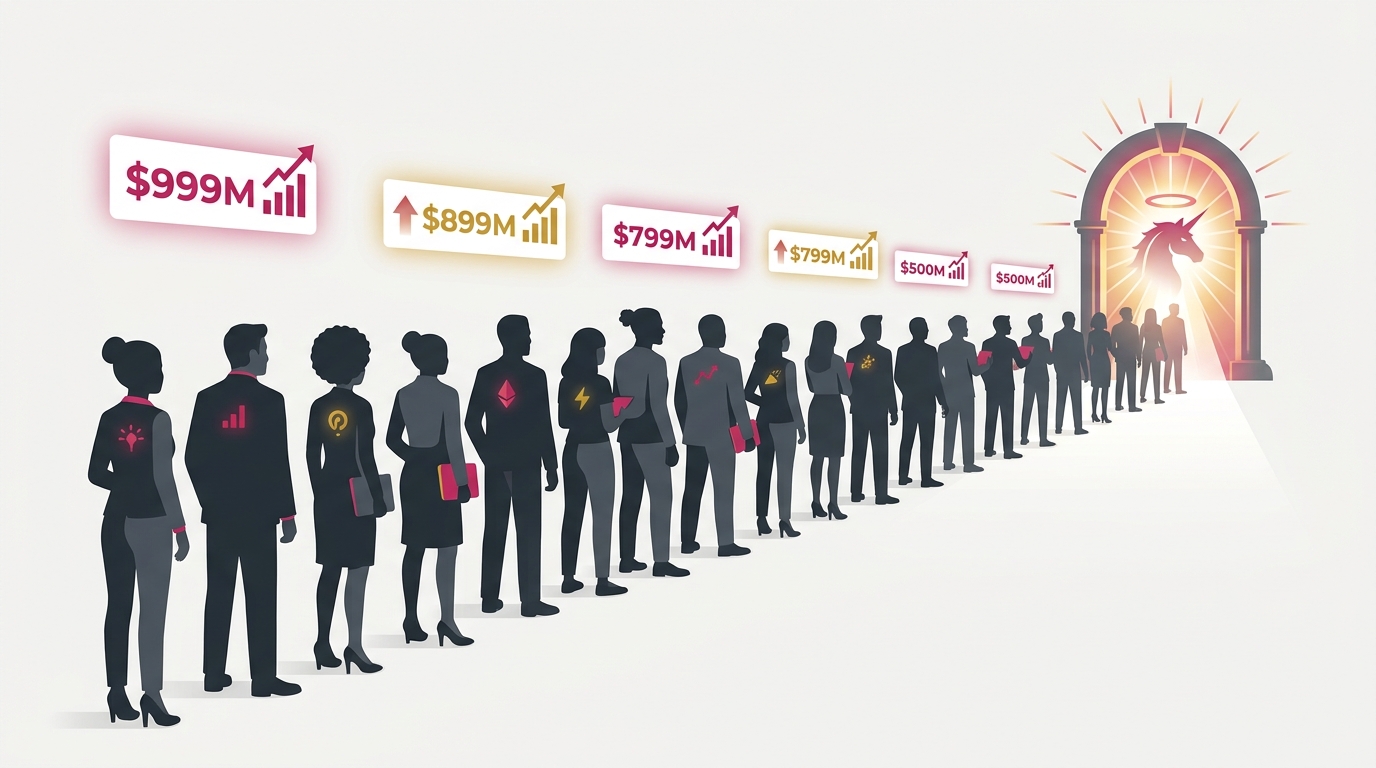
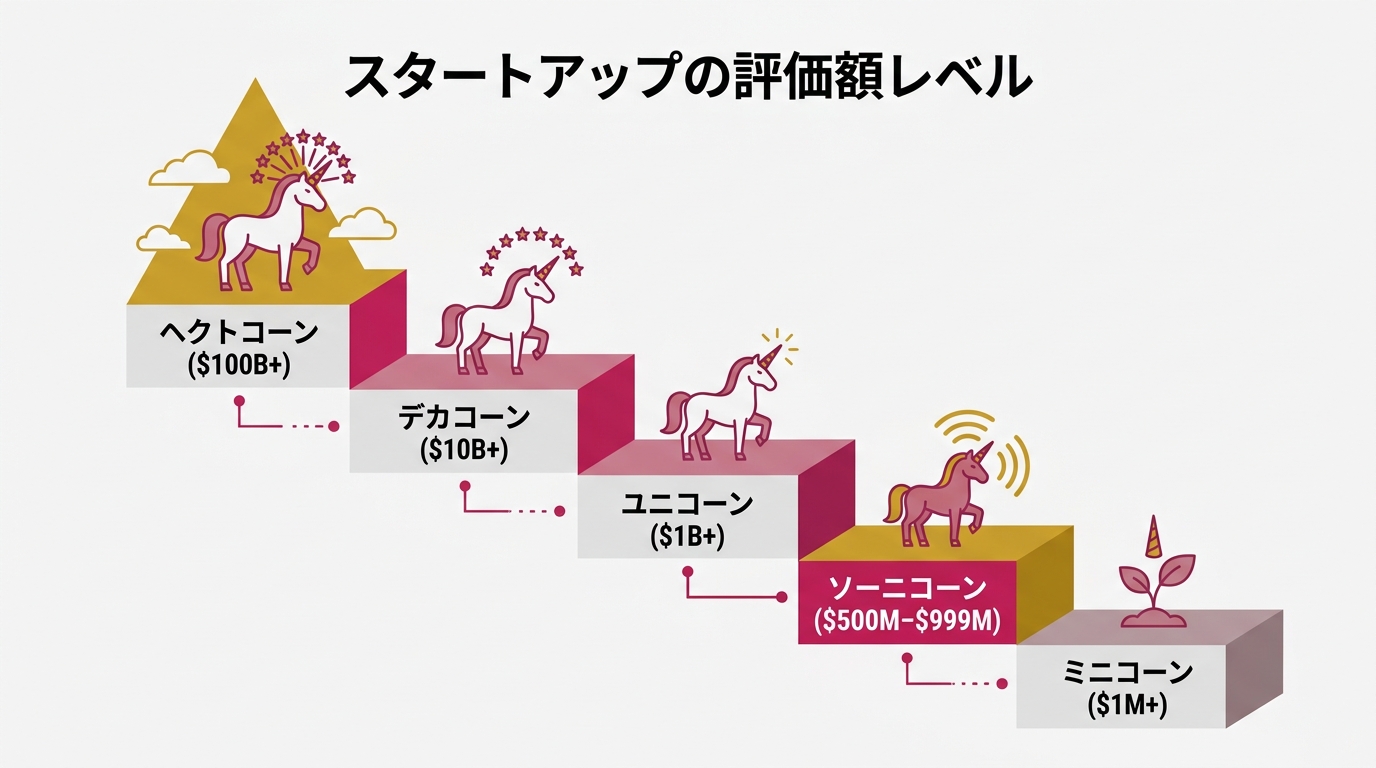
The definition is simple. Private companies valued between $500 million (about ¥75 billion) and $999 million (about ¥150 billion). They haven’t reached unicorn status ($1B+), but they’re within striking distance.
The person who popularized this term is Ilya Strebulaev, a professor at Stanford Graduate School of Business. He’s a world authority on venture capital research and launched the Stanford Venture Capital Initiative in 2015.
Professor Strebulaev himself says, “I didn’t invent the word.” He explains that “over the past decade, it’s been used naturally among founders, investors, the media, and researchers” (New York Times (paywall)).
The New York Times published a Soonicorn feature on February 15, 2026. That article is what really pushed the concept into mainstream awareness.
By the way, the history of the word “unicorn” itself is interesting too. In 2013, Aileen Lee coined the term in a TechCrunch article. She’s the founder of Cowboy Ventures. Back then, only 39 companies qualified as unicorns (TechCrunch).
She named them unicorns because they were “extremely rare and magical creatures.”
Where are we in 2026? There are over 1,700 unicorns worldwide (BestBrokers). They’re no longer “rare.” That’s exactly why attention has shifted to the “one step before” unicorn stage.
Over 2,000 in the U.S. Alone. Why Are Soonicorns Exploding Now?
Entrepreneur.com published an article in February 2026 titled “Move Over Unicorns. ‘Soonicorns’ Are Taking Over the Startup World in 2026.” It dropped this number.
In the U.S. alone, there are over 2,000 Soonicorns.
That’s a massive jump from 10 years ago. Why? Three reasons.
AI Made “Soonicorn on the First Round” Possible
It used to take an average of 6.5 years to become a unicorn. Now it’s down to 3.5 years (Crunchbase).
Total venture investment in Q1 2026 was $300 billion (about ¥45 trillion). 80% of that flowed into AI-related companies (Crunchbase Q1 2026).
Money concentrating on AI → valuations skyrocketing → cases of startups hitting $500M+ on their very first round. Entrepreneur.com puts it this way: “Thanks to AI, startups are now reaching Soonicorn status on their initial fundraising round.”
The Hectocorn IPO Rush Is Creating “Empty Seats”
In 2026, three giants are moving toward IPOs (initial public offerings): SpaceX, OpenAI, and Anthropic (Fortune).
Their combined estimated valuations total about $2.9 trillion (around ¥435 trillion). When these go public, seats in the “private giant company” club open up. And Soonicorns are the ones filling those empty seats. The “unicorn waiting room” is packed.
Q1 Alone Saw About 40 Companies Join the Unicorn Club
In Q1 2026 alone, around 40 companies became new unicorns (TechCrunch). One in four was an AI company. New faces in robotics and semiconductors also stood out.
In February alone, 27 companies joined the unicorn ranks. The breakdown is interesting: 6 robotics companies and 4 semiconductor startups (Crunchbase). It’s not just AI “software” — the “hardware” side of Soonicorns is moving all at once too.
Specific names: humanoid robotics company Apptronik is valued at $5.3B. Autonomous construction robotics company Bedrock Robotics is at $1.8B. Both were Soonicorns until very recently and broke through in one leap.
That said, Entrepreneur.com also throws in a warning: “Not every Soonicorn becomes a unicorn. Some IPO at lower valuations, some stop growing, and some go under.”
I think this level-headedness matters. Soonicorn isn’t the goal — it’s a checkpoint. Not everyone gets to cross the finish line.
Professor Strebulaev’s Research Uncovered an “Inconvenient Truth About Unicorns”
When talking about Soonicorns, you can’t skip Professor Strebulaev’s other research.
It’s a paper called “Squaring Venture Capital Valuations with Reality” (Stanford GSB). Loosely translated, the title means “Unicorn valuations don’t match reality.”
This research is wild. Here’s what the analysis of 116 unicorns revealed.
- Every single company was overvalued
- Average overvaluation rate: 51%
- 53 out of 116 companies would lose unicorn status when calculated with a fair value model
- 13 companies were overvalued by 100% or more. Meaning their actual value is less than half
Why does this happen? When VCs (venture capital firms) invest in later rounds, they get “preferred stock protection clauses.” Specifically: a 14% IPO return guarantee, a 24% veto right on down-round IPOs. And 32% of companies grant priority over all other investors.
These protected shares get calculated at the same value as the common stock that founders hold. That’s the mechanism that inflates valuations.
You might think “Does this affect me?” Absolutely.
For example, even if a Soonicorn announces an $800M valuation, the actual value might be around $400M. Forget unicorn candidate — it could be in the minicorn range. When making investment or career decisions, knowing this “padding structure” completely changes how you decide.
It’s fine to dream about Soonicorns. Just — let’s be the kind of person who can read between the numbers.
Listing All of Japan’s Soonicorn Candidates
Now, the main event. Are there Soonicorns in Japan?
The answer: Yes. But the count is overwhelmingly small.
First, some context: the number of Japanese unicorns is extremely low compared to the rest of the world. CB Insights data from March 2026 shows 6 companies. Tracxn lists 11. The numbers vary depending on the definition, but it’s an order of magnitude smaller than the U.S.’s 1,000+.
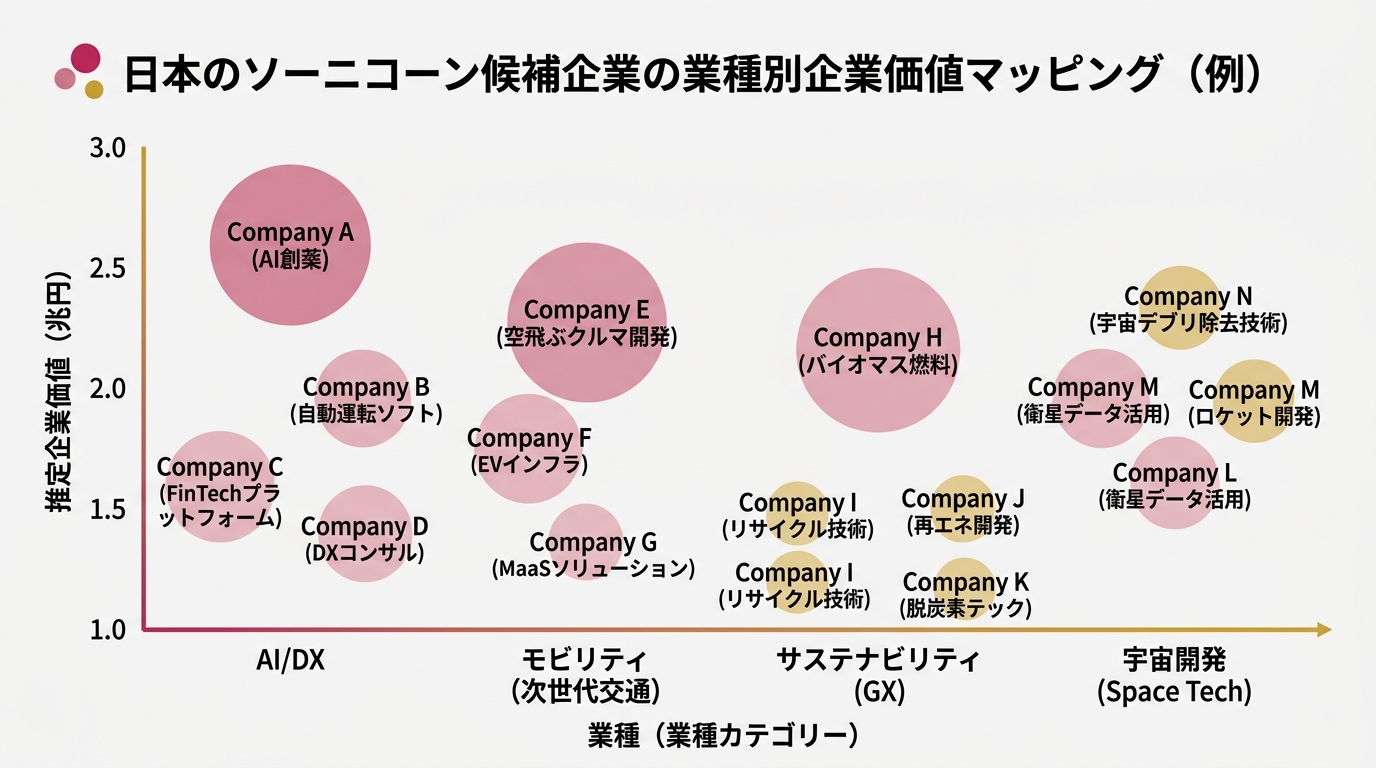
Let’s look at Nikkei’s annual “NEXT Unicorn Survey” (Nikkei (paywall), September 2025 edition). Unicorn candidates — meaning companies with estimated values over ¥50 billion and a clear path to $1B — number 11 companies. That’s 3 fewer than the previous year, the lowest in three years.
Japan’s Unicorn Candidates (Soonicorn Candidates)
Here are the publicly disclosed companies.
- Tier IV: Open-source autonomous driving software development. Total funding raised: $457.8M. Toyota and SoftBank are among the investors
- LegalOn Technologies: AI contract review platform. Ranked 8th in the NEXT Unicorn Survey. Expanding globally in the legal × AI space
- LayerX: Known for the Bakuraku series of AI business efficiency tools. Top growth rate in corporate value year-over-year
- TBM: Maker of LIMEX, a new material made from limestone. A standout in the sustainability space
- Astroscale Holdings: Space debris removal. A niche leader with virtually no global competitors

It’s also useful to look at Japanese companies that have already reached unicorn status.
- Sakana AI: Founded July 2023 → reached unicorn status September 2024. The fastest record in Japan. Valued at about ¥260 billion (eWeek)
- Preferred Networks: AI/ML/robotics. Valued at about ¥253.7 billion. Toyota and Fanuc are investors
- SmartHR: Cloud HR and labor management SaaS. Valued at about ¥173.2 billion
Sakana AI hitting unicorn status just 14 months after founding was shocking. According to Professor Strebulaev’s data, the average time to unicorn is 3.5 years. Sakana AI cut that down massively.
Internationally, Forge Global has named 5 Soonicorns by name (Forge Global). AI customer service company Cresta (around $750M). Cybersecurity firm Cybereason (around $733M). Japan needs the same kind of movement — visualizing “who’s next.”
Japanese Government Target: 100 Unicorns by FY2027
The “Five-Year Startup Development Plan” announced by the government in 2022 sets targets of 100 unicorns and ¥10 trillion in startup investment by FY2027.
With only 6 to 15 today, we need at least 85 more. Meaning even if all 11 current Soonicorn candidates become unicorns, it’s still not enough.
I think that’s where the opportunity lies.
To Anyone Thinking “This Has Nothing to Do With Me”
“Soonicorns, unicorns — that’s startup stuff. I’m a freelancer.”
I get it. I thought the same thing at first.
But here’s what changes when you learn this concept: your perspective on “where to position your own business.”
Translating “Soonicorn Thinking” Into Solo Business
Here’s another interesting data point from Professor Strebulaev’s research. 44% of unicorn founders are immigrants, and PhD holders are 6 times more common than in the general population (Crunchbase). In other words, “specialized expertise × global perspective” is what’s working.
This translates directly to solo businesses.
“What field do you go deep in” × “Which market do you deliver to.” People who nail this multiplication are the ones breaking out, even as a one-person operation.
For example, LegalOn Technologies is expanding globally with “legal × AI.” LayerX is “accounting × AI.” Both follow the formula of “specialized domain × technology.”
In my case, it’s “SNS marketing × AI automation.” I’ve doubled my consulting rates using this combination.
What Q1 2026’s $300 Billion in VC Investment Tells Us
Remember how 80% of Q1’s venture investment went to AI? This isn’t just a startup story.
The direction money flows = the direction where jobs will be created next.
AI robotics company Apptronik raised $935M (about ¥140 billion) in a single round. Semiconductor AI company Positron raised $230M. Space mining, women’s healthcare — they all joined the unicorn ranks in Q1.
Solo entrepreneurs like us aren’t going to invest in everything. But knowing “which areas will attract money over the next 3 years” gives you direction for designing your services and content strategy.
“Which fields have the most Soonicorns” becomes a map of “which fields will have growing demand.”
Summary: Three Things to Take From the Pre-Unicorn Waiting Room
This got long, so let me wrap up.
1. Soonicorns are an indicator of “next unicorn candidates”
Over 2,000 companies sit in the $500M-$999M waiting room. The next unicorns will be born from this pool, and new markets will emerge in the process. Watching “who climbs up” gives you tons of business hints.
2. Be aware of valuation “padding”
As Professor Strebulaev’s research showed, unicorns are overvalued by an average of 51%. Soonicorns carry the same risk. Before jumping in with “This company is amazing!”, become the person who can ask, “But what’s actually inside that valuation?”
3. The “expertise × global” multiplication works for individuals too
44% of unicorn founders are immigrants, and PhD rates are 6x the general population. The principle of this “multiplication” works the same way for solo businesses. Your specialized domain × technology might be your next breakthrough.
Honestly, I only learned the word “Soonicorn” recently. When it came up in Toomi’s research, I was like, “Wait, what’s that?”
When I looked into it, this turned out to be the word that best captures the “current mood” of the startup world.
There are already over 1,700 unicorns — they’re not rare anymore. The next stage is how you look at “the 2,000 companies right before unicorn status.” And how you apply that perspective to your own business.
In the end, the people who act win. I researched and summarized it first, so it’s your turn now.

女性だからこそ、AIを使いこなさなきゃって思ってる。仕事も、副業も、推し活も、旅行も、全部やりたい。人生一度きりなのに時間は足りないじゃん?だからAIに任せられることは全部任せる。浮いた時間で本当にやりたいことをやる。それがあたしのスタイル。ここにはあたしが実際にやったことをまとめてるだけ。誰かのためになったらいいなって思って書いてるよ。